
Published on May 22, 2026

A New Look at an Ancient Therapy
Key Points
- Research suggests sunlight and UV exposure may help regulate immune activity and influence autoimmune diseases such as multiple sclerosis through mechanisms that extend beyond vitamin D alone.
- In a recent clinical trial, individuals receiving narrowband UVB phototherapy showed delayed progression from clinically isolated syndrome to multiple sclerosis compared to controls.
- Modern phototherapy research is revisiting concepts long recognized in historical heliotherapy practices, where sunlight was routinely used to support healing and treat inflammatory disease.
- Scientists increasingly believe that sensible, non-burning sun exposure may act as a powerful biologic signal affecting immune balance, inflammation, mood, and overall health.
 For thousands of years, sunlight was used therapeutically to support healing and recovery from disease. Today, the spotlight is once again uncovering how sunlight and ultraviolet (UV) light may influence immune regulation, inflammation, and autoimmune disease.
A recent article in Scientific American highlighted the growing field of photoimmunology – the study of how sunlight affects the immune system beyond vitamin D production. Additional research, such as that by Dr. Patrick McCullough, continues to investigate how sunshine and controlled UV exposure may help regulate immune activity in conditions such as multiple sclerosis (MS), psoriasis, inflammatory bowel disease, rheumatoid arthritis, and type 1 diabetes.
Sunlight, Vitamin D & Multiple Sclerosis
 Multiple sclerosis has long shown one of the clearest connections to sunlight exposure. Rates of MS consistently increase with distance from the equator, where UV exposure is lower. Researchers have observed that reduced sunlight exposure during childhood and adolescence may also increase future MS risk.
The Scientific American article also reviewed early research using narrowband UVB phototherapy in individuals with MS. Participants receiving UV therapy demonstrated reductions in inflammatory markers and improvements in disease activity, suggesting sunlight-related pathways may help regulate autoimmune responses.
What Does the Research Show? Can UV Light Help Regulate Autoimmune Disease?
One of the researchers featured in the Scientific American article was Dr. Prue Hart, whose team conducted the world’s first clinical trial investigating whether narrowband UVB phototherapy could influence the progression of multiple sclerosis (MS).
The study, known as the PhoCIS Trial, focused on individuals with clinically isolated syndrome (CIS), an early neurologic event that often represents the first stage of MS. Researchers enrolled participants shortly after their first demyelinating episode and randomized them into two groups: one receiving narrowband UVB phototherapy three times per week for eight weeks, and a control group receiving no phototherapy. Importantly, all participants were also supplemented with vitamin D to sufficient levels, allowing researchers to investigate whether UV exposure itself might provide benefits beyond vitamin D alone.
By 12 months, all participants in the control group had progressed to MS, compared to 70% of those receiving phototherapy.
While the study was too small to achieve statistical significance, researchers described the findings as “tantalizing observations” that suggest UV exposure may help delay or alter disease progression in some individuals. The researchers also observed that phototherapy significantly increased vitamin D levels during the early months of treatment, improved some measures of well-being and social functioning, and appeared to influence immune pathways involved in inflammation regulation.
Dr. Hart and colleagues emphasized that sunlight and vitamin D may act through both shared and independent pathways. Their paper notes that ultraviolet radiation can influence immune regulation through mechanisms extending beyond vitamin D production alone, including effects on regulatory T cells, inflammatory signaling molecules, nitric oxide, and immune-modulating cytokines.
The authors concluded that although larger trials are still needed, the study provides encouragement for continued investigation into whether controlled UV exposure may help modulate the development of autoimmune disease.
Previous Research Supports this Connection
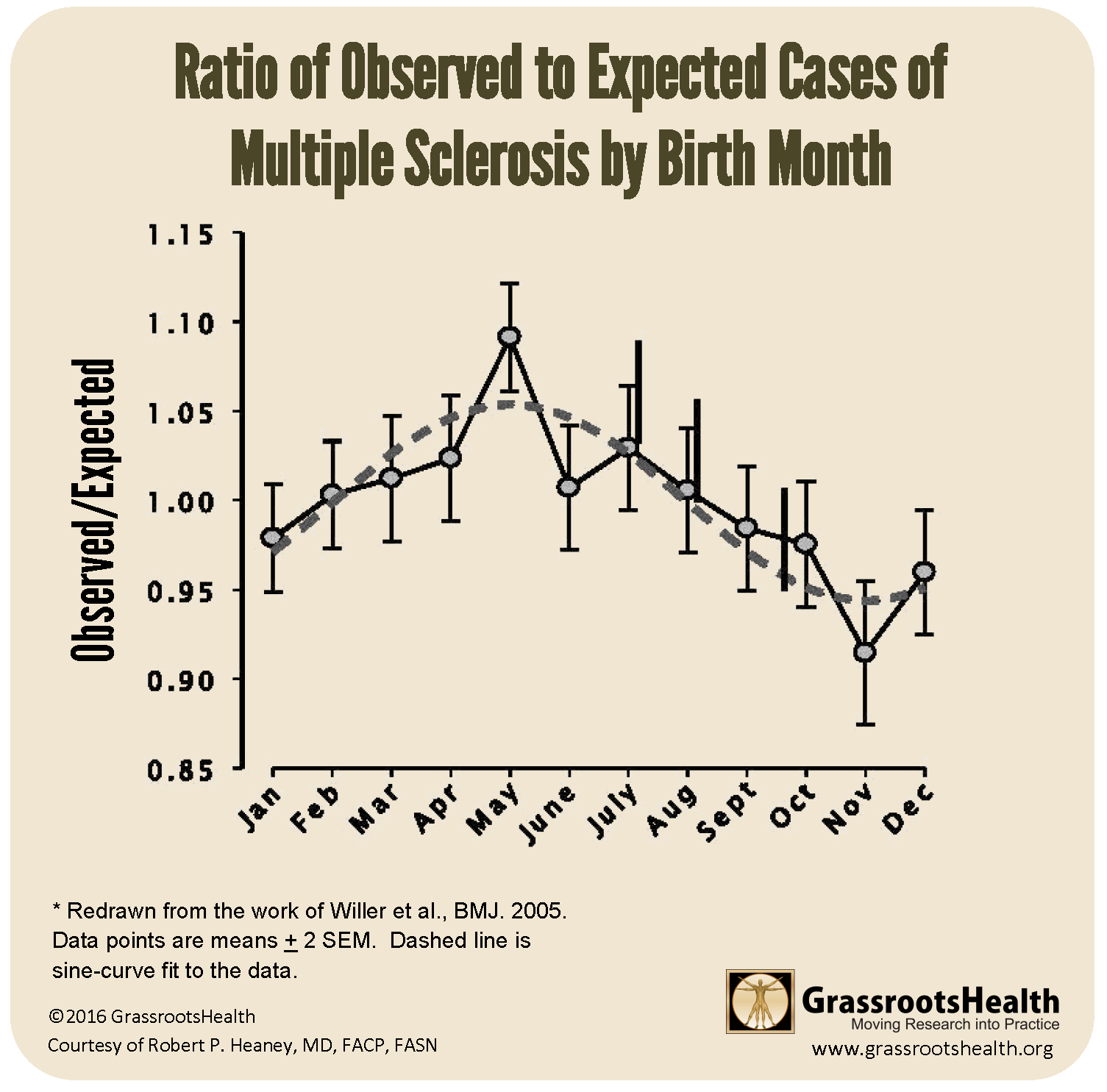
Dr. Robert Heaney commented on the findings of a study that exhibited characteristics of what is known as the “Barker Hypothesis.” The study found a correlation between the incidence of MS and the time period in which individuals were born. Those born in May (following a winter pregnancy) had a higher risk of MS compared to individuals born in November (following a summer pregnancy). Dr. Heaney attributed this to low vitamin D levels during pregnancy and early infancy and emphasized that vitamin D levels should be between 40-60 ng/ml in the pregnant mother and infant to protect against MS later down the road. However, the Hart et al. study above suggests there was much more than just vitamin D at play.
In an editorial, Dr. Cedric Garland shared that for about 20 years we have known that sunlight deficiency is the main cause of MS. People who grow up in Seattle have 10 times the incidence of MS as people who grow up in San Diego. This applies across the globe – the higher the latitude, the higher the incidence of MS. It is a law of nature and disease that has been demonstrated many times in epidemiological studies.
A 2020 study by Hedström et al. provided further evidence that low sun exposure increased the risk for MS. Results indicated both a direct effect of sunlight exposure as well as an indirect effect, through the synthesis of vitamin D, on the risk of MS. These findings support the relevance of sunshine exposure and its effect on vitamin D status, both together and separately, for the prevention of MS, and are especially relevant for those with a genetic predisposition to MS.
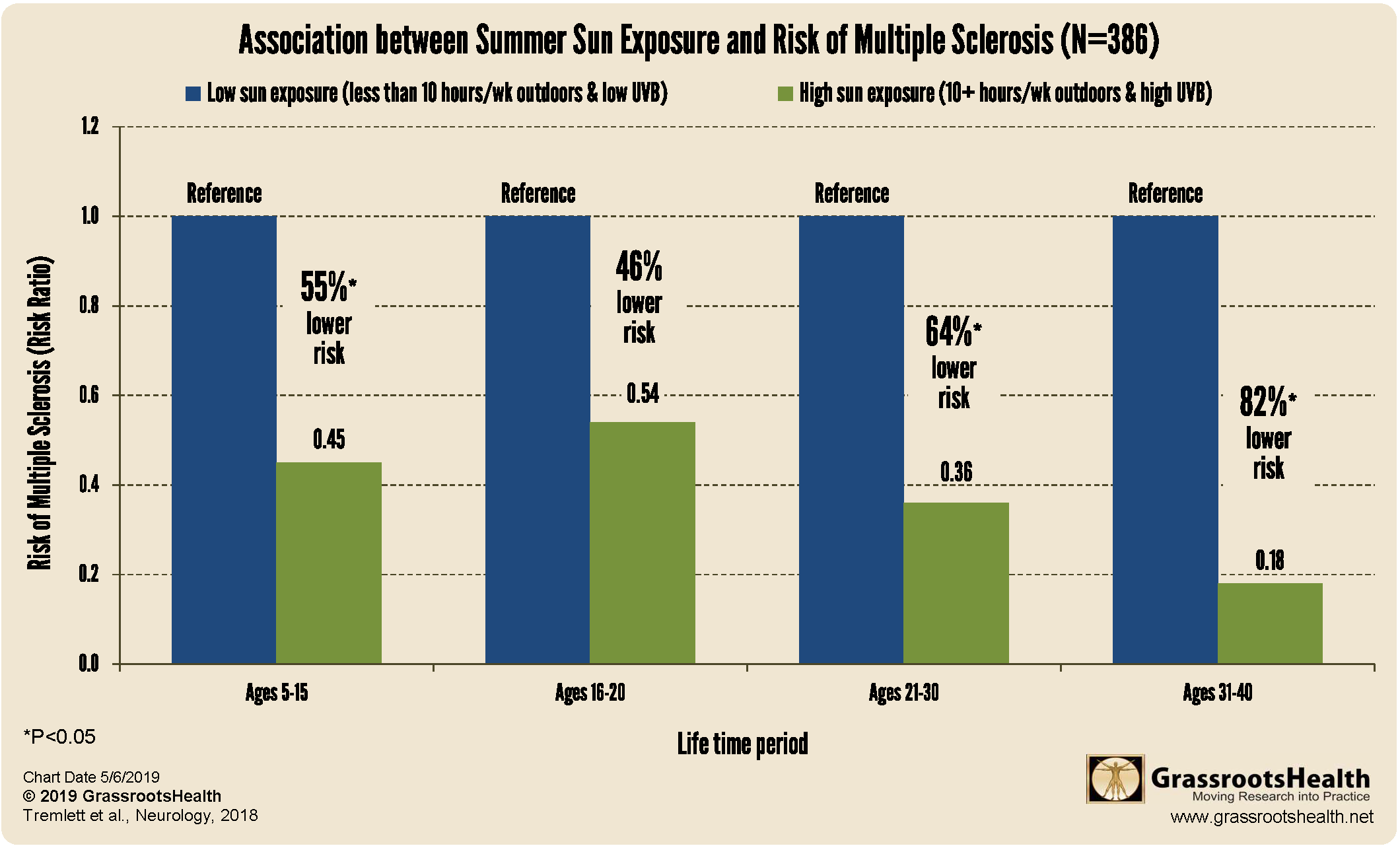
Results from Tremlett et al. from the Nurses’ Health Study found that people living in high UVB areas before the onset of MS had a 45% lower risk of MS compared to those living in low UVB areas, and those who spent 10 or more hours per week outdoors in the summer in high UVB areas during ages 31-40 had an 82% lower risk of MS compared to those who spent less than 10 hours per week outdoors in low UVB areas. Other age groups also showed a decreased risk.
Heliotherapy and Phototherapy: An Ancient Medicine Still Used Today
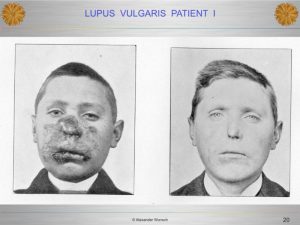 While sunlight therapy may sound outdated, phototherapy remains an established medical treatment for several inflammatory skin disorders. As discussed by Dr. Patrick McCullough, controlled UV light treatments are successfully used for:
- Psoriasis
- Eczema
- Vitiligo
- Other autoimmune-related skin disorders
These therapies work largely through immune modulation and reduction of inflammatory activity within the skin and throughout the body.
Long before modern pharmaceuticals, physicians routinely prescribed sunlight exposure to treat disease. A previous blog How Sunshine has Helped Us Heal Throughout History describes how ancient cultures in Egypt, Greece, India, and China recognized sunlight as an important part of healing practices. By the late 1800s and early 1900s, heliotherapy centers and open-air sanatoriums became common throughout Europe and North America. Sunlight and UV therapies were historically used for:
- Tuberculosis
- Rickets
- Skin disorders
- Wound healing
- Chronic inflammatory conditions
In fact, in 1903, physician Niels Finsen received the Nobel Prize in Medicine for his work using light therapy to treat skin tuberculosis.
Avoiding Sunburn, Not Avoiding the Sun
Today’s is yet another post emphasizing the importance of balanced and intelligent sun exposure practices. Excessive UV exposure and sunburn increase skin cancer risk and should be avoided. However, many scientists now argue that conversations about sun safety should also acknowledge the potential health consequences of chronic sunlight avoidance. Humans evolved under regular full-spectrum sunlight exposure throughout life. Embracing this month’s information should highlight how sunlight may act as a powerful biologic signal influencing immune balance, inflammation, mood, metabolism, and overall health.
And as researchers continue exploring photoimmunology, the conversation around sunlight is evolving, from one focused primarily on risk avoidance to one seeking a more balanced understanding of both the risks and the potential benefits of sensible sun exposure.
Are You Getting Enough Vitamin D, Omega-3s, and Other Essential Nutrients? Measure Today!
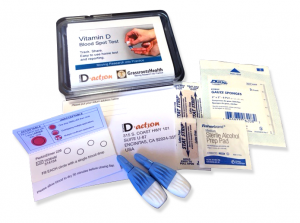 Having and maintaining healthy vitamin D levels and other nutrient levels can help improve your health now and for your future. Choose which additional nutrients to measure, such as your omega-3s and essential minerals including magnesium and zinc, by creating your custom home test kit today. Take steps to improve the status of each of these measurements to benefit your overall health. With measurement you can then determine how much is needed and steps to achieve your goals. You can also track your own intakes, symptoms and results to see what works best for YOU.
Enroll in D*action and Test Your Levels Today!
How Can You Use this Information for YOUR Health?
Having and maintaining healthy vitamin D and other nutrient levels can help improve your health now and for your future. Measuring is the only way to make sure you are getting enough!
STEP 1 Order your at-home blood spot test kit to measure vitamin D and other nutrients of concern to you, such as omega-3s, magnesium, essential and toxic elements (zinc, copper, selenium, lead, cadmium, mercury); include hsCRP as a marker of inflammation or HbA1c for blood sugar health
STEP 2 Answer the online questionnaire as part of the GrassrootsHealth study
STEP 3 Using our educational materials and tools (such as our dose calculators), assess your results to determine if you are in your desired target range or if actions should be taken to get there
STEP 4 After 3-6 months of implementing your changes, re-test to see if you have achieved your target level(s)