

Published on March 18, 2026
11 Key Factors That Influence Your Vitamin D Levels
Key Points
- Vitamin D deficiency risk varies widely between individuals due to differences in sun exposure, lifestyle, biology, and overall health status.
- Certain factors—including limited sun exposure, darker skin, aging, obesity, genetics, poor co-nutrient intake, and underlying health conditions—can significantly increase the likelihood of low vitamin D levels.
- Medications and conditions that affect absorption or metabolism can further impair vitamin D status, even when intake appears adequate.
- Because multiple risk factors often overlap, testing serum 25-hydroxyvitamin D [25(OH)D] is essential to accurately assess status and guide personalized vitamin D intake.

Vitamin D deficiency is one of the most common nutritional deficiencies worldwide, yet it does not affect everyone equally. While seasonal changes, especially the winter months, play a major role in lowering vitamin D levels, there are several well-established factors that can significantly increase an individual’s risk of deficiency year-round.
Last week, we focused on the influence of the seasons on vitamin D levels, and how this time of year is when a majority of the population is at their highest risk of deficiency. Understanding the additional following risk factors for vitamin D deficiency is essential for both individuals and practitioners, as it helps identify who may need higher intake, closer monitoring, or more frequent testing year-round.
Why Risk Varies from Person to Person
 Vitamin D levels are influenced by a combination of:
- Sun exposure
- Skin pigmentation
- Body composition
- Age
- Diet and supplementation
- Genetics
- Overall health status
Because of this, two people taking the same amount of vitamin D—or getting the same amount of sun—can have very different blood levels.
This variability is one of the key reasons why testing is essential.
11 Key Risk Factors for Vitamin D Deficiency
1. Limited Sun Exposure, Sun Avoidance, and Sunscreen Use
Vitamin D is produced in the skin when exposed to UVB radiation from sunlight, and for those who do not supplement, sunlight becomes a key determinant of their vitamin D status. Individuals at higher risk include:
- Those who spend most of their time indoors
- People who live in northern latitudes
- Individuals experiencing winter months with minimal UVB availability
- Those who consistently avoid sun exposure or cover most of their skin
- Individuals who regularly use sunscreen during all sun exposure
Even in sunny regions, modern indoor lifestyles, sun avoidance, and protective behaviors can significantly limit vitamin D production.
2. Darker Skin Pigmentation
Melanin reduces the skin’s ability to produce vitamin D from sunlight. As a result:
- Individuals with darker skin require more sun exposure to produce the same amount of vitamin D
- Risk of deficiency is significantly higher, particularly in regions with limited sunlight
3. Aging
As we age, the skin becomes less efficient at producing vitamin D. Older adults may also:
- Spend less time outdoors
- Have reduced dietary intake
- Have an increased incidence of chronic disease
- Be on medications affecting vitamin D (see below)
- Experience decreased liver or kidney function, which affects vitamin D activation
4. Overweight and Obesity
Body fat can sequester vitamin D, reducing its availability in circulation. Research has shown that:
- Individuals with higher body weight often require 2–3 times more vitamin D to achieve the same blood levels
- Obesity is consistently associated with lower 25(OH)D levels
5. Inadequate Supplementation or Intake
Many individuals rely on standard recommendations that may be too low to achieve optimal levels. Most also fail to retest vitamin D levels after adjusting intake to ensure that intake is the correct dose for them. Without sufficient intake and monitoring of serum levels:
- Vitamin D stores decline, especially during winter
- Blood levels may fall into deficient or insufficient ranges
6. Genetics and Individual Variability
Genetic differences can affect how vitamin D is:
- Absorbed
- Transported
- Activated
- Utilized at the cellular level
Some individuals may have a blunted response to supplementation, sometimes referred to as “vitamin D resistance.”
7. Gastrointestinal or Malabsorption Issues
Digestive conditions that affect fat absorption can impair vitamin D uptake. Examples include:
- Celiac disease
- Inflammatory bowel disease (IBD)
- Bariatric surgery
- Chronic digestive disorders
Because vitamin D is fat-soluble, proper absorption is essential.
8. Pregnancy and Increased Physiological Demand
Vitamin D requirements increase during pregnancy. Without adequate intake:
- Maternal levels may decline
- Risk of maternal and infant health conditions increases
- Fetal development may be affected
- Postpartum deficiency is common
Optimizing vitamin D status during pregnancy is increasingly recognized as an important factor in maternal and infant health.
9. Chronic Health Conditions
Certain conditions are associated with lower vitamin D levels or altered metabolism. These may include:
- Kidney disease
- Liver disease
- Endocrine disorders
- Chronic inflammatory conditions
These individuals may require closer monitoring and individualized dosing.
10. Medications That Affect Vitamin D Metabolism
Certain medications can interfere with vitamin D absorption, metabolism, or activation, increasing the risk of deficiency. Common examples include:
- Glucocorticoids (steroids)
- Anticonvulsants
- Weight-loss medications that reduce fat absorption
- Cholesterol-lowering medications (such as bile acid sequestrants)
These medications may reduce circulating vitamin D levels or impair how vitamin D is utilized in the body, making monitoring and adjustment especially important for individuals taking them.
11. Inadequate Co-Nutrient Status
Vitamin D does not work in isolation and relies on several key nutrients for proper absorption, activation, and function in the body. Important co-nutrients include:
- Magnesium (required for vitamin D metabolism and activation)
- Vitamin K (supports calcium regulation and proper distribution)
- Omega-3 fatty acids (support anti-inflammatory pathways)
- B vitamins (involved in energy metabolism and cellular function)
- Zinc and boron (support immune function and vitamin D activity)
If these co-nutrients are insufficient:
- Vitamin D may not be properly activated
- The body’s response to supplementation may be reduced
- Higher doses of vitamin D may be required to achieve optimal levels
Optimizing these co-nutrients is an important but often overlooked factor in achieving and maintaining healthy vitamin D status.
Many People Have More Than One Risk Factor
It’s important to recognize that these risk factors often overlap. For example, an individual may:
- Work indoors
- Have darker skin
- Be overweight
- Live in a northern climate
Each additional factor can further increase the likelihood of deficiency. Measure your risk of vitamin D deficiency with our quiz here.
Why Testing Matters—Especially for High-Risk Groups
Because vitamin D status varies so widely between individuals, testing is the only way to know your level. Testing serum 25-hydroxyvitamin D [25(OH)D] allows you to:
- Identify deficiency or insufficiency
- Understand your personal response to supplementation
- Adjust intake based on your individual needs
- Monitor changes over time
For individuals with one or more risk factors, testing becomes even more important.
Vitamin D deficiency is not just a seasonal issue—it is influenced by a wide range of personal and environmental factors.
Understanding your individual risk can help guide:
- When to test
- How much vitamin D you may need
- How to maintain healthy levels throughout the year
By combining awareness of risk factors with regular testing, individuals and practitioners can take a more personalized and effective approach to vitamin D optimization.
Measure Your Vitamin D and Other Important Nutrients
If you haven’t had your vitamin D levels checked recently, now is the time! With so many Americans still falling short, awareness is the first step toward change.
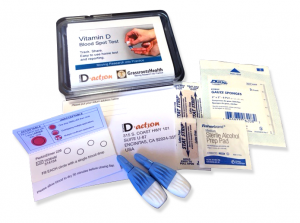
Measuring and calculating a supplementation amount to help reach and maintain a target level, or taking loading doses to correct deficiency faster, could possibly make all the difference in overall health, wellbeing, and how a current disease situation progresses. Test your level now!
Create your custom home blood spot kit by adding any of the following measurements, along with your vitamin D:
- Omega-3 Index (with or without Ratios AA:EPA and Omega-6:Omega-3)
- Magnesium (with additional Elements copper, zinc, selenium, mercury, and cadmium)
- hsCRP as a marker of inflammation and HbA1c as a marker of blood sugar health
Having and maintaining healthy vitamin D levels and other nutrient levels can help improve your health, now and for the future. Enroll and test your levels today, learn what steps to take to improve your status of vitamin D (see below) and other nutrients and blood markers, and take action! By enrolling in the GrassrootsHealth projects, you are not only contributing valuable information to everyone, you are also gaining knowledge about how you could improve your own health through measuring and tracking your nutrient status, and educating yourself on how to improve it.
How Can You Use this Information for YOUR Health?
Having and maintaining healthy vitamin D and other nutrient levels can help improve your health now and for your future. Measuring is the only way to make sure you are getting enough!
STEP 1 Order your at-home blood spot test kit to measure vitamin D and other nutrients of concern to you, such as omega-3s, magnesium, essential and toxic elements (zinc, copper, selenium, lead, cadmium, mercury); include hsCRP as a marker of inflammation or HbA1c for blood sugar health
STEP 2 Answer the online questionnaire as part of the GrassrootsHealth study
STEP 3 Using our educational materials and tools (such as our dose calculators), assess your results to determine if you are in your desired target range or if actions should be taken to get there
STEP 4 After 3-6 months of implementing your changes, re-test to see if you have achieved your target level(s)