

Published on July 21, 2025
New research highlights magnesium’s role in depression, migraines, Alzheimer’s disease, and cognitive health
Key Points
- Magnesium and migraines: Shown to reduce both frequency and severity, particularly in migraine with aura.
- Magnesium and Alzheimer’s: Helps protect brain cells, prevent structural damage, and preserve cognitive function.
- Safe and accessible: Magnesium is generally well-tolerated, affordable, and available in multiple supplement forms (citrate, chloride, L-threonate, glycinate, etc.).
- Balance matters: Both deficiency and excess can be harmful. Be sure to take magnesium with vitamin D, B vitamins, and other essential nutrients.
 Magnesium is an essential nutrient that has been shown in prior studies to play a critical role in mood and mental wellness. In fact, a 2017 clinical trial by Tarleton et al. found that daily supplementation with 248 mg of elemental magnesium significantly reduced both depression and anxiety symptoms within just two weeks in adults with mild to moderate symptoms. (Read summary)
A newly published 2025 comprehensive review by Varga et al. in Nutrients offers a clearer and more complete understanding of magnesium’s relevance to brain health. It synthesizes findings from over 40 clinical trials and large-scale population studies to evaluate magnesium’s role in three major neurological conditions: depression, migraine, and Alzheimer’s disease, as well as its contribution to overall cognitive function and mental resilience.
Depression and Magnesium: A Clear Link
Multiple studies show that low magnesium levels are associated with a higher risk of depression. Magnesium helps regulate neurotransmitters such as serotonin, GABA, and glutamate—all of which influence mood and emotional balance. It also helps calm the stress response by stabilizing the HPA (hypothalamic-pituitary-adrenal) axis and reducing inflammation.
According to the review, magnesium supplementation has been shown to:
- Lower depressive symptoms in adults with mild to moderate depression
- Improve scores on standardized mood scales like the PHQ-9 and Beck Depression Inventory
- Work more effectively when combined with vitamin D, particularly in people with long COVID, diabetes, or obesity
Although results vary depending on dose and form, the pattern is clear: when magnesium deficiency is corrected, many people report feeling better.
Migraine Relief: Magnesium as a Natural Stabilizer
Magnesium also plays a role in migraine prevention and treatment. People with migraines often have low levels of magnesium in their blood and brain. Magnesium helps by:
- Calming brain overactivity (reducing cortical spreading depression)
- Regulating cerebral blood flow
- Reducing inflammation and pain signaling in the trigeminal nerve
Clinical trials show that magnesium supplementation (400–600 mg/day) can reduce migraine frequency and intensity. Some studies even suggest that IV magnesium sulfate provides quick relief for migraine with aura when used in emergency settings.
Alzheimer’s and Cognitive Decline: A Protective Effect
Magnesium was also shown to have a strong potential to slow cognitive decline and reduce dementia risk.
Research indicates that both low and high magnesium levels are associated with increased risk of dementia, with the lowest risk occurring at balanced levels (about 0.85 mmol/L in serum). Magnesium may protect the brain by:
- Reducing oxidative stress and neuroinflammation
- Supporting synaptic plasticity and memory circuits
- Preventing accumulation of beta-amyloid plaques and tau tangles
- Improving blood flow and energy production in brain cells
Several long-term studies included in the review found that magnesium supplementation was associated with better memory, larger brain volume, and reduced risk of both Alzheimer’s and vascular dementia. One randomized study even showed that improving the calcium-to-magnesium dietary ratio led to a 9% improvement in cognitive function.
Be sure to take magnesium with vitamin D, B vitamins, omega-3s and other essential nutrients, especially for brain health!
Where to Learn More
You can read our previous coverage of magnesium and mental health here: Could Magnesium Treat Depression?”
For the full review article, read the full review by Varga et al., 2025.
Magnesium is not just for muscles and bones—it’s a key player in your brain health, too.
If you’re looking for ways to support your mood, focus, and long-term cognitive vitality, magnesium supplementation may be a simple, evidence-backed step to consider.
Are you getting enough magnesium?
You can measure your magnesium levels through GrassrootsHealth as part of the Full Elements Panel, along with measuring levels of zinc, selenium, copper, mercury and cadmium. Test today!
Measure Your Levels Today!
Check your vitamin D, CRP, omega-3s and 6s, magnesium, and other important markers today as part of the vitamin D*action project.
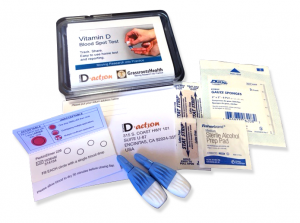
Measure your:
- Vitamin D
- Magnesium PLUS Elements (including zinc, copper, selenium, mercury, cadmium and lead)
- Omega-3 Fatty Acids
- hsCRP (for Inflammation)
- HbA1c (for Blood Sugar)
- and more
Did you know that each of the above can be measured at home using a simple blood spot test? As part of our ongoing research project, you can order your home blood spot test kit to get your levels, followed by education and steps to take to help you reach your optimal target levels. Start by enrolling and ordering your kit to measure each of the above important markers, and make sure you are getting enough of each to support better health and wellbeing!
Start Here to Measure Your Levels
How Can You Use this Information for YOUR Health?
Having and maintaining healthy vitamin D and other nutrient levels can help improve your health now and for your future. Measuring is the only way to make sure you are getting enough!
STEP 1 Order your at-home blood spot test kit to measure vitamin D and other nutrients of concern to you, such as omega-3s, magnesium, essential and toxic elements (zinc, copper, selenium, lead, cadmium, mercury); include hsCRP as a marker of inflammation or HbA1c for blood sugar health
STEP 2 Answer the online questionnaire as part of the GrassrootsHealth study
STEP 3 Using our educational materials and tools (such as our dose calculators), assess your results to determine if you are in your desired target range or if actions should be taken to get there
STEP 4 After 3-6 months of implementing your changes, re-test to see if you have achieved your target level(s)