

Published on July 16, 2025
The majority of available evidence from both clinical trials and observational studies indicates that vitamin D supplementation does not increase uric acid levels… in many cases, it may even help to reduce it.
Key Points
- A recent meta-analysis of randomized controlled trials showed either a neutral or beneficial effect of vitamin D supplementation on uric acid levels
- Observational studies link low vitamin D levels with higher uric acid levels
- Biological mechanisms further explain why adequate vitamin D may help support healthy uric acid levels

We recently received a question regarding vitamin D and gout. One individual shared that their neighbor, who suffers from gout, was advised by their doctor to stop taking vitamin D due to concerns that it could increase uric acid levels—the primary contributor to gout attacks. This brings up an important point: what does the scientific evidence actually say about the relationship between vitamin D and uric acid levels?
What Does the Research Show?
Clinical Trials: Direct Evidence Shows Neutral or Positive Effects
The most reliable way to assess cause and effect is often through randomized controlled trials (RCTs). A recent meta-analysis of seven different RCTs involving 959 participants was carried out by Simental-Mendía et al., published in 2024, examining how vitamin D supplementation affects uric acid levels.
Results from this study showed that vitamin D supplementation actually led to a small but significant decrease in uric acid levels, especially in individuals with pre-diabetes and higher starting uric acid levels.
Other controlled studies have shown similar results: vitamin D supplementation tends to either slightly reduce uric acid or has no measurable effect. Importantly, none of these trials found that vitamin D increases uric acid levels in a meaningful way.

Observational Studies: Consistent Association with Lower Uric Acid
Observational studies, which look at vitamin D and uric acid levels in large groups of people, also show a consistent association: people with lower vitamin D levels tend to have higher uric acid levels.
This trend has been observed in various populations:
- Postmenopausal women
- Adults with metabolic syndrome
- General adult populations
These studies cannot prove causation but provide useful supporting evidence that low vitamin D is often linked to higher uric acid.
Biological Mechanisms: How Vitamin D May Influence Uric Acid
Several physiological explanations help us understand these findings:
- Vitamin D affects parathyroid hormone (PTH): Low vitamin D causes an increase in PTH levels, which can decrease the excretion of uric acid through the kidneys. This means people with low vitamin D may naturally retain more uric acid.
- Vitamin D and kidney function: Vitamin D plays a role in supporting healthy kidney function, which is crucial for clearing uric acid from the body. Better kidney function generally helps lower uric acid levels.
- Interaction in both directions: There is some evidence that high uric acid may interfere with the body’s ability to activate vitamin D. This suggests a two-way interaction, where low vitamin D can worsen uric acid levels, and high uric acid may also reduce vitamin D status.
In Conclusion:
The majority of available evidence from both clinical trials and observational studies indicates that vitamin D supplementation does not increase uric acid levels. In many cases, it may even help to reduce uric acid, especially in individuals with metabolic risk factors.
Measure Your Levels Today!
Check your vitamin D, CRP, omega-3s and 6s, magnesium, and other important markers today as part of the vitamin D*action project.
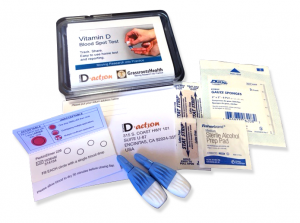
Measure your:
- Vitamin D
- Magnesium PLUS Elements (including zinc, copper, selenium, mercury, cadmium and lead)
- Omega-3 Fatty Acids
- hsCRP (for Inflammation)
- HbA1c (for Blood Sugar)
- and more
Did you know that each of the above can be measured at home using a simple blood spot test? As part of our ongoing research project, you can order your home blood spot test kit to get your levels, followed by education and steps to take to help you reach your optimal target levels. Start by enrolling and ordering your kit to measure each of the above important markers, and make sure you are getting enough of each to support better health and wellbeing!
Start Here to Measure Your Levels
How Can You Use this Information for YOUR Health?
Having and maintaining healthy vitamin D and other nutrient levels can help improve your health now and for your future. Measuring is the only way to make sure you are getting enough!
STEP 1 Order your at-home blood spot test kit to measure vitamin D and other nutrients of concern to you, such as omega-3s, magnesium, essential and toxic elements (zinc, copper, selenium, lead, cadmium, mercury); include hsCRP as a marker of inflammation or HbA1c for blood sugar health
STEP 2 Answer the online questionnaire as part of the GrassrootsHealth study
STEP 3 Using our educational materials and tools (such as our dose calculators), assess your results to determine if you are in your desired target range or if actions should be taken to get there
STEP 4 After 3-6 months of implementing your changes, re-test to see if you have achieved your target level(s)