

Published on June 23, 2026
From PMS to PCOS, Fertility, and Uterine Health, New Review Highlights Multiple Benefits of Vitamin D
Key Points
- Vitamin D receptors are found throughout the female reproductive system; research suggests vitamin D influences reproductive hormones, menstrual cycles, fertility, pregnancy, and overall reproductive health.
- Women with PMS, PCOS, fibroids, endometriosis, and adenomyosis frequently have lower vitamin D levels, and studies suggest correcting deficiency may improve symptoms, hormonal balance, and metabolic health.
- In women with PCOS, vitamin D supplementation has been shown to improve insulin sensitivity, reduce testosterone levels, increase menstrual regularity, and support healthier ovarian function.
- Research suggests that maintaining adequate vitamin D levels before conception and during pregnancy may support fertility, placental health, and healthy pregnancy outcomes, with several studies reporting lower risks of complications among women with levels above 40 ng/mL (100 nmol/L).

Vitamin D has been shown to affect multiple aspects of women’s reproductive health, including regulating the menstrual cycle, improving gynecological health, prenatal outcomes, fertility and the success of IVF treatments.
Vitamin D receptors (VDRs) are found throughout the reproductive system, including the ovaries, uterus, placenta, hypothalamus, and pituitary gland, allowing vitamin D to influence hormone production, ovulation, implantation, immune regulation, and fertility. The influence of vitamin D on prenatal and infant health has been covered extensively in previous posts by GrassrootsHealth. A newly published review by Alsuwaidi et al. highlights several additional areas of impact for vitamin D and female reproductive health. Researchers reviewed studies published between 2013 and 2025 examining the role of vitamin D in reproductive hormones, premenstrual syndrome (PMS), polycystic ovary syndrome (PCOS), uterine disorders, pregnancy, and assisted reproductive technologies such as in vitro fertilization (IVF).
How Vitamin D Influences Female Reproductive Hormones
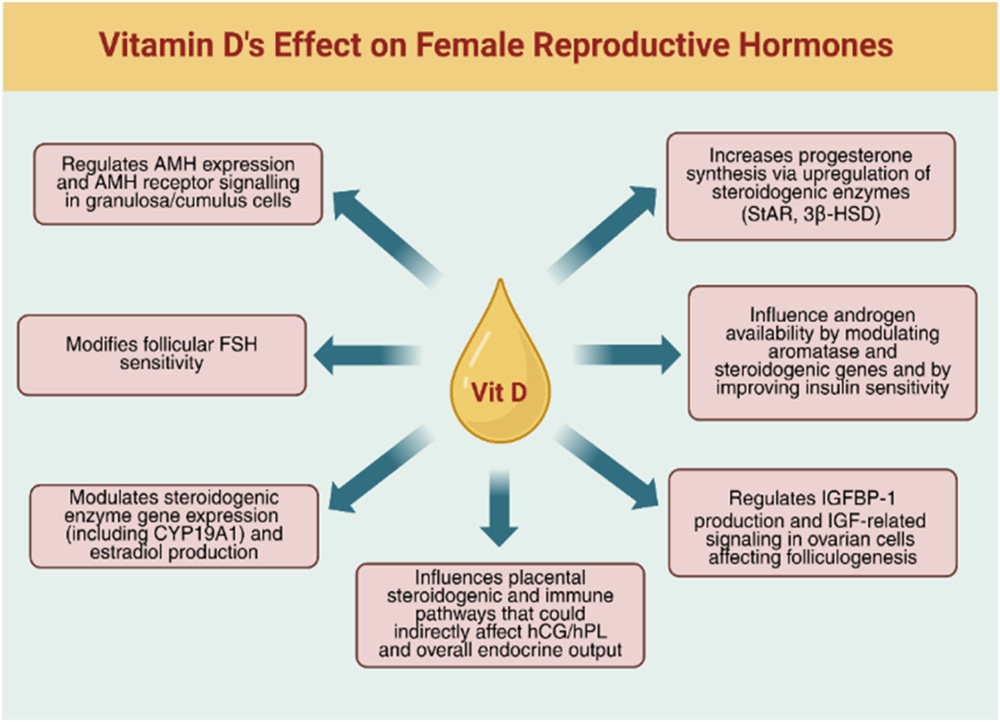
Rather than acting on a single pathway, vitamin D appears to help coordinate a complex network of hormones and signaling molecules that support healthy reproductive physiology.
Emerging research suggests that vitamin D may help regulate anti-müllerian hormone (AMH), improve follicle sensitivity to follicle-stimulating hormone (FSH), support estrogen and progesterone production, and influence androgen balance. Vitamin D has also been associated with improved insulin sensitivity and increased levels of sex hormone-binding globulin (SHBG), both of which may be particularly important for women with conditions such as polycystic ovary syndrome (PCOS). Additionally, vitamin D appears to interact with growth factors involved in follicle development and may help support implantation and early placental function. Together, these mechanisms provide a biological explanation for why low vitamin D status has been linked to PMS, PCOS, infertility, pregnancy complications, and other reproductive disorders.
Vitamin D and Premenstrual Syndrome (PMS)
One of the most consistent findings in the review was the relationship between vitamin D status and PMS symptoms. Researchers found that women with lower vitamin D levels often experienced more severe PMS symptoms, particularly mood-related symptoms such as anxiety, depression, fatigue, and sleep disturbances. Several randomized controlled trials demonstrated that correcting vitamin D deficiency significantly reduced overall PMS symptom scores.
In one study, women with baseline vitamin D levels averaging approximately 21 ng/mL who received 50,000 IU every two weeks for 16 weeks experienced significant improvements in total PMS scores, with the greatest improvements occurring in mood and depression symptoms. Another study using the same protocol found reductions in inflammatory cytokines and increases in antioxidant capacity alongside symptom improvement.
Among women with severe deficiency, averaging just 5 ng/mL, high-dose vitamin D supplementation significantly reduced menstrual pain and the need for pain medications. One case-control study from Pakistan found that 100% of women with PMS were vitamin D deficient, compared to only 10% of healthy controls.
This suggests that vitamin D deficiency may contribute to PMS through multiple mechanisms, including inflammation, oxidative stress, neurotransmitter regulation, and sleep quality. While vitamin D may not be the sole cause of PMS symptoms, correcting deficiency is a low-risk strategy that may significantly improve quality of life for many women.
Vitamin D and Polycystic Ovary Syndrome (PCOS)
The review found particularly strong evidence supporting a role for vitamin D in PCOS, one of the most common causes of infertility in women. Across multiple studies, vitamin D deficiency was highly prevalent among women with PCOS, often affecting 75–85% of participants. Deficient women commonly had vitamin D levels between 8 and 15 ng/mL.
Randomized trials found that vitamin D supplementation improved several key metabolic and hormonal markers associated with PCOS:
- Improved insulin resistance and glucose control
- Lower fasting insulin levels
- Reduced total testosterone
- Reduced free androgen index
- Increased sex hormone-binding globulin (SHBG)
- Improved menstrual regularity
- Improved ovarian ultrasound appearance
- Reduced hirsutism (excess hair growth)
One trial involving vitamin D deficient women with baseline levels around 12 ng/mL found that 50,000 IU weekly for 12 weeks significantly reduced testosterone levels, improved cycle regularity, and improved ovarian morphology. Another study found that adding vitamin D and calcium to metformin treatment improved menstrual regularity and reduced ovarian volume by approximately 30%. Women who were obese or insulin resistant appeared to experience the greatest benefits.
Overall, this shows strong evidence that correcting vitamin D deficiency may be an important component of comprehensive PCOS management, especially as it relates to metabolic health and hormonal balance.
Vitamin D and Uterine Disorders
The review also examined several estrogen-dependent uterine disorders, including fibroids, endometriosis, and adenomyosis.
Uterine Fibroids
Several studies found that women with fibroids tend to have lower vitamin D levels than women without fibroids. In one trial, women with vitamin D levels averaging approximately 11 ng/mL who received 50,000 IU weekly for 12 weeks experienced stabilization of fibroid growth, while fibroids continued growing in the placebo group. Although significant shrinkage was not observed during the relatively short study period, the findings suggest vitamin D may help slow disease progression.
Endometriosis
Researchers found that women with vitamin D levels of 20 ng/mL or higher had lower odds of endometriosis compared to women with lower levels.
Vitamin D appears to influence several pathways involved in endometriosis, including inflammation, prostaglandin production, immune function, and cellular growth signaling. Several intervention studies reported reductions in pelvic pain, inflammatory markers, and oxidative stress following supplementation.
Adenomyosis
Women with adenomyosis had substantially lower vitamin D levels than healthy controls. In one study, average vitamin D levels were approximately 12.6 ng/mL in women with adenomyosis compared to 19.1 ng/mL in controls. Lower levels were also associated with greater pain severity and more advanced disease.
Vitamin D and Fertility Treatment (IVF)
The review also examined the growing body of research on vitamin D and assisted reproduction. Researchers found evidence that vitamin D may support:
- Oocyte (egg) quality
- Follicle development
- Granulosa cell function
- Endometrial receptivity
- Implantation processes
- Reduction of oxidative stress and inflammation within the reproductive environment
One pilot study using 2,000 IU daily during the luteal phase nearly doubled implantation rates. Other studies found that vitamin D supplementation improved markers of embryo quality and altered gene expression in ways that favored a healthier implantation environment.
Unsurprisingly, one large study using a single 600,000 IU bolus shortly before IVF treatment found no improvement in pregnancy outcomes. The authors concluded that timing may be critical, with vitamin D likely exerting its greatest influence during the months of follicle development leading up to conception rather than immediately before embryo transfer. Daily doses of vitamin D should be encouraged versus larger bolus doses, in both research and clinical practice.
Vitamin D and Prenatal Health
The review also confirms that maternal vitamin D deficiency is associated with increased risk of preeclampsia, gestational diabetes, preterm birth, miscarriage, and fetal growth restriction. Several studies suggested that women maintaining vitamin D levels above 40 ng/mL experienced substantially lower risks of adverse pregnancy outcomes.
The authors highlighted an emerging concept: during pregnancy, rising levels of vitamin D binding protein may cause total vitamin D measurements to underestimate true functional deficiency, suggesting that future research should examine bioavailable vitamin D in addition to total 25(OH)D levels.
The Bottom Line
This review adds to growing evidence that vitamin D plays a far broader role in women’s reproductive health than previously recognized. Across conditions ranging from PMS and PCOS to endometriosis, fibroids, fertility, and pregnancy, low vitamin D status consistently correlates with poorer outcomes.
While additional large-scale clinical trials are still needed, the findings reinforce a simple message: vitamin D deficiency is common, measurable, and often correctable. Maintaining healthy vitamin D levels may offer meaningful benefits for hormonal balance, reproductive health, fertility, and overall well-being throughout a woman’s reproductive years.
Measuring Your Level is Important… Are You Getting Enough Vitamin D?
The only way to know is to test your levels! Testing versus blind supplementation is essential to know for sure if what you are taking is the right amount for you. Once you test your vitamin D (and other levels) to know where you are NOW, you can account for any upcoming changes in lifestyle over the coming months and adjust your intake to reach (or maintain) your targets.
 Measure your:
- Vitamin D
- Magnesium PLUS Elements
- Omega-3 Fatty Acids
- hsCRP
- HbA1c
- TSH
- Type 1 Diabetes Autoantibodies
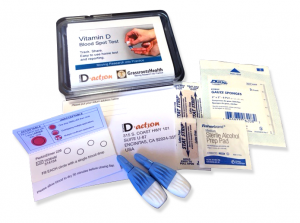
Did you know that each of the above can be measured at home using a simple blood spot test? As part of our ongoing research project, you can order your home blood spot test kit to get your levels, followed by education and steps to take to help you reach your optimal target levels. Start by enrolling and ordering your kit to measure each of the above important markers, and make sure you are getting enough of each to support better mood and wellbeing!
Create your custom home test kit today. Take steps to improve the status of each of these measurements to benefit your overall health. With measurement you can then determine how much is needed and steps to achieve your goals. You can also track your own intakes, symptoms and results to see what works best for YOU.
Enroll in D*action and Test Your Levels Today! Use code SUNMONTH25 for 10% off during May 2025, plus get the Sunshine eBook for FREE with your test kit purchase.
How Can You Use this Information for YOUR Health?
Having and maintaining healthy vitamin D and other nutrient levels can help improve your health now and for your future. Measuring is the only way to make sure you are getting enough!
STEP 1 Order your at-home blood spot test kit to measure vitamin D and other nutrients of concern to you, such as omega-3s, magnesium, essential and toxic elements (zinc, copper, selenium, lead, cadmium, mercury); include hsCRP as a marker of inflammation or HbA1c for blood sugar health
STEP 2 Answer the online questionnaire as part of the GrassrootsHealth study
STEP 3 Using our educational materials and tools (such as our dose calculators), assess your results to determine if you are in your desired target range or if actions should be taken to get there
STEP 4 After 3-6 months of implementing your changes, re-test to see if you have achieved your target level(s)