

Published on June 15, 2026
A New Study Reveals How Vitamin D May Help Restore Immune Balance and Help Heal the Gut
Key Points
- Twelve weeks of vitamin D supplementation significantly improved disease activity and reduced intestinal inflammation in patients with Crohn’s disease and ulcerative colitis.
- Vitamin D increased protective IgA-coated gut bacteria while reducing pro-inflammatory IgG-coated bacteria, suggesting improved immune tolerance to the microbiome.
- Beneficial bacteria associated with short-chain fatty acid production, including Blautia and Lachnospiraceae, became more prominent following vitamin D treatment.
- Vitamin D increased regulatory B and T cells that help control inflammation and maintain immune balance within the gut.

Inflammatory bowel disease (IBD), including Crohn’s disease and ulcerative colitis, is characterized by chronic inflammation of the digestive tract and an inappropriate immune response to the gut microbiome. While vitamin D deficiency has long been associated with worse outcomes in IBD, researchers have not fully understood exactly how vitamin D influences the relationship between the immune system and the trillions of microbes that inhabit the gut.
A new study by Gubatan et al. provides some of the most detailed evidence to date that vitamin D may help restore immune tolerance to the gut microbiome by reshaping immune-microbe interactions, promoting beneficial bacteria and increasing specialized immune cells that help keep inflammation under control.
What Did the Researchers Study?
The study followed 48 adults with IBD, 56% of whom had ulcerative colitis and 44% with Crohn disease. All participants had low vitamin D levels, with an average baseline level of 18 ng/ml. They then received 50,000 IU of vitamin D weekly for 12 weeks.
Researchers used advanced “multi-omics” techniques – a comprehensive approach that combines multiple layers of biological data, including the gut microbiome, immune cells, gene expression, antibody responses, and immune receptor profiles – to examine how vitamin D influences complex interactions throughout the body. By integrating these different datasets, researchers were able to investigate not only changes in vitamin D levels and disease activity, but also how vitamin D affects communication between gut bacteria and the immune system. They examined changes in:
- Vitamin D status
- Disease activity
- Intestinal inflammation
- Gut bacteria
- Immune cell populations
- Communication pathways between immune cells and microbes
Vitamin D Improved Disease Activity, Reduced Inflammation, and Changed Immune System/Gut Bacteria Interactions
After 12 weeks, participants experienced:
- An average increase of approximately 20 ng/mL in serum 25(OH)D levels
- Significant reductions in disease activity scores
- A substantial decrease in fecal calprotectin, a marker of intestinal inflammation
- Improved quality-of-life scores
One of the most important findings involved two antibodies: Immunoglobulin A (IgA) and Immunoglobulin G (IgG). IgA is considered a protective antibody in the gut. It helps maintain peaceful coexistence between the immune system and beneficial microbes while supporting intestinal barrier function. IgG, on the other hand, is often associated with inflammation. Increased IgG coating of gut bacteria has been linked to disease activity and inflammatory responses in IBD.
The researchers found that vitamin D:
- Increased IgA-coated bacteria by nearly 18%
- Decreased IgG-coated bacteria by over 9%
- Increased both stool and blood IgA levels
This suggests that vitamin D may help shift the immune response away from inflammation and toward tolerance and regulation.
Vitamin D Favored Beneficial Gut Bacteria
The study also found that vitamin D altered which bacteria were targeted by immune antibodies. Vitamin D increased IgA binding to bacteria such as:
- Blautia
- Members of the Lachnospiraceae family
- Other Firmicutes associated with gut health
These bacteria are known for producing beneficial compounds such as short-chain fatty acids (SCFAs), including butyrate, which help:
- Nourish intestinal cells
- Support the gut barrier
- Reduce inflammation
- Promote immune regulation
At the same time, vitamin D reduced immune targeting of potentially problematic bacteria, including members of the Proteobacteria group and Enterococcaceae family, which have been associated with intestinal inflammation and disease severity in IBD.
Vitamin D Appears to Strengthen Immune Tolerance
Perhaps the most intriguing findings involved the immune system itself. The researchers discovered that vitamin D increased communication between plasmacytoid dendritic cells and B cells through a signaling pathway known as BAFF (B-cell Activating Factor). This pathway helps stimulate the production of IgA antibodies and supports immune tolerance within the gut. Laboratory experiments confirmed that vitamin D, together with these dendritic cells, increased the formation of IgA-producing B cells and specialized regulatory B cells. These cells help suppress excessive immune responses and maintain balance within the intestinal environment.
Vitamin D also increased populations of regulatory immune cells that are specifically programmed to travel to the gastrointestinal tract. These included:
- Regulatory B cells (Bregs)
- Regulatory T cells (Tregs)
- Other gut-homing immune cell populations expressing α4β7, a molecule that helps immune cells migrate into intestinal tissue
Regulatory immune cells act as the body’s “peacekeepers,” helping prevent excessive inflammation and inappropriate immune attacks against beneficial microbes. Notably, some of these regulatory cell populations were associated with lower disease activity and lower levels of inflammatory markers.
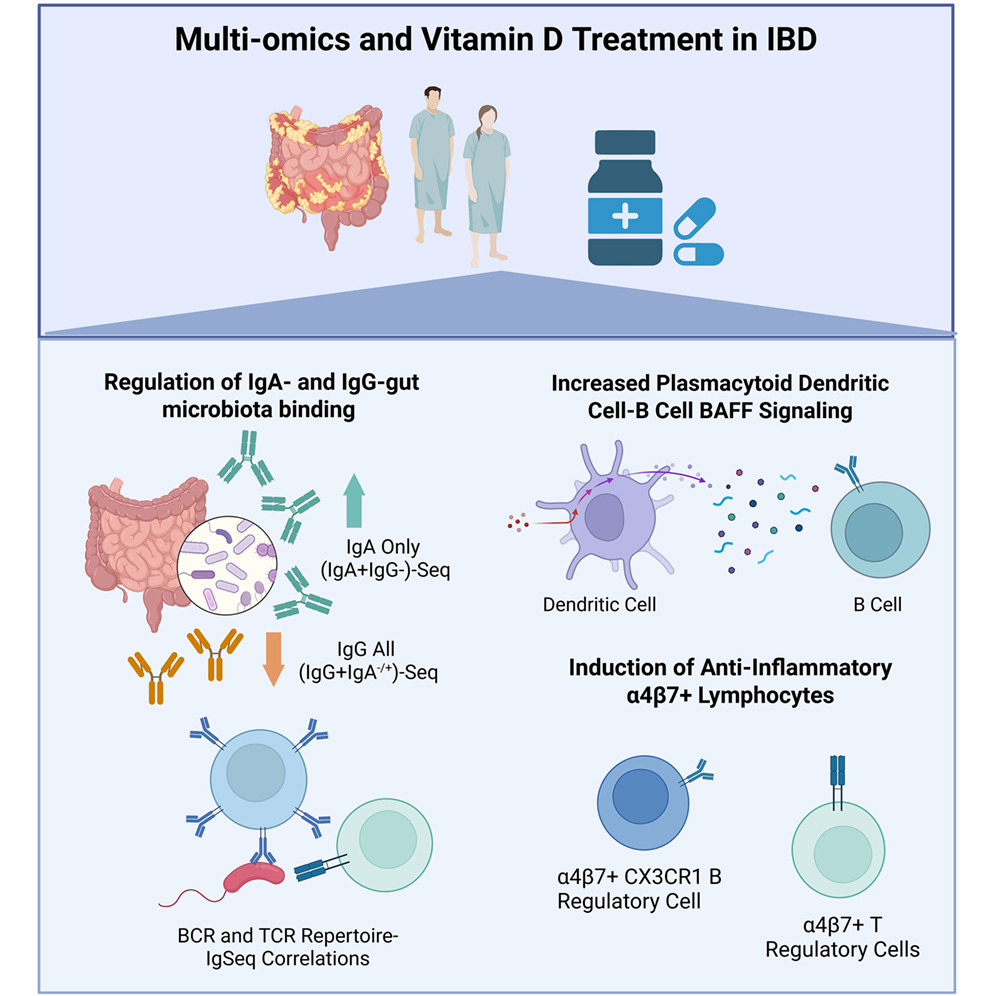
The study’s graphical abstract above summarizes its central finding: vitamin D acts at the intersection of the immune system and the gut microbiome. It illustrates how vitamin D increases protective IgA-coated bacteria while reducing pro-inflammatory IgG-coated bacteria, enhances BAFF signaling between dendritic cells and B cells, and promotes the development of gut-homing regulatory B and T cells. Together, these changes appear to support immune tolerance and help restore balance within the intestinal environment.
“Overall, our results reveal a strategy to regulate immune tolerance to gut microbiota in IBD and provides a foundation for manipulating host immune-microbe interactions to boost immune tolerance and address a critical component in the pathogenesis of IBD.”
What Does This Mean for People with IBD and for Overall Gut Health?
These findings suggest that correcting vitamin D deficiency may help address one of the underlying drivers of IBD, the breakdown of immune tolerance to the gut microbiome, by helping to create a healthier intestinal environment and potentially improve long-term disease control.
And although this study focused on individuals with IBD, the findings may have broader implications. Vitamin D receptors are found throughout the immune system and intestinal tract. Previous research has suggested that vitamin D influences:
- Gut barrier integrity
- Production of antimicrobial peptides
- Immune tolerance
- Microbial diversity
- Inflammatory signaling pathways
The current study provides additional evidence that vitamin D may help shape a healthier microbiome by encouraging beneficial bacteria while reducing immune responses directed against potentially inflammatory microbes. Researchers also observed changes in microbial metabolic pathways, including pathways related to short-chain fatty acid production, amino acid metabolism, and bile acid metabolism, all processes that influence immune function, metabolism, and gastrointestinal health.
The Bottom Line
In patients with inflammatory bowel disease, vitamin D appeared to reshape the relationship between the immune system and the gut microbiome, promoting beneficial bacteria, increasing immune tolerance, and reducing markers of inflammation. As researchers continue to uncover the many ways vitamin D influences human health, these findings add to a growing body of evidence suggesting that maintaining optimal vitamin D status may be an important component of supporting both immune function and gastrointestinal health.
Measuring Your Level is Important… Are You Getting Enough Vitamin D?
The only way to know is to test your levels! Testing versus blind supplementation is essential to know for sure if what you are taking is the right amount for you. Once you test your vitamin D (and other levels) to know where you are NOW, you can account for any upcoming changes in lifestyle over the coming months and adjust your intake to reach (or maintain) your targets.
 Measure your:
- Vitamin D
- Magnesium PLUS Elements
- Omega-3 Fatty Acids
- hsCRP
- HbA1c
- TSH
- Type 1 Diabetes Autoantibodies
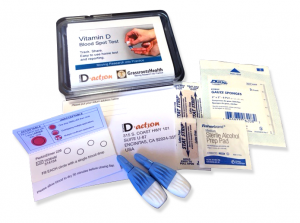
Did you know that each of the above can be measured at home using a simple blood spot test? As part of our ongoing research project, you can order your home blood spot test kit to get your levels, followed by education and steps to take to help you reach your optimal target levels. Start by enrolling and ordering your kit to measure each of the above important markers, and make sure you are getting enough of each to support better mood and wellbeing!
Create your custom home test kit today. Take steps to improve the status of each of these measurements to benefit your overall health. With measurement you can then determine how much is needed and steps to achieve your goals. You can also track your own intakes, symptoms and results to see what works best for YOU.
Enroll in D*action and Test Your Levels Today! Use code SUNMONTH25 for 10% off during May 2025, plus get the Sunshine eBook for FREE with your test kit purchase.
How Can You Use this Information for YOUR Health?
Having and maintaining healthy vitamin D and other nutrient levels can help improve your health now and for your future. Measuring is the only way to make sure you are getting enough!
STEP 1 Order your at-home blood spot test kit to measure vitamin D and other nutrients of concern to you, such as omega-3s, magnesium, essential and toxic elements (zinc, copper, selenium, lead, cadmium, mercury); include hsCRP as a marker of inflammation or HbA1c for blood sugar health
STEP 2 Answer the online questionnaire as part of the GrassrootsHealth study
STEP 3 Using our educational materials and tools (such as our dose calculators), assess your results to determine if you are in your desired target range or if actions should be taken to get there
STEP 4 After 3-6 months of implementing your changes, re-test to see if you have achieved your target level(s)