

Published on January 19, 2026

New Study Concludes: Checking and fixing vitamin D levels may help those who are at risk of getting type 2 diabetes delay or avoid getting it
Key Points
- Diabetes and prediabetes are widespread in the U.S., affecting over 30 million people with diabetes and 84 million with prediabetes, many of whom are undiagnosed.
- Prior research shows vitamin D plays a protective role, with higher vitamin D levels linked to reduced risk of insulin resistance, type 2 diabetes, and cardiometabolic disease.
- A new 2025 study found low vitamin D is very common in prediabetes, with about 77% of participants being deficient or insufficient.
- Lower vitamin D levels were associated with worse blood sugar control, including higher glucose, higher HbA1c, and greater insulin resistance, independent of body weight.
 In the United States, diabetes affects more than 30 million people, with Type 2 diabetes accounting for 90-95% of cases. Additionally, more than a third of US adults (84 million) have prediabetes, and many people with diabetes don’t even know they have it (25% of those with diabetes and 90% of those with prediabetes).
Learn more about the research by joining us for our Vitamin D Study Hour tomorrow with Dr. Barbara Boucher! Access the registration link or submit your questions for Dr. Boucher here.
Findings From Previous Research
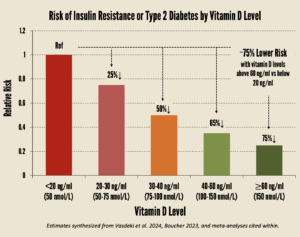
Several studies have clearly demonstrated that achieving and maintaining optimal vitamin D levels helps prevent insulin resistance, type 2 diabetes, and cardiovascular disease, some of which are referenced in the featured infographic below:
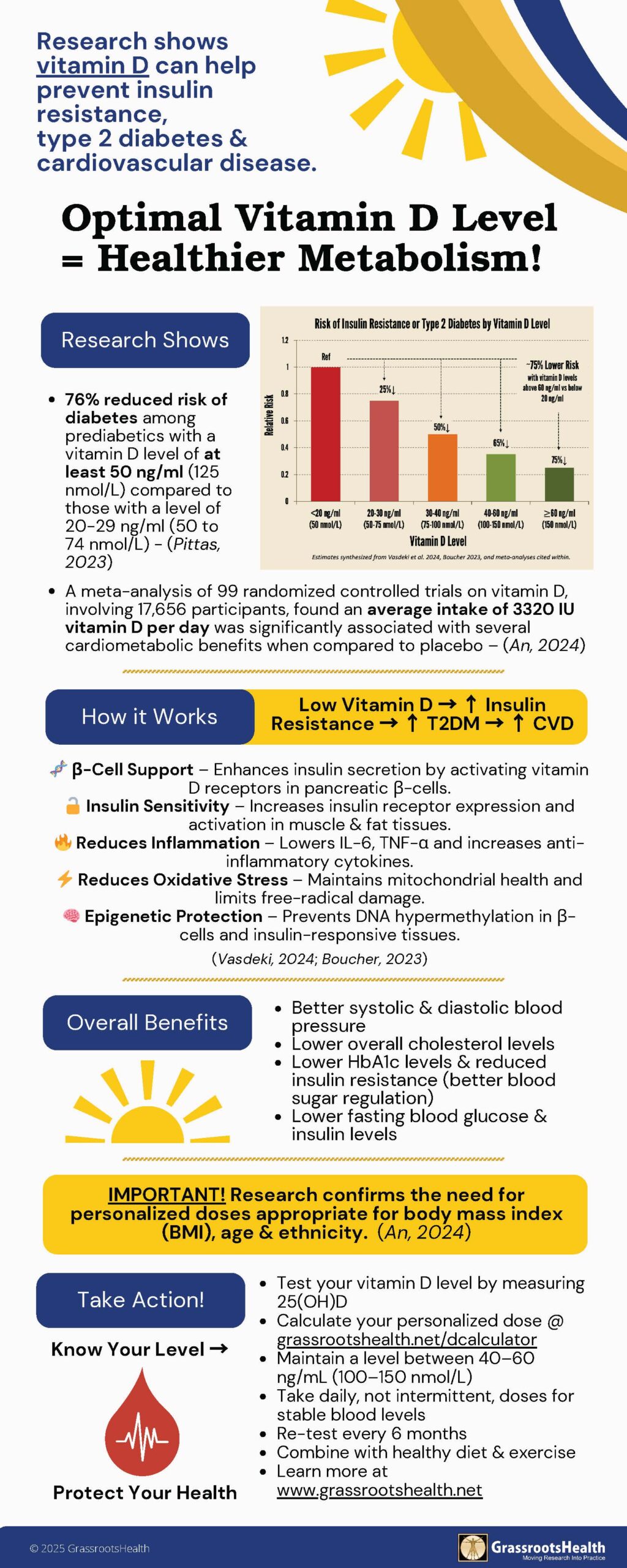
For example,
- A 76% reduced risk of diabetes was found among individuals with prediabetes who maintained a vitamin D blood level of at least 50 ng/ml (125 nmol/L) compared to those with a vitamin D level of 20-29 ng/ml (50 to 74 nmol/L) – Pittas (2023)
- A meta-analysis of 99 randomized controlled trials on vitamin D, involving 17,656 participants, found an average intake of 3320 IU vitamin D per day was significantly associated with several cardiometabolic benefits when compared to placebo – An (2024)
Learn more about the research by joining us for our Vitamin D Study Hour tomorrow with Dr. Barbara Boucher! Access the registration link or submit your questions for Dr. Boucher here.
A New Study Confirms: Lower Vitamin D Levels Associated with Worse Blood Sugar Health
A new cross-sectional analytical study, published in December of 2025 by Wathore et al., examined the association between serum vitamin D levels and glycemic status in adults with prediabetes. Prediabetes is a reversible stage of impaired glucose metabolism; when properly addressed, the transition into diabetes can be prevented.
The study included 120 adults aged 30–60 years with HbA1c values between 5.7% and 6.4%, classified as vitamin D deficient (below 20 ng/ml), insufficient (20-29 ng/ml), or sufficient (30 ng/ml or higher) based on serum 25-hydroxyvitamin D concentrations.
Results showed that vitamin D deficiency and insufficiency were highly prevalent and were associated with significantly poorer glycemic markers, including higher fasting blood glucose, elevated HbA1c, and greater insulin resistance measured by HOMA-IR, compared with individuals who had sufficient vitamin D levels. Specifically, they found
- A high prevalence of low vitamin D: Nearly 77% of prediabetic participants were either vitamin D deficient (40%) or insufficient (36.7%).
- Worse glycemic control with lower vitamin D: Individuals with deficient or insufficient vitamin D levels had significantly higher fasting blood glucose and HbA1c compared with those who were vitamin D sufficient.
- Higher insulin resistance with lower vitamin D: HOMA-IR values increased progressively as vitamin D status declined, indicating greater insulin resistance in those with lower serum 25(OH)D levels.
- An inverse relationship with HbA1c: Serum 25(OH)D levels were moderately and significantly inversely correlated with HbA1c (r ≈ −0.41), suggesting better long-term glycemic control at higher vitamin D levels.
Findings independent of body weight: No significant association was found between vitamin D levels and BMI, indicating the observed glycemic effects were not driven by differences in body mass.
The authors conclude,
“A lack of vitamin D is strongly linked to poor blood sugar management in persons who are prediabetic. Checking and fixing vitamin D levels may help those who are at risk of getting type 2 diabetes delay or avoid getting it.”
How Are Your Levels of the Above??
Check your vitamin D, omega-3, HbA1c and magnesium levels today as part of the vitamin D*action project, and add the Ratios for more about how to balance your Omega-3s and 6s for better inflammation control.

Measure your:
- Vitamin D
- Magnesium PLUS Elements
- Omega-3 Fatty Acids
- hsCRP (for Inflammation)
- HbA1c (for Blood Sugar)
- and more
Did you know that each of the above can be measured at home using a simple blood spot test? As part of our ongoing research project, you can order your home blood spot test kit to get your levels, followed by education and steps to take to help you reach your optimal target levels. Start by enrolling and ordering your kit to measure each of the above important markers, and make sure you are getting enough of each to support better mood and wellbeing!
Build your custom kit here – be sure to include your Omega-3 Index along with your vitamin D.
Start Here to Measure Your Levels
How Can You Use this Information for YOUR Health?
Having and maintaining healthy vitamin D and other nutrient levels can help improve your health now and for your future. Measuring is the only way to make sure you are getting enough!
STEP 1 Order your at-home blood spot test kit to measure vitamin D and other nutrients of concern to you, such as omega-3s, magnesium, essential and toxic elements (zinc, copper, selenium, lead, cadmium, mercury); include hsCRP as a marker of inflammation or HbA1c for blood sugar health
STEP 2 Answer the online questionnaire as part of the GrassrootsHealth study
STEP 3 Using our educational materials and tools (such as our dose calculators), assess your results to determine if you are in your desired target range or if actions should be taken to get there
STEP 4 After 3-6 months of implementing your changes, re-test to see if you have achieved your target level(s)
You may also like
 Should You be Decreasing Your Omega-6 Intake while also Increasing Omega-3s?
 Vitamin D, Glutathione, and NAC: Important Relationships to Pay Attention To
 Defining Optimal Levels and Doses of Vitamin D for Every Individual
 Hypertension in the GrassrootsHealth Cohort: Demographics and Vitamin D Status