

Academic and Public Impact Behind a Nutrients Top Paper
FOR IMMEDIATE RELEASE
Orthomolecular Medicine News Service, September 14, 2025
By Richard Z. Cheng, M.D., Ph.D., Bill Grant, Ph.D., Sunil Wimalawansa, M.D., Ph.D., Pawel Pludowski, Ph.D., and Barbara Boucher, M.D.
An Unusual Milestone
Published in January 2025, our recent paper(1), shown below (Figure 1), in Nutrients has already achieved 36,490 views and over 3,482 downloads in just eight months – far above the journal’s average. By academic standards, this qualifies as “viral.”

Figure 1. Publication details of the Nutrients paper: “Vitamin D: Evidence-Based Health Benefits and Recommendations for Population Guidelines”(January 2025).
Since then, we have expanded the discussion regarding cardiovascular disease in a second paper(2). This is especially timely, since Mendelian Randomization is now considered a form of observational study – showing that our earlier approach was aligned with the evolving scientific consensus.
This achievement reflects not only strong attention from the scientific community, but also broad cross-disciplinary and public engagement. More importantly, it lays a foundation for the global recognition of Integrative Orthomolecular Medicine (IOM).
Introduction: Context and Controversy
It was written as a response to the seriously flawed (and conflated) new Endocrine Society Clinical Practice Guidelines for vitamin D(3), which disavowed the 2011 Guidelines by a committee led by Michael Holick(4). The new guidelines were based on randomized controlled trials (RCTs). The Endocrine Society Guidelines indicate that the only people needing vitamin D supplementation were those 1 to 18 years, pregnant women, those with high-risk prediabetes, and those 75 years or older. This paper overlooked the fact that RCTs are not the proper way to evaluate any micronutrient, and for other ages and health outcomes were not properly designed, conducted, or analyzed, whether by intention or otherwise.
In our review, we took the point of view that observational studies should be considered the best available evidence in the absence of evidence from RCTs. We then determined the top ten causes of death in the US and examined the evidence from observational studies. We found reasonably strong evidence for eight of the ten causes of death.
As for citations, here are the numbers. The Demay et al. paper has 310 Google Scholar citations and 201 SCOPUS citations. Our paper has the highest number of citations among the 310 papers that cited it: 41 Google Scholar and 31 SCOPUS citations. It is also the second-highest cited paper published in Nutrients in 2025. Holick’s paper has 8,512 SCOPUS citations, including 604 in 2024, 381 in 2025, and 14,766 Google Scholar citations, including 991 in 2024 and 581 in 2025. (Google Scholar includes many sources for citations while SCOPUS is limited to journals recognized by Elsevier from more than 7,000 publishers.)
Thus, the Demay et al. paper can be considered just another example of the application of the “Disinformation Playbook”to discredit vitamin D by Big Pharma(5).
What the Numbers Mean
1. Views (36,490)
- What it is: How many times the article webpage was opened.
- Why it matters: A few thousand views in the first year is already strong for Nutrients. Surpassing 36,000 in eight months is exceptional.
- Figure 2 shows the steady growth in article views, reaching 36,490 by early September 2025.

Figure 2. MDPI official metrics graph showing article views, surpassing 36,000 by September 2025
2. Downloads (>3,482)
- What it is: Full-text access for reading, citing, or teaching.
- Why it matters: Downloads are a stronger measure of engagement. A 10:1 view-to-download ratio is excellent, showing genuine reader interest.
3. Standing Among Peers
- Average paper: A few thousand views, a few hundred downloads in the first year.
- This paper: Roughly 10× higher, putting it in the journal’s top tier.
4. Journal Prestige
- Nutrients is a leading international, peer-reviewed journal in nutrition research.
- Visibility here signals both popularity and influence across nutrition and medicine.
5. Beyond Citations
- Citations take time.
- Early indicators like views and downloads reveal discoverability, cross-disciplinary interest, and even media traction.
- In fact, the paper has already been cited numerous times in other international studies, as shown in Figure 3.

Figure 3. MDPI citation alert showing recent citations of our Vitamin D paper, including systematic reviews and clinical analyses (September 2025).
Why It Matters for IOM
Numbers alone do not tell the whole story. The extraordinary attention this paper has received suggests something larger: a worldwide hunger for credible, evidence-based nutritional strategies.
For decades, Integrative Orthomolecular Medicine (IOM) has emphasized nutrition, detoxification, and metabolic balance as root-cause approaches to health. These results show that the international community – researchers, clinicians, journalists, and the public – is ready to listen.
Summary
In only eight months, this article has reached over 36,000 views and 3,400 downloads – an outstanding level of engagement in academic publishing.
More importantly, this “authoritative journal + viral readership”effect highlights growing recognition of IOM as a credible, global medical approach. The message is clear: nutrition-centered medicine is stepping into the spotlight.
 Explore full metrics here:
 MDPI Metrics Page
About the Authors
Richard Z. Cheng, M.D., Ph.D. – Editor-in-Chief, Orthomolecular Medicine News Service; Integrative Oncology; Co-founder, Society of International Metabolic Oncology (SIMO)
William B. Grant, Ph.D. – Director, SUNARC; Global Expert on Vitamin D and Population Health
Sunil J. Wimalawansa, M.D., Ph.D., MBA, DSc – Professor of Medicine, Clinical Endocrinologist & Human Hutrition; Clinical Trialist; Global Health Policy Advisor, and former advisor to the World Health Organization and multiple other national health ministries
Pawel Pludowski, Ph.D. – Professor of Pediatrics and Laboratory Medicine at the Children’s Memorial Health Institute, Warsaw, Poland; internationally recognized researcher on vitamin D metabolism, diagnostics, and clinical applications.
Barbara J. Boucher, M.D. – Emeritus Professor of Metabolic Medicine at Queen Mary University of London; clinical researcher specializing in vitamin D, diabetes, and metabolic bone disease.
References below.
Nutritional Medicine is Orthomolecular Medicine
Orthomolecular medicine uses safe, effective nutritional therapy to fight illness. For more information: http://www.orthomolecular.org
Subscribe for free at http://orthomolecular.org/subscribe.html or visit the OMNS archive link at http://orthomolecular.org/resources/omns/index.shtml.
Find a Doctor
To locate an orthomolecular physician near you: http://orthomolecular.org/resources/omns/v06n09.shtml
The peer-reviewed Orthomolecular Medicine News Service is a non-profit and non-commercial informational resource.
Measure Your Levels Today – Save 15% with Code OMEGA3S

Create your custom home blood spot kit to help determine if you are getting enough of the following nutrients shown to benefit overall health, along with other measures, including:
 Vitamin D
- Omega-3 Index plus Omega-3:Omega-6 and AA:EPA Ratios
- Magnesium (plus Zinc, Copper, Selenium, Lead, Cadmium & Mercury)
- hsCRP
- HbA1c
- Type 1 Diabetes Autoantibodies
- TSH
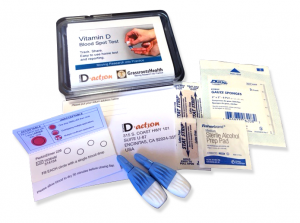 Vitamin D
Enroll and test your levels today, learn what steps to take to improve your status of omega-3s, vitamin D and other nutrients and blood markers, and take action! By enrolling in the GrassrootsHealth projects, you are not only contributing valuable information to everyone, you are also gaining knowledge about how you could improve your own health through measuring and tracking your nutrient status, and educating yourself on how to improve it.
Enroll in D*action and Test Your Levels Today!
References:
1. Grant WB, Wimalawansa SJ, Pludowski P, Cheng RZ. Vitamin D: Evidence-Based Health Benefits and Recommendations for Population Guidelines. Nutrients. 2025 Jan;17(2):277.
2. Grant WB, Boucher BJ, Cheng RZ, Pludowski P, Wimalawansa SJ. Vitamin D and Cardiovascular Health: A Narrative Review of Risk Reduction Evidence. Nutrients. 2025 Jan;17(13):2102.
3. Demay MB, Pittas A, Bikle DD. Vitamin D for the Prevention of Disease: An Endocrine Society Clinical Practice Guideline – PubMed [Internet]. [cited 2024 Sept 6]. Available from: https://pubmed.ncbi.nlm.nih.gov/38828931/
4. Holick MF, Binkley NC, Bischoff-Ferrari HA, Gordon CM, Hanley DA, Heaney RP, et al. Evaluation, treatment, and prevention of vitamin D deficiency: an Endocrine Society clinical practice guideline. J Clin Endocrinol Metab. 2011 July;96(7):1911-30.
5. Grant WB. Vitamin D acceptance delayed by Big Pharma following the Disinformation Playbook. Orthomolecular Medicine News Service [Internet]. 2018 Oct 1;14(22). Available from: https://orthomolecular.org/resources/omns/v14n22.shtml
Orthomolecular Medicine
Orthomolecular medicine uses safe, effective nutritional therapy to fight illness. For more information: http://www.orthomolecular.org
Find a Doctor
To locate an orthomolecular physician near you: http://orthomolecular.org/resources/omns/v06n09.shtml
The peer-reviewed Orthomolecular Medicine News Service is a non-profit and non-commercial informational resource.