

Published on February 17, 2026
A Statistical Oversight with Global Health Consequences
Key Points
- The official vitamin D RDA (600 IU/day in the U.S. and 400 IU/day in the UK) is far too low.
- A statistical error, confusing population averages with individual requirements, led to a dramatic underestimation of true needs.
- Correct analysis suggests that up to 8,895 IU/day may be required to ensure 97.5% of individuals reach a minimum healthy blood level of vitamin D.
- Vitamin D deficiency is associated with increased risks far beyond bone health, including immune dysfunction, cancer, diabetes, and cognitive decline.
- GrassrootsHealth has been raising awareness of this error and presenting data-driven alternatives for more than a decade!
 Vitamin D has long been recognized as essential for bone health, immune function, and chronic disease prevention. Yet despite decades of research, official recommendations for daily vitamin D intake remain way too low… so low, in fact, that they leave a large portion of the population deficient.
In a December 7, 2025 video, Dr. John Campbell brought renewed attention to what he describes as a “schoolboy error” in the calculation of the Recommended Dietary Allowance (RDA) for vitamin D, an error that has gone uncorrected for more than a decade.
For the GrassrootsHealth community, however, this is not breaking news. This statistical mistake and its serious public health implications, has been documented, analyzed, and communicated by GrassrootsHealth scientists (such as Dr. Michael Holick, featured in the following video) for years. What is new is that this issue is finally receiving broader public and professional attention.
WATCH DR. CAMPBELL’S VIDEO
The Heart of the Error: “Average vs. Individual”
When the U.S. Institute of Medicine (IOM), now the National Academy of Medicine, established the vitamin D RDA, the goal was to ensure that 97.5% of the population would reach a serum 25(OH)D level of at least 20 ng/ml (50 nmol/L).
The problem lies in how that calculation was made.
Instead of analyzing individual participant data from vitamin D supplementation studies, the IOM averaged results at the study level. This “average of averages” approach smoothed out natural biological variation and led to a false sense of adequacy.
Dr. Campbell explains this with a simple analogy: if the average score in a classroom is a passing grade, that does not mean every student passed. To ensure nearly everyone succeeds, individual performance not averages must be considered.
GrassrootsHealth scientists identified and documented this exact issue years ago, including in the blog written by Dr. Robert Heaney, “IOM Miscalculated the RDA for Vitamin D”, which clearly explains how this statistical oversight led to an RDA that fails most individuals.
How Big Is the Mistake?
When the same data are analyzed correctly at the individual level, the results are startling:
- 600 IU/day raises serum vitamin D to only 10.7 ng/mL (26.8 nmol/L) for 97.5% of people well below sufficiency.
- To ensure nearly everyone reaches 20 ng/ml, intake may need to be as high as 8,895 IU/day.
That means:
- The U.S. RDA may be nearly 15 times too low
- The UK RDA may be more than 22 times too low
GrassrootsHealth data have long supported this conclusion, showing that much higher intakes are required to reliably achieve and maintain healthy vitamin D levels across diverse populations.
Not New Science, Just Long Ignored
This next video, a recording of our Vitamin D Study Hour with Dr. Michael Holick titled Practical Uses of Vitamin D for Disease Prevention, reviews decades of vitamin D research as well as the history and shortcomings of the RDA and Endocrine Society’s guidelines for vitamin D. Dr. Holick clearly outlines the evidence showing the strong link between vitamin D levels and reduced risk of many chronic diseases, including diabetes, infectious diseases, autoimmune conditions, and cancer. Yet, even with significant decreases in disease risk, these outcomes are not reflected in many current public health guidelines. Dr. Holick explains how this all evolved.
WATCH DR. HOLICK’S VITAMIN D STUDY HOUR
GrassrootsHealth and our panel of scientists have consistently challenged low official recommendations, publishing analyses and population data that demonstrate their inadequacy:
- “Current Recommendations Are Too Low” highlights how existing guidelines fail to prevent deficiency.
- “GrassrootsHealth Data Supports Much Higher Intake of Vitamin D Than the Current RDA” presents real-world evidence from thousands of participants.
- “Big Mistake by the IOM” explains the origin and consequences of the RDA miscalculation in accessible terms.
For over a decade, these findings have been available to policymakers, clinicians, and researchers. Unfortunately, they have been largely overlooked.
Why This Matters for Public Health
Vitamin D deficiency is not limited to bone health concerns. Low vitamin D status has been associated with:
- Increased fracture risk and bone disease
- Higher incidence of certain cancers, including colorectal and prostate cancer
- Elevated risk of type 1 and type 2 diabetes
- Impaired immune function
- Greater risk of cognitive decline and dementia
- Much more…
In countries like Canada, where average dietary intake is only 232 IU/day, and in northern regions where winter sun exposure is minimal, deficiency is widespread. Similar challenges exist across the UK and much of Europe. These realities underscore why relying on outdated RDAs has real consequences for population health.
Growing Attention
In addition to Dr. Campbell’s widely viewed video, this issue has recently gained further attention, including in a detailed Substack article published by Popular Rationalism. Together, these voices reflect a growing recognition that vitamin D guidelines are overdue for correction.
This renewed attention validates what GrassrootsHealth researchers and participants have known for years: the science has been clear yet policy remains in the Dark Ages.
What Should Be Done Now?
Correcting the vitamin D RDA is not merely an academic exercise. It is a public health necessity. GrassrootsHealth continues to advocate for:
- Evidence-based vitamin D intake recommendations
- Testing serum 25(OH)D levels with a target level of 40-60 ng/ml (100-150 nmol/L) to guide individualized supplementation
- Public health policies that reflect biological variability and current evidence
Until official guidelines are updated, individuals, especially those with limited sun exposure, may benefit from testing their vitamin D levels and working with GrassrootsHealth and others in the vitamin D community to determine appropriate intake.
Conclusion
A simple statistical error has contributed to decades of inadequate guidance, leaving millions unknowingly deficient. The time to fix the problem and its resulting health consequences is well overdue.
GrassrootsHealth has been sounding this alarm for over ten years. With growing public and professional awareness, there is renewed hope that health authorities will finally act. Correcting this mistake could improve immune health, reduce chronic disease risk, and enhance quality of life worldwide. The science is clear. The data are strong. The time to update vitamin D recommendations is NOW.

Measure Your Vitamin D and Other Important Nutrients
If you haven’t had your vitamin D levels checked recently, now is the time! With so many Americans still falling short, awareness is the first step toward change.
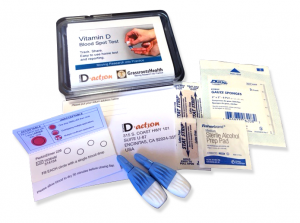
Measuring and calculating a supplementation amount to help reach and maintain a target level, or taking loading doses to correct deficiency faster, could possibly make all the difference in overall health, wellbeing, and how a current disease situation progresses. Test your level now!
Create your custom home blood spot kit by adding any of the following measurements, along with your vitamin D:
- Omega-3 Index (with or without Ratios AA:EPA and Omega-6:Omega-3)
- Magnesium (with additional Elements copper, zinc, selenium, mercury, and cadmium)
- hsCRP as a marker of inflammation and HbA1c as a marker of blood sugar health
Having and maintaining healthy vitamin D levels and other nutrient levels can help improve your health, now and for the future. Enroll and test your levels today, learn what steps to take to improve your status of vitamin D (see below) and other nutrients and blood markers, and take action! By enrolling in the GrassrootsHealth projects, you are not only contributing valuable information to everyone, you are also gaining knowledge about how you could improve your own health through measuring and tracking your nutrient status, and educating yourself on how to improve it.
How Can You Use this Information for YOUR Health?
Having and maintaining healthy vitamin D and other nutrient levels can help improve your health now and for your future. Measuring is the only way to make sure you are getting enough!
STEP 1 Order your at-home blood spot test kit to measure vitamin D and other nutrients of concern to you, such as omega-3s, magnesium, essential and toxic elements (zinc, copper, selenium, lead, cadmium, mercury); include hsCRP as a marker of inflammation or HbA1c for blood sugar health
STEP 2 Answer the online questionnaire as part of the GrassrootsHealth study
STEP 3 Using our educational materials and tools (such as our dose calculators), assess your results to determine if you are in your desired target range or if actions should be taken to get there
STEP 4 After 3-6 months of implementing your changes, re-test to see if you have achieved your target level(s)