

Published on May 7, 2026

Rethinking the Health Consequences of Indoor and Shift Work
Key Points
- A GrassrootsHealth study showed how nurses and nursing students are at high risk for vitamin D deficiency due to limited sun exposure.
- Indoor healthcare environments may unintentionally create biological light deficiency by limiting both sunlight exposure during the day and healthy circadian rhythms at night.
- Shift work and rotating schedules can disrupt natural light-dark cycles linked to sleep quality, mood, energy, recovery, and long-term health.
- Vitamin D deficiency among nurses may influence not only personal health, but also workplace performance, resilience, and patient safety.
- Supporting safe sunlight exposure and optimal vitamin D status may represent one of the simplest and most cost-effective opportunities to improve healthcare workforce wellness.
by Beth S. Sanford, DNP, RN, Director of Education and Clinical Practice at GrassrootsHealth
 Sunshine Month is a time to recognize the powerful role sunlight plays in human health while inviting an important question:
What happens when a profession is built around being indoors?
During Nurses Week (May 6th to May 12th), we celebrate the dedication and sacrifice of nurses. And since it is also Sunshine Month, we are given an opportunity to ask how healthcare systems can better support the health of the workforce itself with opportunities for exposure to daylight.
For nurses and nursing students, limited sun exposure is not incidental, it is structural. Modern healthcare environments are highly artificial from a biological perspective, with long hours under fluorescent lighting, limited daylight exposure, overnight shifts, and minimal time outdoors. Meanwhile, human physiology evolved in close relationship with natural light-dark cycles and regular sunlight exposure. Long work hours, extra shifts, indoor environments, night or rotating schedules, and irregular sleeping patterns reduce opportunities for the healthcare workforce to receive meaningful sunlight exposure. Over time, this pattern leads to sunshine deficiency, identified by lower vitamin D levels and a largely unrecognized and underappreciated occupational health risk.
Sunlight, Vitamin D, and Cellular Health
Sunlight, specifically ultraviolet B (UVB) radiation, is the body’s primary source of vitamin D. When UVB rays reach the skin, they initiate vitamin D synthesis, supporting:
- DNA health and repair
- Circadian rhythm
- Immune regulation
- Neuromuscular function
- Cognitive and mental well-being
- Physical performance and stamina
Importantly, vitamin D production from the sun depends on timing, duration, skin exposure, and individual factors such as skin type, latitude, and season.
Findings From Our Nurses Study: A Workforce Below Optimal Levels
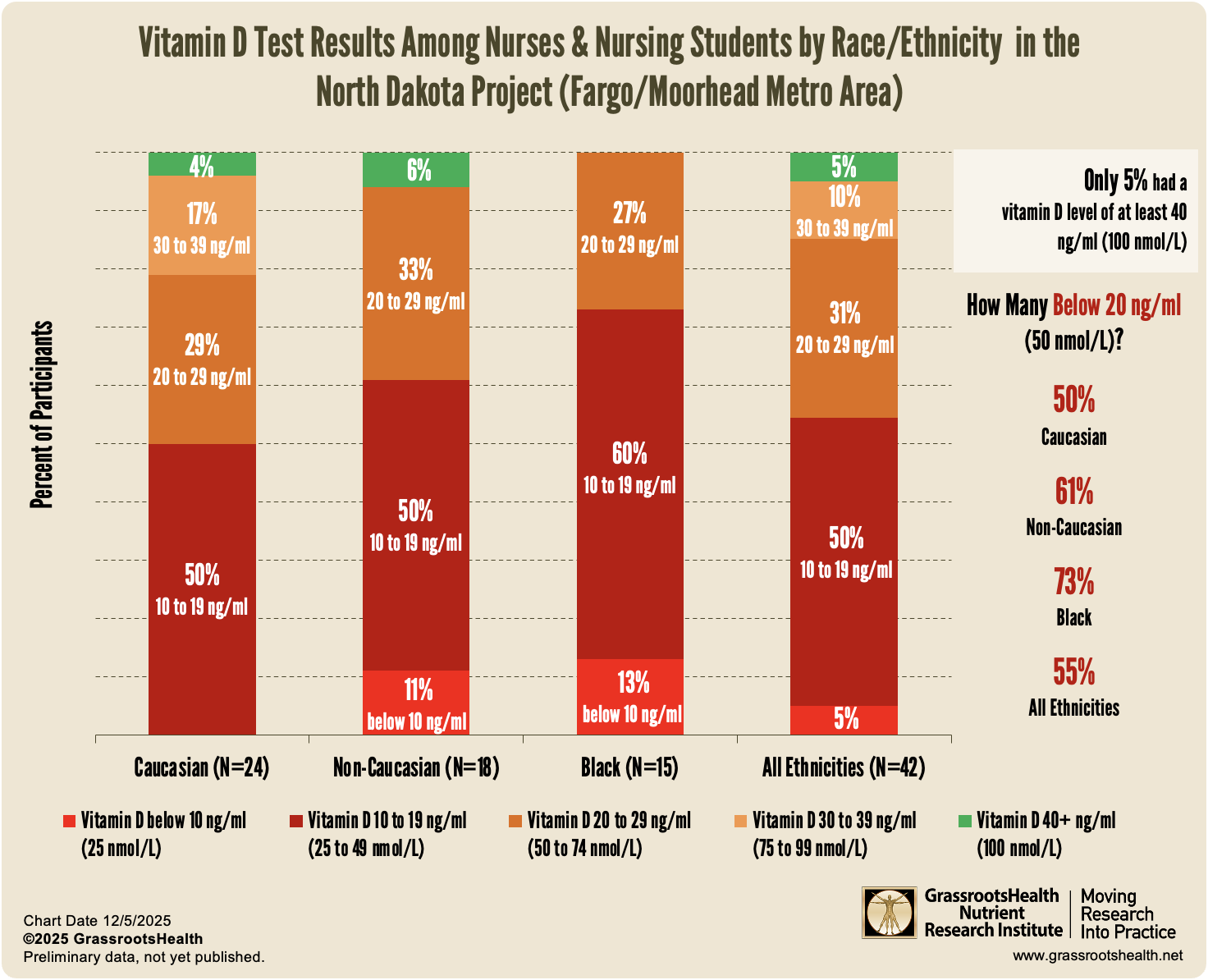
In our pilot study of nurses and nursing students (n=42), we found the following:
- Average vitamin D level: 20.7 ng/mL
- 55% deficient (<20 ng/mL)
- 41% insufficient (20–39 ng/mL)
Notably, disparities were observed across groups: Black participants had the lowest average vitamin D levels (16.2 ng/mL), compared to 22.6 ng/mL among Caucasian participants. Both were well below optimal levels, but with Black participants at even greater risk.
Equity Insight: Lower vitamin D levels among individuals with darker skin highlight the need for personalized strategies in both nursing workforce and student health.
These findings are consistent with global research demonstrating high rates of deficiency among nurses, healthcare workers, and college/healthcare students (Hattapornsawan et al., 2012; Beloyartseva et al., 2012; Mahdy et al., 2010; Sowah et al., 2017; Cress et al., 2015).
Occupation Influences Risk of Sunlight and Vitamin D Deficiency
Should certain occupations have specific guidelines and recommendations when it comes to sun exposure and vitamin D? Several studies suggest so.
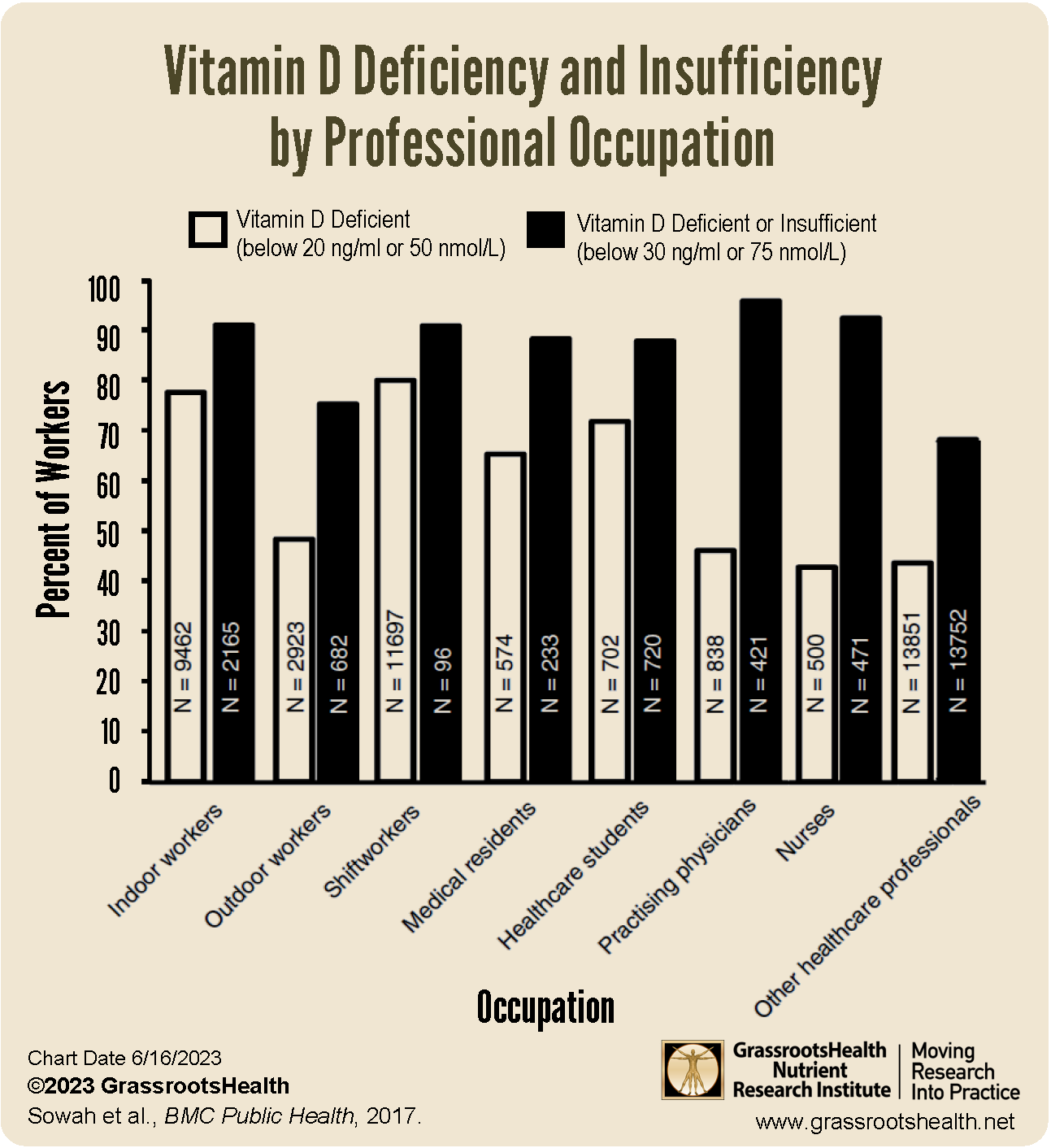
A large systematic review by Sowah et al. (2017) examining vitamin D status across different occupations found that indoor and shift-based professions consistently carried the highest risk for vitamin D deficiency. Among all occupations studied, deficiency rates were highest in shift workers (80%) and indoor workers (78%), while outdoor workers had significantly higher vitamin D levels overall. Healthcare professionals were also identified as a particularly vulnerable group, with deficiency rates reported in 72% of healthcare students, 65% of medical residents, and 43% of nurses. These findings reinforce the idea that occupational patterns, especially long hours indoors, rotating night shifts, and reduced daylight exposure, can substantially limit sunlight-derived vitamin D production and contribute to chronically low vitamin D levels, as well as additional health deficits resulting from a lack of exposure to sunlight.
These findings suggest that sunlight exposure and vitamin D optimization should be considered an important component of occupational wellness strategies for healthcare workers and other predominantly indoor professions.
Sunlight Deficiency is Much More than Vitamin D Deficiency
Sunlight is much more than a source of vitamin D; natural light during the day is a biological signal that helps regulate circadian rhythm, sleep-wake cycles, mood, metabolism, cognitive alertness, and cellular function. For nurses working long indoor hours or rotating shifts, reduced exposure to natural daylight may contribute to a broader form of biological light deficiency beyond vitamin D deficiency.
“Sunlight is not only a source of vitamin D – it is a fundamental regulator of time, biology, and mental health.” Dr. Alexander Wunsch
Additionally, human health depends not only on exposure to daylight, but also on exposure to true nighttime darkness, which supports melatonin production and cellular repair processes. Disruption of these natural light-dark cycles, common among shift workers, healthcare professionals, and individuals exposed to artificial light late into the evening, has been associated with increased risks of sleep disturbances, depression, anxiety, fatigue, burnout, and broader mental and physical health challenges – many of which are highly prevalent among nurses.
Why This Gap Matters for Performance and Learning
Vitamin D and sunlight deficiency are not only long-term health issues; both affect day-to-day function, performance, and resilience. Low 25(OH)D serum concentrations and vitamin D deficiency have been associated with:
- Reduced cognitive performance (Bartali et al., 2014)
- Student academic stress and poor academic performance (Almuqbil et al., 2023; AlZahrani & Oommen, 2022; Hassan et al., 2023; Kusmiyati et al., 2020)
- Depression and mood disturbances (Bahnam et al., 2016; Almuqbil et al., 2023)
- Pain (Madani et al., 2014; Masoudi Alavi, et al., 2015b)
- Fatigue (Khamis et al., 2020; Masoudi Alavi et al., 2015)
- Reduced physical performance and increased musculoskeletal injuries (Yoon et al., 2021)
- Poor health-related quality of life (Khamis et al., 2020)
- Decreased feelings of self-efficacy (AlZahrani & Oommen, 2022)
For nurses, this may influence:
- Focus and clinical decision-making in high-stress environments
- Emotional resilience and burnout
- Physical stamina
- Workplace injuries
- Patient safety
- Medication errors
In addition, for new nurses and nursing students, the implications extend into learning success:
- Memory and recall, essential for mastering complex clinical knowledge
- Concentration and learning efficiency
- Academic progression and readiness for practice
Optimizing vitamin D may be one of the simplest ways to support both nurse performance and student success.
Burnout, fatigue, staffing shortages, and workforce retention remain major challenges across healthcare systems. While these issues are complex, supporting biological resilience through measurable and modifiable factors such as vitamin D status may represent a simple but overlooked opportunity to support workforce well-being. For shift workers, natural daylight is often missing completely, yet it is one of the body’s primary regulators of circadian rhythm, influencing sleep quality, cortisol balance, energy levels, mood, and cognitive performance. In other words, chronic disruption of normal light exposure patterns may compound fatigue, burnout, and impaired recovery.
A Missed Opportunity
 Workforce and student health strategies often focus on hydration, ergonomics, and infection prevention, but rarely include sunlight exposure or vitamin D status. Fortunately, increasing sunlight exposure and vitamin D levels is easily modifiable, measurable and treatable. This makes it one of the most practical and scalable opportunities for improving workforce and academic health.
What Can Be Done?
For Individuals (Nurses and Nursing Students)
- Spend safe, intentional time in the sun, particularly during mid-day hours when UVB is available
- Avoid sunburn while allowing adequate exposure for vitamin D production
- Understand your personal risk factors (skin type, schedule, geography) and don’t burn your skin
- Get tested to determine your current vitamin D level and if you are getting enough from sunshine exposure – test through your healthcare provider or with a home blood spot test through grassrootshealth.net (as part of our D*action study) or checkyourd.org
- Use evidence-based supplementation when needed
- Reassess levels periodically to maintain optimal status
Start with personalized tools:
- Discover your personalized risk of vitamin D deficiency and insufficiency with our short Vitamin D Deficiency Risk Assessment Quiz
- Order your home vitamin D test at grassrootshealth.net or checkyourd.org
- Calculate your personalized dose of vitamin D with our Vitamin D*Calculator
For Employers and Nursing Programs
Healthcare organizations and academic institutions have a unique opportunity to address this modifiable risk factor:
- Incorporate vitamin D and sunlight education into wellness programs and curricula
- Provide access to routine vitamin D testing, especially for shift workers
- Integrate vitamin D and exposure to daylight into fatigue, burnout, and workforce well-being initiatives
- Support evidence-based supplementation guidance
- Include vitamin D metrics in quality improvement efforts
Employers: Encouraging sensible and intelligent sunshine exposure along with vitamin D optimization may be some of the simplest, most cost-effective strategies available to support workforce health, performance, and retention.
A Call to Action
Sunshine Month reminds us that sunlight is not just environmental; it is a biological necessity. For nurses and nursing students, limited sun exposure is not a lifestyle choice, it is an occupational reality. Recognizing this allows us to take meaningful action.
Nurses spend their careers caring for others during some of life’s most difficult moments, often while sacrificing their own opportunities for rest, recovery, and time outdoors in natural light. Recognizing the importance of sunlight and vitamin D is one small but meaningful way to support the health of the healthcare workforce itself. Our study highlights a clear and actionable issue:
When nurses and nursing students lack sunlight, they lack vitamin D – a simple, measurable, and modifiable biological factor with meaningful implications for individual health, workforce performance, and patient safety.
Bringing sunlight and its downstream health effects back into the conversation represents a practical and powerful step toward improving both workforce well-being and overall health.
About the Author
 Dr. Beth Sanford completed her Doctor of Nursing Practice from Rasmussen University with a specialty in Public Health and Policy, focusing on vitamin D translational research. Beth has served vulnerable populations inside and outside the USA since 1996. Currently, she is nursing faculty in the graduate nursing department at Galen College of Nursing. She obtained a post-graduate certificate in Applied Clinical Nutrition to better educate colleagues, patients, and the public about the principles of integrative nutrition. Beth is the lead investigator for GrassrootsHealth’s North Dakota Vitamin D project, and she is serving as the President of the North Dakota Nurses Association and North Dakota Center for Nursing. She advocates for health equity and vitamin D awareness, and volunteers mentoring new nurses and nursing students. Dr. Sanford became passionate about sunlight, vitamin D and population health after her daughter experienced a health crisis accompanied by extremely low vitamin D serum concentrations. You can read more about her research here: Beth SANFORD | Director of Education and Clinical Practice | Doctor of Nursing Practice | Research | Research profile
To learn more about the study, read the study abstract here: (PDF) Vitamin D Status Among Nurses and Nursing Students in a Northern Midwest State: A Pilot Study
Make Sure You Are Getting Enough of Both Sunshine & Vitamin D
It is important to incorporate safe, sensible sun exposure into a regular routine, just as it is important to make sure you are getting enough vitamin D. Because the sun produces many health-benefiting molecules in addition to vitamin D, sunshine exposure cannot be replaced with taking a supplement.
It is also important not to stop supplementing with vitamin D during the summer. Most people do not make enough vitamin D from sunshine alone, due to their lifestyle and other factors, and therefore must rely on supplementation to maintain optimal vitamin D levels of 40-60 ng/ml (100-150 nmol/L).

This Sunshine Month, get 10% off your home blood spot test kits PLUS the free Sunshine eBook when using the code SUNMONTH26 at checkout. Or, save on 2 Vitamin D test kits (for before and after summer sun) plus the Sunshine eBook with our Sunshine Month Bundle here!
Measure Your Vitamin D Level Today
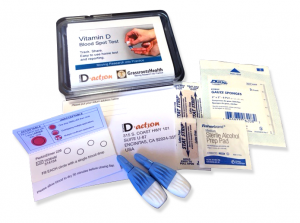 Having and maintaining healthy vitamin D levels and other nutrient levels can help improve your health now and for your future. Choose which additional nutrients to measure, such as your omega-3s and essential minerals including magnesium and zinc, by creating your custom home test kit today. Take steps to improve the status of each of these measurements to benefit your overall health. With measurement you can then determine how much is needed and steps to achieve your goals. You can also track your own intakes, symptoms and results to see what works best for YOU.
Enroll in D*action and Test Your Levels Today!
References
Almuqbil, M., Almadani, M. E., Albraiki, S. A., Alamri, A. M., Alshehri, A., Alghamdi, A., … & Asdaq, S. M. B. (2023, July). Impact of vitamin D deficiency on mental health in university students: a cross-sectional study. In Healthcare (Vol. 11, No. 14, p. 2097). MDPI.
AlZahrani, W. I., & Oommen, A. (2023). Role of vitamin D in the academic performance of health sciences students in Saudi Arabia. Arab Gulf Journal of Scientific Research, 41(1), 40-47.
Bahnam, B., Semnani, V., Hadadnia, F., & Mirmohammadkhani, M. (2016). Vitamin D serum levels in nurses and its association with depression. Koomesh, 17(2), e151347.
Bartali, B., Devore, E., Grodstein, F., & Kang, J. H. (2014). Plasma vitamin D levels and cognitive function in aging women: The Nurses’ Health Study. The Journal of Nutrition, Health & Aging, 18(4), 400–406. https://doi.org/10.1007/s12603-013-0409-9
Beloyartseva, M., Mithal, A., Kaur, P., Kalra, S., Baruah, M. P., Mukhopadhyay, S., Bantwal, G., & Bandgar, T. R. (2012). Widespread vitamin D deficiency among Indian health care professionals. Archives of Osteoporosis, 7(1–2), 187–192. https://doi.org/10.1007/s11657-012-0096-x
Cress, E. M., & Stiles, M. M. (2015). Vitamin D status of college students: Implications for health leaders [Poster presentation]. Journal of the Academy of Nutrition and Dietetics, 115(9 Suppl 2), A43. https://www.jandonline.org/article/S2212-2672(15)00833-3/fulltext
Gao, F., Zhang, X., Wang, X., Zhang, J., Wang, F., Zhou, Y., Wang, J., Li, X., & Zhang, R. (2024). High prevalence and risk factors associated with vitamin D deficiency among Chinese hospital staff: A cross-sectional study. International Journal of General Medicine, 17, 1833–1843. https://doi.org/10.2147/IJGM.S453473
Hassan, A.A.; Elbashir, M.I.; Al-Nafeesah, A.; AlEed, A.; Adam, I. Association between Serum 25-Hydroxyvitamin D Concentrations and Academic Performance among Adolescent Schoolchildren: A Cross-Sectional Study. Nutrients 2023, 15, 4552. https://doi.org/10.3390/nu15214552
Hattapornsawan, Y., Pangsuwan, S., Ongphiphadhanakul, B., & Udomsubpayakul, U. (2012). Prevalence of vitamin D deficiency in nurses at a hospital in Thailand. Journal of the Medical Association of Thailand, 95(12), 1569–1574.
Jadoon, A. K., Sohail, F., Jadoon, S. K., & Jadoon, A. (2020). Vitamin D deficiency among doctors and staff nurses: A neglected domain among medical care givers. Pakistan Journal of Public Health, 9(4), 190–192. https://doi.org/10.32413/pjph.v9i4.457
Khamis, E., Hemdan, G., & Dabou, E. (2020). Influence of Vitamin D Level on Self-Perceived Fatigue, Body Mass Index and Health Related Quality of Life among Female Nurses in Two Governorates. Egyptian Journal of Nursing and Health Sciences, 1(Second Issue), 18-47. doi: 10.21608/ejnhs.2020.115931
Lehnert, M., Beine, A., Burek, K., Putzke, S., Schlösser, S., Pallapies, D., Brüning, T., Behrens, T., & Rabstein, S. (2018). Vitamin D supply in shift working nurses. Chronobiology International, 35(9), 1213–1221. https://doi.org/10.1080/07420528.2018.1472053
Madani, M., Masoudi Alavi, N., & Taghizadeh, M. (2014). Non-Specific Musculoskeletal Pain and Vitamin D Deficiency in Female Nurses in Kashan, Iran. Journal of Musculoskeletal Pain, 22(3), 268–274. https://doi.org/10.3109/10582452.2014.907858
Mahdy, S. M., Al-Emadi, S. A., Khanjar, I. A., Hammoudeh, M. M., Sarakbi, H. A., Siam, A. R., & Abdelrahman, M. O. (2010). Vitamin D status in health care professionals in Qatar. Saudi Medical Journal, 31(1), 74–77.
Masoudi Alavi, N., Madani, M., Sadat, Z., Haddad Kashani, H., & Sharif, M. R. (2015). Fatigue and vitamin D status in Iranian female nurses. Global Journal of Health Science, 8(6), 196–203. https://doi.org/10.5539/gjhs.v8n6p196
Masoudi Alavi, N., Madani, M., Taghizadeh, M., & Sharif, M. R. (2015). Vitamin D supplementation in female nurses: The effects on serum 25-hydroxyvitamin D, and non-specific musculoskeletal pain. Journal of Musculoskeletal Research, 18(2), 1550008. https://doi.org/10.1142/S0218957715500086
Sanford, B. S., Aliano, J. L., Omary, C. S., McDonnell, S. L., Kimball, S. M., & Grant, W. B. (2023). Exposure to a Vitamin D Best Practices Toolkit, Model, and E-Tools Increases Knowledge, Confidence, and the Translation of Research to Public Health and Practice. Nutrients, 15(11), 2446. https://doi.org/10.3390/nu15112446
Sowah, D., Fan, X., Dennett, L., Hagtvedt, R., & Straube, S. (2017). Vitamin D levels and deficiency with different occupations: A systematic review. BMC Public Health, 17, 519. https://doi.org/10.1186/s12889-017-4436-z
Yoon, S., Kwon, O., & Kim, J. (2021). Vitamin D in athletes: focus on physical performance and musculoskeletal injuries. Physical activity and nutrition, 25(2), 20–25. https://doi.org/10.20463/pan.2021.0011
How Can You Use this Information for YOUR Health?
Having and maintaining healthy vitamin D and other nutrient levels can help improve your health now and for your future. Measuring is the only way to make sure you are getting enough!
STEP 1 Order your at-home blood spot test kit to measure vitamin D and other nutrients of concern to you, such as omega-3s, magnesium, essential and toxic elements (zinc, copper, selenium, lead, cadmium, mercury); include hsCRP as a marker of inflammation or HbA1c for blood sugar health
STEP 2 Answer the online questionnaire as part of the GrassrootsHealth study
STEP 3 Using our educational materials and tools (such as our dose calculators), assess your results to determine if you are in your desired target range or if actions should be taken to get there
STEP 4 After 3-6 months of implementing your changes, re-test to see if you have achieved your target level(s)