

Published on August 6, 2025

A new systemic review finds that vitamin D levels influences the intensity of pain, with higher levels related to better outcomes among individuals at risk of developing chronic pain
Key Points
- Studies have consistently linked vitamin D deficiency to increased levels of pain; one study found that supplementing to correct deficiency among those experiencing persistent, nonspecific musculoskeletal pain decreased the pain, suggesting that the pain could be due to vitamin D deficiency itself
- A new systematic review found that while a low vitamin D level may not directly cause the transition from acute to chronic pain, it was associated with higher pain intensity, a risk factor for chronicity; supplementing with vitamin D often reduced pain intensity and improved quality of life
- Several studies suggest that achieving a vitamin D level of at least 40 ng/ml was necessary for pain relief benefits
 Chronic pain affects approximately 30% of adults world-wide, negatively influencing quality of life, increasing the risk of disabilities, and poorly affecting social relationships. Pharmaceutical drugs often produce insufficient pain relief while also increasing the risk of side effects and addiction.
Meanwhile, vitamin D deficiency has consistently been linked to higher pain intensity, a known risk factor for chronic pain. Observational studies have found that low vitamin D levels are associated with musculoskeletal pain, myalgia, chronic lower back pain, and chronic headaches. It has also been shown that appropriate vitamin D supplementation can result in enhanced pain relief among individuals with certain pain conditions. One study showed a high risk of vitamin D deficiency among those experiencing persistent, nonspecific musculoskeletal pain; supplementation decreased pain, suggesting that the pain could be due to vitamin D deficiency itself.
Could Vitamin D Help Prevent the Development of Chronic Pain?
“…vitamin D plays an important role in pain mechanism development, with emerging evidence suggesting it influences pain perception, inflammation, and nerve function.”
Sometimes, acute pain, due to circumstances or conditions such as surgery, trauma, lower back pain, osteoarthritis, chemotherapy and radiation, can transition into long-term chronic pain. A new systematic review by Abrego-Guandique et al. (June, 2025) explored the existing published evidence to determine if there is a relationship between vitamin D levels and the transition from acute to chronic pain; 14 different studies were included in the review.
Key Findings: Vitamin D Status and Pain Transition
While low vitamin D levels may not directly cause the transition from acute to chronic pain, the study found that they are associated with higher pain intensity, a risk factor for chronicity. Specific associations include:
- Post-surgical patients with low vitamin D levels had higher acute postoperative pain and a greater risk of persistent pain at 3 months.
- Chemotherapy patients with vitamin D deficiency had a higher risk and severity of neuropathic pain (CIPN).
- Lower back pain patients with more severe vitamin D deficiency had worse outcomes, suggesting a potential link between vitamin D and chronic musculoskeletal pain.
- Inflammation: Vitamin D was inversely correlated with IL-6 levels and pain scores, especially in chronic pain patients.
Key Findings: Vitamin D Supplementation and Pain Outcomes
 Supplementation did not consistently prevent the transition from acute to chronic pain but often reduced pain intensity or improved quality of life. Appropriate doses of vitamin D were beneficial in:
- Reducing pain in aromatase inhibitor-associated musculoskeletal symptoms (AIMSS).
- Attenuating postoperative pain when combined with rehabilitation.
- Some trials found no significant effect (e.g., Niravath et al. for AI-induced arthralgia), while others suggested that achieving a vitamin D level of at least 40 ng/ml was necessary for pain relief benefits.
Overall, vitamin D levels were found to affect the intensity of pain and sufficient levels were related to better outcomes among individuals at risk of developing chronic pain. The effects of vitamin D on pain reduction are likely through its impact on pain perception and inflammation. The study also concluded that there is evidence that vitamin D plays a role in preventing some forms of persistent pain, and that vitamin D deficiency may increase the intensity of postoperative pain and increase the chances of the development of chronic conditions, such as low back pain, arthrosis, and chemotherapy neuropathy.
“…patients with vitamin D deficiency may be more prone to experiencing more severe acute and chronic persistent pain after surgery, suggesting a possible role of this hormone as a predictive marker of pain intensity.”
In conclusion, maintaining adequate vitamin D levels may improve acute pain outcomes and reduce the likelihood of chronic pain development, especially in high-risk groups like surgical and chemotherapy patients.
Make Sure You Are Getting Enough Vitamin D and Other Important Nutrients
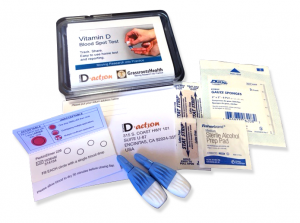
Measuring your vitamin D level and calculating a supplementation amount to help reach and maintain a target level, or taking loading doses to correct deficiency faster, could possibly make all the difference in overall health, wellbeing, and how a current disease situation progresses. Test your level now!
Create your custom home blood spot kit by adding any of the following measurements, along with your vitamin D:
- Omega-3 Index (with or without Ratios AA:EPA and Omega-6:Omega-3)
- Magnesium (with additional Elements copper, zinc, selenium, mercury, and cadmium)
- hsCRP as a marker of inflammation and HbA1c as a marker of blood sugar health
Having and maintaining healthy vitamin D levels and other nutrient levels can help improve your health, now and for the future. Enroll and test your levels today, learn what steps to take to improve your status of vitamin D (see below) and other nutrients and blood markers, and take action! By enrolling in the GrassrootsHealth projects, you are not only contributing valuable information to everyone, you are also gaining knowledge about how you could improve your own health through measuring and tracking your nutrient status, and educating yourself on how to improve it.
How Can You Use this Information for YOUR Health?
Having and maintaining healthy vitamin D and other nutrient levels can help improve your health now and for your future. Measuring is the only way to make sure you are getting enough!
STEP 1 Order your at-home blood spot test kit to measure vitamin D and other nutrients of concern to you, such as omega-3s, magnesium, essential and toxic elements (zinc, copper, selenium, lead, cadmium, mercury); include hsCRP as a marker of inflammation or HbA1c for blood sugar health
STEP 2 Answer the online questionnaire as part of the GrassrootsHealth study
STEP 3 Using our educational materials and tools (such as our dose calculators), assess your results to determine if you are in your desired target range or if actions should be taken to get there
STEP 4 After 3-6 months of implementing your changes, re-test to see if you have achieved your target level(s)