
Published on August 4, 2025
New research finds that combining omega-3 fatty acids with aerobic exercise significantly reduces menstrual pain and inflammation in young women—with no side effects.
Key Points
- Dual approach works best: Omega-3s and aerobic exercise each helped reduce period pain but combining them led to the greatest relief.
- Inflammation lowers: C-reactive protein (CRP), a key marker of inflammation, was significantly reduced in groups using omega-3s and/or exercise.
- Safe and sustainable: Both interventions are affordable, accessible, and offer wide-ranging health benefits beyond period pain.
- Evidence-based alternative: Offers a non-drug option for managing primary dysmenorrhea—especially valuable for those seeking natural or long-term solutions.
 Menstrual Pain Is Real
For millions of women, menstruation comes with more than inconvenience, it brings disabling pain. Known as primary dysmenorrhea, this monthly struggle often begins in adolescence and can persist into adulthood, affecting school, work, and quality of life.
While NSAIDs (like ibuprofen) are commonly used to manage pain, they don’t work for everyone—and long-term use isn’t ideal. That’s why this new 12-week randomized controlled trial, (Kumari et al. 2025), offers promising news: a natural, side-effect-free way to manage menstrual pain through a combination of targeted nutrition and movement.
Importantly, this research aligns with a growing body of evidence showing that nutrients like vitamin D also play a critical role in menstrual cycle health, hormone balance, and fertility. Learn more!
What did the study do?
Researchers in Kanpur, India, recruited 72 young women aged 18–25 who experienced significant monthly period pain. Participants were randomly divided into four groups:
- Control – No changes
- Exercise only – 45 minutes of aerobic exercise, 5 days per week
- Omega-3 only – 800 mg EPA/DHA, 5 days per week
- Combined – Exercise plus omega-3
At the end of the 12 weeks, the researchers measured:
- Pain intensity using the Visual Analog Scale (VAS)
- Inflammatory markers including CRP, ESR, and WBC
- Blood parameters to ensure safety
The Results Speak Volumes
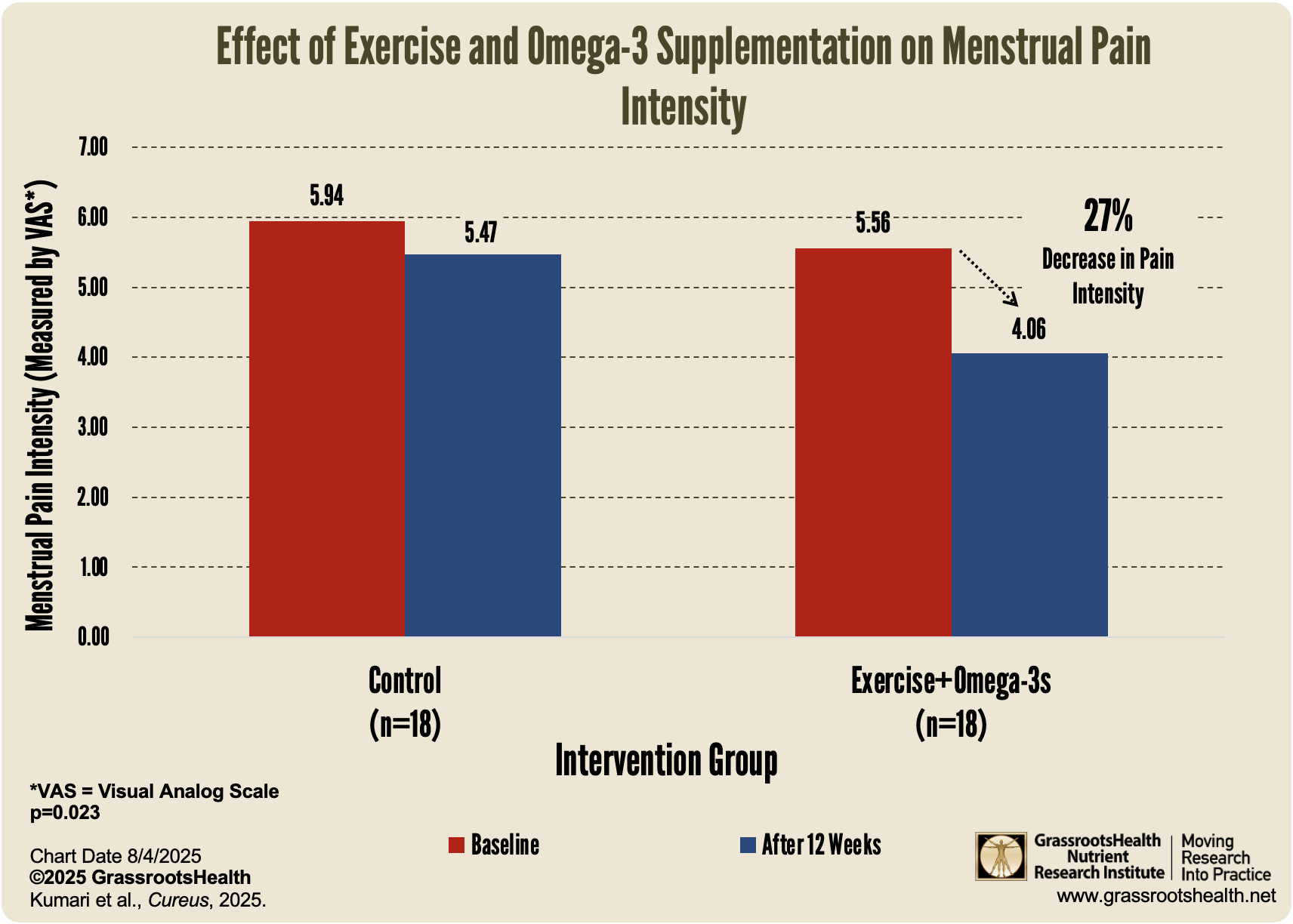
Pain reduction:
All three intervention groups experienced a meaningful reduction in pain, but the combined group had the greatest relief, more than a 25% drop in pain scores (p = 0.023). This suggests a synergistic effect when omega-3s and exercise are used together.
Inflammation lowered:
- CRP levels dropped significantly (p = 0.016), especially in the exercise and combined groups.
- WBC and ESR also showed positive trends, reflecting reduced systemic inflammation.
No adverse effects:
Important safety markers—such as hemoglobin, platelets, and other blood counts—remained stable, affirming that these strategies are safe and non-invasive.
Why Does This Work?
This approach tackles menstrual pain at its root: inflammation and prostaglandin imbalance.
- Omega-3 fatty acids (like EPA and DHA) help suppress pro-inflammatory prostaglandins that cause painful uterine contractions.
- Aerobic exercise improves blood flow, releases natural pain-relieving endorphins, and supports hormone balance.
- Together, they reduce both the trigger (inflammation) and the signal (pain perception).
This makes the combination a holistic solution—not just a patch for symptoms, but a way to address the underlying physiology of period pain.
What This Means for You (or Your Patients)
If you’re looking for science-backed, drug-free ways to manage menstrual pain, this study offers a clear, actionable path:
Daily movement
- Try brisk walking, cycling, swimming, or dance workouts.
- Aim for 45 minutes a day, 5 days per week.
Omega-3 intake
- Look for a supplement with at least 800 mg EPA/DHA, taken 5 days a week (this was the amount used in this study).
- Or increase intake of fatty fish (like salmon or sardines).
Track your cycle
- Use an app or journal to note pain levels and progress over a few cycles.
According to research, these simple, evidence-based strategies could make a real, measurable difference in just a few months.
A Broader Win for Women’s Health
This trial adds to a growing body of research showing that lifestyle interventions can be powerful tools in managing menstrual and hormonal health. As more women seek root-cause solutions and move away from one-size-fits-all treatments, the importance of personalized, nutrient-informed care has never been clearer.
Combining omega-3 fatty acids with aerobic exercise offers a safe, effective, and natural way to reduce period pain and inflammation—without side effects. It’s a smart strategy for young women looking to take control of their cycles and their health.
Measure your Omega-3 Index to make sure you are getting enough of these important fatty acids. Save 15% with code OMEGA3S.

Measure Your Levels Today – Get 15% Off when Including Your Omega-3 Index with Code OMEGA3S
Check your vitamin D, CRP, omega-3s and 6s, magnesium, and other important markers today as part of the vitamin D*action project.
Measure your:
- Vitamin D
- Magnesium PLUS Elements (including zinc, copper, selenium, mercury, cadmium and lead)
- Omega-3 Fatty Acids
- hsCRP (for Inflammation)
- HbA1c (for Blood Sugar)
- and more
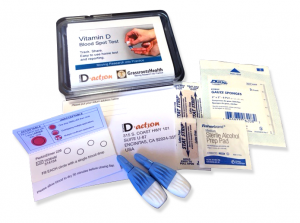
Did you know that each of the above can be measured at home using a simple blood spot test? As part of our ongoing research project, you can order your home blood spot test kit to get your levels, followed by education and steps to take to help you reach your optimal target levels. Start by enrolling and ordering your kit to measure each of the above important markers, and make sure you are getting enough of each to support better health and wellbeing!
Start Here to Measure Your Levels
How Can You Use this Information for YOUR Health?
Having and maintaining healthy vitamin D and other nutrient levels can help improve your health now and for your future. Measuring is the only way to make sure you are getting enough!
STEP 1 Order your at-home blood spot test kit to measure vitamin D and other nutrients of concern to you, such as omega-3s, magnesium, essential and toxic elements (zinc, copper, selenium, lead, cadmium, mercury); include hsCRP as a marker of inflammation or HbA1c for blood sugar health
STEP 2 Answer the online questionnaire as part of the GrassrootsHealth study
STEP 3 Using our educational materials and tools (such as our dose calculators), assess your results to determine if you are in your desired target range or if actions should be taken to get there
STEP 4 After 3-6 months of implementing your changes, re-test to see if you have achieved your target level(s)