
Published on October 21, 2025
New Study Shows Strong Association Between Vitamin D and this Debilitating Side Effect of Breast Cancer and its Treatment
Key Points
- Vitamin D plays an important role in breast cancer prevention; an estimated 75-80% of breast cancer could be due to vitamin D deficiency, and therefore easily prevented with vitamin D alone.
- Research demonstrates that it is not too late to affect cancer survival outcomes with vitamin D, even after diagnosis. In fact, one study showed that when looking at the direct relationship between vitamin D level and breast cancer fatality, the vitamin D level accounted for 97% of the variance, meaning the vitamin D level made almost all the difference.
- A new study found that 96% of women with breast cancer-related lymphedema were vitamin D deficient, compared to 72% of breast cancer patients without lymphedema and 44% of controls without breast cancer.
- Analysis of vitamin D levels showed a strong negative correlation with lymphedema severity; the lower the vitamin D, the more advanced the swelling.

Vitamin D plays an important role in breast cancer prevention; an estimated 75-80% of breast cancer could be due to vitamin D deficiency, and therefore easily prevented with vitamin D alone. Several studies, including those published using GrassrootsHealth cohort data, have demonstrated this relationship between vitamin D status and the risk of breast cancer.
Research also demonstrates that it is not too late to affect outcomes with vitamin D, even after a breast cancer diagnosis. In fact, one study showed that when looking at the direct relationship between vitamin D level and breast cancer fatality, the vitamin D level accounted for 97% of the variance. This means that when considering other factors that may influence breast cancer mortality, the vitamin D level made almost all the difference.
Another Reason Vitamin D Matters for Breast Cancer Recovery Patients
Many breast cancer survivors also face lingering and often debilitating side effects, one of them being breast cancer-related lymphedema (BCRL). This chronic swelling of the arm or chest occurs when lymphatic drainage is impaired after surgery or radiation therapy. It can cause pain, reduced mobility, and significant emotional distress. This too has been shown to be affected by vitamin D levels.
A new 2025 study published in Lymphology by Dr. Gülseren Demir Karakılıç and Dr. Melek Aykut Selçuk highlights a very significant factor in lymphedema development: vitamin D deficiency.
The study compared three groups of women (201 in each group):
- Those with breast cancer-related lymphedema (BCRL)
- Those with breast cancer but no lymphedema
- Controls without breast cancer matched by age and sex

As illustrated in the chart above,
- Women with lymphedema had the lowest vitamin D levels (average 10.5 ng/mL)
- Women with breast cancer but no lymphedema averaged 16.3 ng/mL
- Healthy women averaged 22.7 ng/mL
Nearly 96% of women with lymphedema were vitamin D deficient (<20 ng/mL), compared to 72% of breast cancer patients and 44% of women without breast cancer. In addition, vitamin D levels showed a strong negative correlation with lymphedema severity (p < 0.001); the lower the vitamin D, the more advanced the swelling.
The Science Behind It: Vitamin D’s Anti-Inflammatory Effects
Vitamin D is a powerful immune regulator and inflammation modulator. Research has shown that:
- Vitamin D helps calm chronic inflammation by reducing cytokines such as IL-6 and IL-17 while increasing anti-inflammatory cytokines like IL-10.
- It supports macrophage migration and lymphatic repair, helping restore tissue balance after cancer treatment.
- Studies have shown that women with sufficient vitamin D levels (≥40 ng/mL) have a significantly lower risk of breast cancer and better outcomes during recovery.
Animal studies cited within the study also show that calcitriol (the ‘active’ form of vitamin D) can directly reduce lymphatic inflammation and swelling, reinforcing the biological link between vitamin D and lymphatic health.
The authors conclude that hypovitaminosis D likely contributes to both breast cancer pathogenesis and lymphedema progression. They recommend that all breast cancer patients, and especially those at risk for or living with lymphedema, have their vitamin D levels tested and corrected as part of standard care.
“Therefore, it is recommended that individuals diagnosed with BC or at risk of lymphedema have their vitamin D levels checked regularly and take supplements if necessary.”
An Unfortunate Reality with a Simple Solution
The study above adds yet another piece to the growing body of evidence showing that vitamin D sufficiency is not optional, it’s essential for both prevention and recovery in breast cancer.
By simply maintaining healthy vitamin D levels, women can potentially reduce their risk of developing breast cancer, avoid lifelong side effects of treatment, support immune healing, and improve long-term quality of life.
We now have decades of research to show that:
- ≥97% of the population does not achieve the optimal vitamin D range (40–60 ng/mL or 100–150 nmol/L) without supplementation.
- Maintaining this level (an easy step for improving health outcomes) is associated with reduced incidence and improved prognosis across many chronic conditions—including many cancers.
Given that vitamin D deficiency is both common and correctable, routine testing and personalized supplementation represent one of the most cost-effective, evidence-based interventions available today. Learn more about how vitamin D fights cancer here. Test your vitamin D level and take action today.
Measure Your Vitamin D and Other Important Nutrients
If you haven’t had your vitamin D levels checked recently, now is the time! With so many Americans still falling short, awareness is the first step toward change.
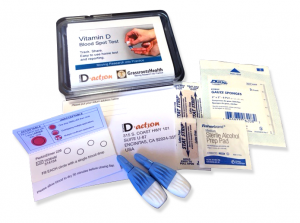
Measuring and calculating a supplementation amount to help reach and maintain a target level, or taking loading doses to correct deficiency faster, could possibly make all the difference in overall health, wellbeing, and how a current disease situation progresses. Test your level now!
Create your custom home blood spot kit by adding any of the following measurements, along with your vitamin D:
- Omega-3 Index (with or without Ratios AA:EPA and Omega-6:Omega-3)
- Magnesium (with additional Elements copper, zinc, selenium, mercury, and cadmium)
- hsCRP as a marker of inflammation and HbA1c as a marker of blood sugar health
Having and maintaining healthy vitamin D levels and other nutrient levels can help improve your health, now and for the future. Enroll and test your levels today, learn what steps to take to improve your status of vitamin D (see below) and other nutrients and blood markers, and take action! By enrolling in the GrassrootsHealth projects, you are not only contributing valuable information to everyone, you are also gaining knowledge about how you could improve your own health through measuring and tracking your nutrient status, and educating yourself on how to improve it.
How Can You Use this Information for YOUR Health?
Having and maintaining healthy vitamin D and other nutrient levels can help improve your health now and for your future. Measuring is the only way to make sure you are getting enough!
STEP 1 Order your at-home blood spot test kit to measure vitamin D and other nutrients of concern to you, such as omega-3s, magnesium, essential and toxic elements (zinc, copper, selenium, lead, cadmium, mercury); include hsCRP as a marker of inflammation or HbA1c for blood sugar health
STEP 2 Answer the online questionnaire as part of the GrassrootsHealth study
STEP 3 Using our educational materials and tools (such as our dose calculators), assess your results to determine if you are in your desired target range or if actions should be taken to get there
STEP 4 After 3-6 months of implementing your changes, re-test to see if you have achieved your target level(s)