

New research suggests inhaled vitamin D could improve treatment for respiratory disease
Key Points
- Researchers developed an inhaled form of vitamin D that delivers the nutrient directly to the lungs.
- Targeted delivery may help reduce lung inflammation while limiting effects on the rest of the body.
- The approach could improve treatment for chronic lung diseases, such as COPD and pulmonary fibrosis.
- Inhaled vitamin D may require lower doses than oral supplements because it acts directly at the site of disease.
- The findings are based on preclinical research, and more studies are needed before this treatment can be used in patients.
- This research highlights a promising new direction for vitamin D–based therapies in respiratory medicine.

(UNC School of Medicine – June 15, 2026) People with chronic lung diseases like chronic obstructive pulmonary disease (COPD), asthma, and cystic fibrosis tend to have low vitamin D levels, and these low levels are linked to worse respiratory health results. This has led to many studies looking at taking vitamin D supplements (pills taken by mouth) as a treatment for lung diseases.
Now, a new perspective, published in Chronic Obstructive Pulmonary Diseases: Journal of the COPD Foundation, argues that randomized controlled trials have consistently failed to demonstrate clinically meaningful benefits from oral vitamin D supplementation. Despite years of clinical trials and reviews, taking vitamin D supplements orally does not appear to meaningfully improve lung function, reduce flare-ups or exacerbations, or improve quality of life in people with these diseases. Although oral supplements can raise vitamin D in the blood, this is not reflected in the lung.

Kevin Schichlein, PhD, first author, postdoc in the Marsico Lung Institute
“We think the reason is that oral vitamin D gets inactivated by an enzyme in the lung’s blood vessels before it ever reaches airway tissue,” said UNC School of Medicine’s Kevin Schichlein, PhD, first author, postdoc in the Marsico Lung Institute. “Delivering it directly to the lung through inhalation could bypass that problem entirely.”
Researchers note that by placing vitamin D directly where it’s needed, in the lungs, the effects may be beneficial in the airways while reducing how much of the vitamin circulates through the rest of the body. However, clinical studies are still needed in people to see if this approach is safe, to identify the best dose, and to understand how well it actually works.
“Topical or inhaled delivery of vitamin D is already being explored for upper airway diseases with data from preclinical models and some preliminary clinical trials showing promising results,” said Ilona Jaspers, PhD, co-author, professor in Pediatrics and investigator in the Marsico Lung Institute. “Moving to the lower airways could be a logical extension of these observations.”

Ilona Jaspers, PhD, co-author, professor in Pediatrics and investigator in the Marsico Lung Institute
Across trials, oral vitamin D supplementation has shown no consistent effects on lung function, exacerbation rates, hospitalizations, or quality-of-life measures in respiratory disease patients. Meanwhile, observational studies across conditions consistently demonstrate strong associations between vitamin D deficiency and adverse outcomes, like patients with COPD showing higher hospitalization rates or those with asthma experiencing reduced lung function. Additionally, cystic fibrosis patients show associations between low vitamin D and worse respiratory outcomes. Authors share that clinical trials consistently demonstrate that taking vitamin D orally to treat these diseases fails to produce clinical benefits.
“There has been a longstanding disconnect between the established harms of vitamin D deficiency and the failure of clinical trials of oral vitamin D supplementation to improve respiratory health,” said M. Bradley Drummond, MD, co-author, professor of medicine, Division of Pulmonary Diseases and Critical Care Medicine. “We believe this disconnect may reflect a suboptimal delivery method for vitamin D rather than its overall ineffectiveness. Direct inhaled delivery of vitamin D could unlock new therapeutic opportunities for COPD and other chronic lung diseases.”
Direct Delivery to the Airway

M. Bradley Drummond, MD, co-author, professor of medicine, Division of Pulmonary Diseases and Critical Care Medicine
When vitamin D is taken by mouth, it goes to the liver where it gets processed and spreads throughout the bloodstream. Researchers propose that as vitamin D travels through the blood to the lungs, an enzyme in the lung’s blood vessel cells may inactivate it before it reaches the air spaces where it is needed. As a result, oral vitamin D might not reach the lungs in a strong enough, active form to have a meaningful therapeutic effect. Therefore, direct delivery of vitamin D to the airway, through topical or inhaled, may provide a better option for treating chronic lung disease and should be further studied.
“If inhaled vitamin D proves safe and effective in clinical trials, it could be a low-cost add-on to existing treatments for the millions of people living with chronic lung disease,” said Schichlein. “The compound itself is already well-characterized and inexpensive. The novelty comes from treating the lung as a local target rather than assuming a pill will eventually reach the lung.”
By delivering vitamin D directly into the lungs, it could possibly help reduce inflammation, strengthen the lung’s natural defenses, and potentially lessen the frequency or severity of flare‑ups in diseases like COPD. The authors emphasize the need for future clinical trials to confirm the promise seen in early preclinical research. The targeted treatment of inhaling vitamin D could give patients a safer, more effective tool to help protect their lungs and improve daily breathing.
Media Contact, Brittany Phillips, Communications Specialist, UNC Health | UNC School of Medicine
Measure Your Vitamin D Levels, Include Omegas to Save 15% with Code OMEGA3S
 Create your custom home blood spot kit to help determine if you are getting enough of the following nutrients shown to benefit overall health, along with other measures, including:
 Vitamin D
- Omega-3 Index plus Omega-3:Omega-6 and AA:EPA Ratios
- Magnesium (plus Zinc, Copper, Selenium, Lead, Cadmium & Mercury)
- hsCRP
- HbA1c
- Type 1 Diabetes Autoantibodies
- TSH
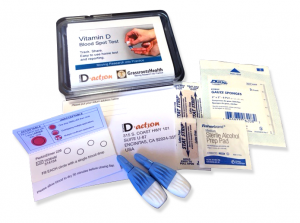 Vitamin D