

From DINOMIT to Systemic Leaky Barrier Syndrome: Honoring the legacy of Dr. Cedric Garland while advancing a systems view of vitamin D biology
Key Points
- Vitamin D functions as a master regulator of biological barrier integrity, maintaining tight junctions and protecting multiple systems including the gut, brain, lungs, and vasculature.
- The DINOMIT model links vitamin D deficiency to cancer development through loss of cellular adhesion, enabling inflammation, tumor growth, and metastasis.
- The proposed Systemic Leaky Barrier Syndrome (SLBS) expands on DINOMIT by identifying widespread barrier dysfunction as the upstream driver of chronic disease processes.
- Inadequate vitamin D leads to increased permeability across multiple barriers, allowing inflammatory and microbial factors into circulation and promoting systemic, low-grade inflammation.
- Achieving sufficient vitamin D levels (≥50 ng/mL) may significantly reduce risks of cancer, autoimmune disease, and other chronic conditions by preserving barrier integrity and immune regulation.
FOR IMMEDIATE RELEASE
Orthomolecular Medicine News Service & GrassrootsHealth, April 10, 2026
by Richard Z. Cheng, MD, PhD
Editor-in-Chief, Orthomolecular Medicine News Service (OMNS)
Cedric F. Garland, DrPH, FACE
Professor Emeritus at the University of California, San Diego
Jen Aliano, MS, CCN
Executive Director, GrassrootsHealth
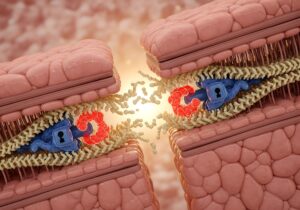 For more than two decades, Dr. Cedric Garland and colleagues including Drs. Frank C. Garland and Edward D. Gorham and their colleagues profoundly shaped our understanding of vitamin D as a central determinant of cancer risk and immune health. This line of research arose from their papers [1-4] that stimulated a need for a new model for cancer cause. The DINOMIT model, originally proposed by Dr. Cedric Garland and colleagues, describes a constellation of biological processes associated with vitamin D deficiency, including as a first or early phase: Disjunction or loss of intercellular adherence junctions, Initiation/promotion, the historic classic phases, followed by Natural selection of aggressive clones and recruitment of blood supply (neoangiogenesis), Overgrowth of the aggressive clones with penetration of basement membrane and microevolution from normal to less differentiated cellular morphology, Metastasis, and potentially, Involution of the tumor and possibly Transition to nonaggressive cellular structure upon vitamin D repletion, if vitamin D receptor is still functional in tumor tissue including micrometastases. DINOMIT provided an early integrative framework linking low vitamin D status to cancer development and progression, and remains highly influential in vitamin D research [1–4].
As vitamin D research has continued to evolve, a growing body of molecular, immunological, and clinical evidence suggests that DINOMIT captured not only downstream disease manifestations, but also a deeper upstream vulnerability: the loss of biological barrier integrity across multiple organ systems.
This article explores how recent discoveries allow us to extend and integrate DINOMIT into a broader systems framework—Systemic Leaky Barrier Syndrome (SLBS) [5] —while fully honoring Dr. Garland’s foundational insights.
DINOMIT: a prescient model ahead of its time
DINOMIT was remarkably forward-looking. It recognized that vitamin D deficiency:
- Causes loss of intercellular adhesion
- Allows rapid natural selection of highly aggressive cell lines within epithelium of many organs
- Allows aggressive cells to consume nearby normal cells (autophagy) and tumor necrosis
- Stimulates neoangiogenesis and
- Fosters colonization by tumor cells of remote tissues (metastasis) [4].
These effects of vitamin D deficiency were proposed based on epidemiologic research by Garland and colleagues, supporting laboratory research by Palmer and Muñoz [6], and made possible by the discovery of intercellular junctions [7].
Epidemiologic and mechanistic studies from the Garland group and extensive research by their scholarly independent collaborator Dr. Wiliam B. Grant [8] and other colleagues including Dr. Sharif B. Mohr [9] demonstrated inverse relationships between serum 25-hydroxyvitamin D levels and total and ultraviolet solar ultraviolet irradiance with risk or mortality from colorectal, breast, and other cancers [1–4, 6, 7]. Apperly [10] previously proposed a favorable role of sunlight on risk of cancer, although not implicating vitamin D, deficiency as the cause, and Peller [11] proposed a possible antagonism between skin cancer or irritation and cancer of internal organs. DINOMIT implicated the structural failure of tissue barriers that normally separate the internal environment from external insults as the first or early step in the cellular microevolution of normal cellular structure and function to cancer by natural selection of highly aggressive invasive clones in the primary site and metastases [4].
At the time DINOMIT was developed, the molecular biology of tight junctions, epithelial–endothelial crosstalk, and vitamin D receptor (VDR)–mediated barrier regulation was still emerging. Today, that landscape has changed dramatically.
Watch this Video Segment about DINOMIT with Dr. Garland
Vitamin D and biological barriers: what we now know
Vitamin D signaling is now recognized as a key regulator of barrier integrity across multiple systems, including:
- Intestinal epithelial barrier
- Vascular endothelium
- Blood–brain barrier
- Pulmonary epithelium
- Renal filtration barrier
- Cutaneous barrier
At the molecular level, vitamin D—via the vitamin D receptor (VDR)—regulates tight junction proteins such as claudins, occludin, and ZO-1, while also modulating antimicrobial peptide expression, immune tolerance, and inflammatory signaling [12-15].
Experimental and clinical studies demonstrate that vitamin D deficiency increases intestinal permeability (“leaky gut”), endothelial dysfunction, and blood–brain barrier disruption, while vitamin D repletion improves junctional integrity and reduces inflammatory leakage [13-16].
When vitamin D signaling is inadequate, barriers do not fail in isolation. Instead, multiple barriers become subtly permeable over time, allowing microbial products, inflammatory mediators, and oxidative stress to enter systemic circulation.
This creates a chronic, low-grade inflammatory state that closely mirrors—and helps explain—the downstream processes described in DINOMIT.
Systemic Leaky Barrier Syndrome (SLBS): an integrative extension of DINOMIT
Systemic Leaky Barrier Syndrome (SLBS) is not a replacement for DINOMIT. It is best understood as a structural and systems-level extension of it. In this framework:
- Vitamin D deficiency is an upstream driver
- Barrier dysfunction is the central organizing pathology
- DINOMIT phenomena emerge downstream as biological consequences of chronic barrier failure
Barrier-Level Interpretation of DINOMIT Component [4]
Disjunction
Loss of epithelial intercellular junctions and adhesion, leading to loss of barrier functions and loss or reduction of contact inhibition of mitosis. Loss enables immune system overactivation and inflammation.
Initiation
Classic historic mutations to DNA including activation of alleles that foster excessive mitosis and cannibalization of normal cells loss of antitumor alleles.
Natural selection
Selection at the primary tumor site of highly aggressive clones with the greatest ability to cannibalize normal cells and recruit a blood supply (autophagy and neoangiogenesis).
Overgrowth
Aggressive clones continue to outcompete normal cells for recruitment of blood supply, penetrate the basement membrane, and invade the nearby stroma, With time they may convert to more mesenchymal morphology, and enter the lymphatic circulation. Penetration of the basement membrane is the hallmark of a tumor becoming cancer.
Metastasis
Aggressive cancer cells colonize remote tissues. Epithelial, endothelial and extracellular matrix barriers are compromised. Structure and function of the targeted organ are destroyed, potentially resulting in death.
Involution
If vitamin D receptor alleles survive in the tumor and metastases, intercellular adherence and contact inhibition of division of some tumor cells may be restored. If so, growth of the primary cancer and metastases might be reduced or blocked. This could potentially cause involution of the cancer.
Transition
If involution persists, highly aggressive cancer cells may die off due to inadequate blood supply to support their high metabolic needs, potentially causing transition from active cancer to scarring of the tissues and long-term control of the cancer.
Drs. Edward D. Gorham, Frank and Cedric Garland and colleagues also performed studies that advanced [17-20] the idea proposed by Hypponen et al. [21] that vitamin D deficiency is the principal cause of Type 1 diabetes. Gorham and the Garland group developed the DIAB model for the causal sequence of Type 1 diabetes [22] that is in harmony with the SLBS leaky membrane model. The DIAB model asserted that Type 1 diabetes is principally a result of loss of intercellular junctions due to vitamin D deficiency, followed by invasion by pathogens and killer T-lymphocytes of the pancreatic beta cells.
The steps proposed in the model were Decoupling of cells of the barrier membrane that surrounds and protects the insulin-producing pancreatic beta cells, Invasion of various enteric viruses through the leaky barrier, Autoimmune attack by killer T-lymphocytes against beta cells followed by Beta cell death, ultimately preventing production of insulin. This was among the first models to suggest the role of a leaky membrane in cells surrounding the beta cells due to vitamin D deficiency in the etiology of Type 1 diabetes.
Seen this way, DINOMIT describes what happens, while SLBS helps explain why it happens systemically.
Why this matters clinically
Understanding vitamin D through a barrier-centered lens has practical implications:
1. Cancer prevention
Vitamin D sufficiency may stabilize epithelial and endothelial barriers long before malignant transformation occurs, reducing inflammatory and angiogenic signaling that supports tumor development [1–4].
2. Autoimmune and inflammatory diseases
Autoimmune conditions frequently involve barrier dysfunction (gut, brain, skin). Vitamin D’s role in maintaining immune tolerance at barrier surfaces provides a unifying explanation for its association with multiple autoimmune diseases [15, 16, 23, 24].
3. Aging and chronic disease
Barrier permeability increases with age, contributing to systemic inflammation (“inflammaging”). Vitamin D insufficiency accelerates this process, while repletion may slow barrier degradation [15, 16, 23, 24].
4. Beyond single-organ thinking
SLBS explains why vitamin D deficiency is associated with multiple chronic diseases rather than one isolated condition.
Honoring Dr. Garland’s legacy
Dr. Garland’s work anticipated much of what systems biology is now confirming. DINOMIT remains a landmark conceptual model—one that correctly identified vitamin D deficiency as a root biological vulnerability, not a mere association. The DINOMIT and SLBS models suggest that research should be done toward discovery of other compounds, including solar photoproducts and calcium, in addition to vitamin D and its metabolites that could stimulate intercellular adherence and help prevent adverse natural selection of aggressive tumor cells and reduce metastasis.
In the meantime, research by the Garland group and others suggests that increasing the population 25(OH)D concentration to no less than 50 ng/ml would substantially cut the risk of death from breast, colon, lung and several other serious cancers [25-27], Specifically it would reduce risk of death from breast cancer by 80 percent in women [26], reduce risk of Type 1 diabetes by a similar amount [17-22] and reduce risk of other diseases that are due in part to damaged membrane integrity and autoimmunity resulting from having a serum 25(OH)D concentration less than 50 ng/ml..
The SLBS framework is offered in that same spirit: to refine, integrate, and extend his insights using today’s expanded molecular and systems knowledge.
Scientific progress is cumulative. DINOMIT laid the foundation; barrier biology helps complete the architecture.
Closing thoughts
Vitamin D is not simply a nutrient, a hormone, or a cancer risk modifier. It functions as a master regulator of biological boundaries—the interfaces that determine whether health or disease emerges. By viewing DINOMIT and Systemic Leaky Barrier Syndrome together, we gain a more complete and clinically actionable understanding of vitamin D’s central role in human health.
Author note:
A peer-review-ready version of this framework has recently been submitted to the International Journal of Molecular Sciences.
The DINOMIT model was developed at the University of California San Diego School of Medicine and the Naval Health Research Center. In addition to Garland group workers named above, the research on cancer and diabetes was performed with Drs. Sharif Mohr, Raphael Cuomo, Elizabeth Barrett-Connor, Alina Burgi MPH, Dr. Joseph V. Raffa and Natalie Raffa of the University of California San Diego, Dr. William B. Grant of the Sunlight and Nutrition Research Center, San Francisco, Richard B. Shekelle and Jeremiah Stamler of the University of Chicago, and George W. Comstock of The Johns Hopkins University Bloomberg School of Public Health. Progress was encouraged by scientific support and helpful review by Dr. Edward L. Giovannucci of the Harvard University Chan School of Public Health and by Dr. Eric E. K. Gunderson, CAPT Larry M. Dean and CAPT Lawrence H. Frank of the U.S. Naval Health Research Center, San Diego. Development of the idea that vitamin D reduces risk of cancer and metastasis was encouraged from its inception by Drs. Abraham M. and David E. Lilienfeld of the Department of Epidemiology. The Johns Hopkins University School of Public Health.
References Below
Measure Your Vitamin D Levels, Include Omegas to Save 15% with Code OMEGA3S

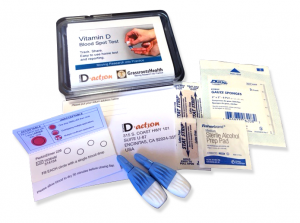
Create your custom home blood spot kit to help determine if you are getting enough of the following nutrients shown to benefit overall health, along with other measures, including:
 Vitamin D
- Omega-3 Index plus Omega-3:Omega-6 and AA:EPA Ratios
- Magnesium (plus Zinc, Copper, Selenium, Lead, Cadmium & Mercury)
- hsCRP
- HbA1c
- Type 1 Diabetes Autoantibodies
- TSH
 Vitamin D
Enroll and test your levels today, learn what steps to take to improve your status of omega-3s, vitamin D and other nutrients and blood markers, and take action! By enrolling in the GrassrootsHealth projects, you are not only contributing valuable information to everyone, you are also gaining knowledge about how you could improve your own health through measuring and tracking your nutrient status, and educating yourself on how to improve it.
Key References
1. Garland CF, Garland FC.
Do sunlight and vitamin D reduce the likelihood of colon cancer?
Int J Epidemiol. 1980.
https://academic.oup.com/ije/article/9/3/227/695873
2. Garland C, Shekelle RB, Barrett-Connor E, Criqui M, Rossof A, Paul O. Dietary vitamin D and calcium and risk of colorectal cancer: a 19-year prospective study in men. Lancet. 1985; 1: 307-9.
3. Garland C, Comstock GW, Garland FC, Helsing KJ, Shaw EK, Gorham ED. Serum 25-hydroxyvitamin D and colon cancer: eight-year prospective study. Lancet. 1989; 2: 1176-8.
4. Garland CF, Gorham ED, Mohr SB, Grant WB.
Vitamin D for cancer prevention: global perspective.
Ann Epidemiol. 2009.
https://www.sciencedirect.com/science/article/pii/S1047279709000559
5. Cheng, R. Z. Systemic Leaky Barrier Syndrome (SLBS): A Systems-Level Framework for Chronic Disease. Preprints 2026, 2026020069. https://doi.org/10.20944/preprints202602.0069.v2
6. Pálmer HG, González-Sancho JM, Espada J, Berciano MT, Puig I, Baulida J, Quintanilla M, Cano A, de Herreros AG, Lafarga M, Muñoz A. Vitamin D(3) promotes the differentiation of colon carcinoma cells by the induction of E-cadherin and the inhibition of beta-catenin signaling. J Cell Biol. 2001; 23;154(2):369-87.
7. Farquhar MG, Palade GE. Junctional complexes in various epithelia. J Cell Biol. 1963; 17(2):375-412.
8. Apperly FL. The relation of solar radiation to cancer mortality in North America. Cancer Res 1941;1:191-195.
9. Peller S, Stephenson CS. Skin irritation and cancer in the United States navy. Am J Med Sci 1937;194:326-333.
10. Grant WB, Mohr SB. Ecological studies of ultraviolet B, vitamin D and cancer since 2000. Ann Epidemiol 2009;12:014 Epub Mar 9 2009.
11. Mohr SB, Garland CF, Gorham ED, Grant WB, Garland FC. Relationship between low ultraviolet B irradiance and higher breast cancer risk in 107 countries. Breast J 2008;14: 255-60.
12. Chun RF, Liu PT, Modlin RL, Adams JS, Hewison M.
Impact of vitamin D on immune function.
Nutrients. 2014.
https://www.mdpi.com/2072-6643/6/2/250
13. Assa A, et al.
Vitamin D deficiency promotes epithelial barrier dysfunction.
Gut. 2014.
https://gut.bmj.com/content/63/4/588
14. Hewison M.
Vitamin D and immune function: autocrine, paracrine, endocrine.
J Endocrinol. 2012.
https://joe.bioscientifica.com/view/journals/joe/215/2/225.xml
15. Talmor-Barkan Y, et al.
Vitamin D and endothelial function.
J Steroid Biochem Mol Biol. 2021.
https://pubmed.ncbi.nlm.nih.gov/33647312/
16. Garcion E, et al.
Vitamin D and blood–brain barrier integrity.
Trends Endocrinol Metab. 2002.
https://pubmed.ncbi.nlm.nih.gov/12128284/
17. Mohr SB, Garland CF, Gorham ED, Garland FC. The association between ultraviolet B irradiance, vitamin D status and incidence rates of Type 1 diabetes in 51 regions worldwide. Diabetologia 2008;51:1391–98.
18. Gorham ED, Garland CF, Burgi AA, Mohr SB, Zeng K, Hofflich H, Kim J-J, Ricordi C. Lower prediagnostic serum 25-hydroxyvitamin D is associated with higher risk of insulin-requiring diabetes in the U.S. military: a nested case-control study. Diabetologia 2012;55:3224-3227.
19. Gorham ED, Garland FC, Barrett-Connor EL, Garland CF, Wingard DL, Pugh WM. Incidence of insulin-dependent diabetes mellitus in young adults: experience of 1,587,630 U.S. Navy enlisted personnel. American Journal of Epidemiology 1993;138:984-7.
20. Mohr SB, Garland FC, Garland CF, Gorham ED, Ricordi C. Is there a role of vitamin D deficiency in type 1 diabetes of children? American Journal of Preventive Medicine 2010;39(2):189-90.\
21. Hypponen E, Laara F, Reunanen A, Jarvelin MR, Virtanen SM. Intake of vitamin D and risk of type 1 diabetes: a birth cohort study. Lancet 2001;358:1500-1503.
22. Gorham ED, Garland CF, Burgi A, Mohr SB, Zeng K, Hofflich H, Ricordi C. Lower prediagnostic 25-hydroxyvitamin D concentration is associated with increased incidence of type 1 diabetes in the U. S. military: a nested case-control study. Oral presentation to the American Society for Nutrition Annual Meeting, San Diego CA 21 April 2012.
23. Aranow C.
Vitamin D and the immune system.
J Investig Med. 2011.
https://pubmed.ncbi.nlm.nih.gov/21527855/
24. Cheng RZ.
Vitamin D as a Master Regulator of Biological Barrier Integrity.
Preprints 2026.
https://doi.org/10.20944/preprints202602.0694.v1
25. McDonnell S, Baggerly C, French CB,Baggerly L, Garland CF, Gorham ED, Hollis BW, Trump D, Lappe JM. Breast cancer risk markedly lower with serum 25-hydroxyvitamin D concentrations > 60 vs < 20 ng/ml (150 vs 50 nmol/L): Pooled analysis of two randomized trials and a prospective cohort. PLoS ONE 2018;13(6): e0199265.https://journals.plos.org/plosone/article?id=10.1371/journal.pone.0199265
26. Lappe J, Watson P, Travers-Gustafson D, Recker R, Garland C, Gorham E, Baggerly K, McDonnell SL. Effect of vitamin D and calcium supplementation on cancer incidence in older women: a randomized clinical trial. JAMA. 2017 Mar 28;317(12):1234-1243. https://jamanetwork.com/journals/jama/fullarticle/2613159#156361460
27. Kim H, Giovannucci EL. Vitamin D status and cancer Incidence, survival, and mortality, Adv Exp Biol Med 2020;1268:39-52. https://link.springer.com/chapter/10.1007/978-3-030-46227-7_3#
Orthomolecular Medicine
Orthomolecular medicine uses safe, effective nutritional therapy to fight illness. For more information: http://www.orthomolecular.org
Find a Doctor
To locate an orthomolecular physician near you: http://orthomolecular.org/resources/omns/v06n09.shtml
The peer-reviewed Orthomolecular Medicine News Service is a non-profit and non-commercial informational resource.