

Published on February 19, 2026

Symptoms of low magnesium range from increased nervous system strain, reduced sleep quality, and lowered stress resilience to increased physical comfort – symptoms often attributed to other causes.
Key Points
- Magnesium shortfalls develop gradually and often go unnoticed.
- Fatigue, muscle tension, poor sleep, and stress sensitivity may indicate low magnesium levels.
- Many adults globally consume less magnesium than recommended due to processed foods, low whole-food intake, soil depletion, and higher stress or illness demands.
- Serum tests may appear normal even when tissues are magnesium-deficient.
- Low magnesium can increase nervous system strain, reduce sleep quality, lower stress resilience, and affect physical comfort.

Magnesium deficiency is common and often develops slowly and silently. Fatigue, muscle tension, poor sleep, and stress sensitivity are all common symptoms that are nonspecific and easy to dismiss. Yet research, such as that found in a comprehensive new review by Sarić et al., suggests these common symptoms reflect widespread suboptimal magnesium intake.
How Common Is Inadequate Magnesium Intake?
Population studies consistently show that a large proportion of adults fail to meet recommended magnesium intakes. This is not limited to one country or demographic, it is a global pattern.
Contributing factors include:
- Increased consumption of processed foods
- Lower intake of magnesium-rich whole foods
- Agricultural soil depletion
- Higher physiological demands due to stress and chronic illness
- Medications that lower magnesium status
Half to Two-Thirds of the US Population at Risk of Magnesium Deficiency
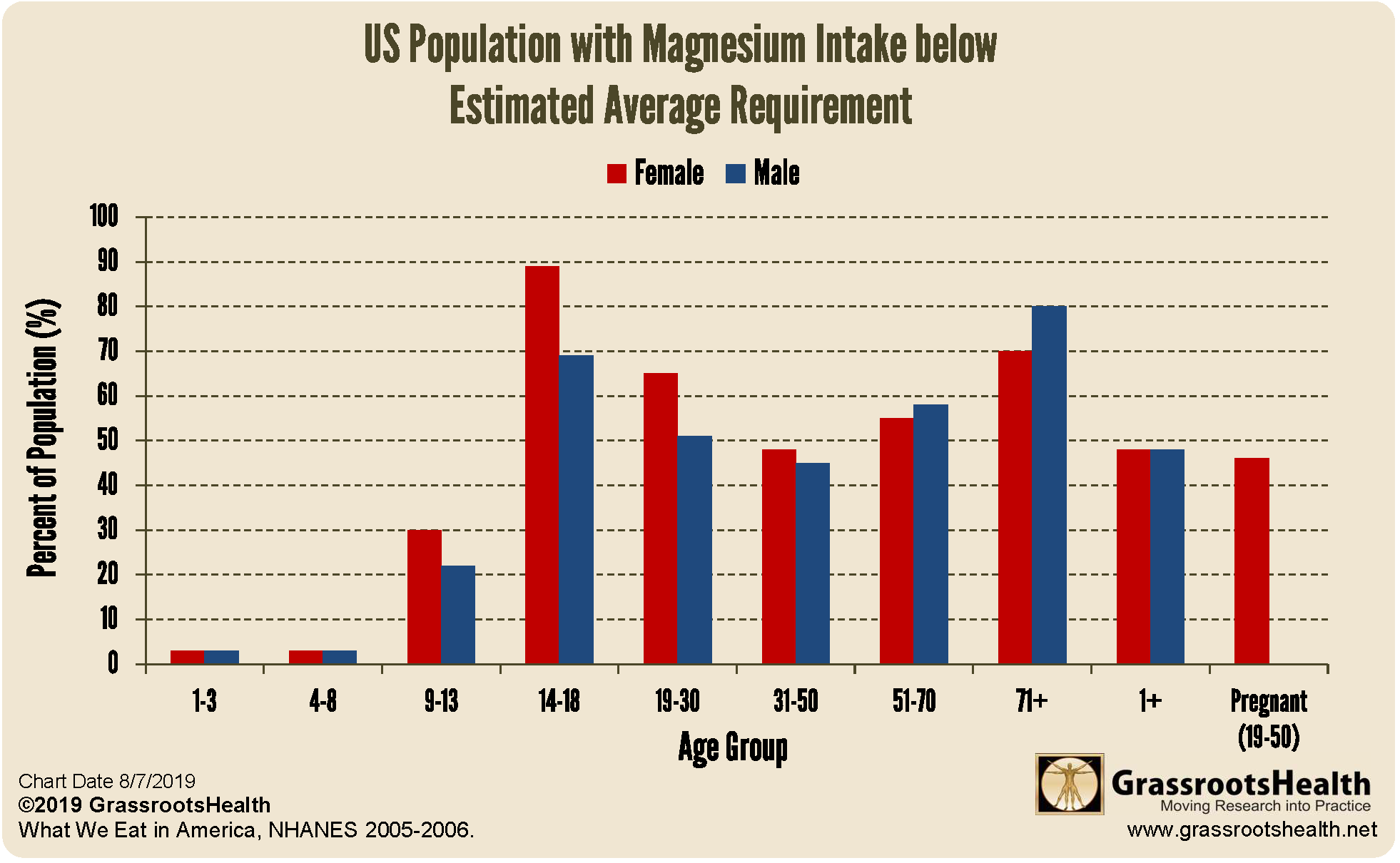
There has been an estimated decline of magnesium intake in the United States over the last 100 years, from approximately 500 mg/day to 175-225 mg/day. The following chart illustrates the findings from a National Health and Nutrition Examination Survey (NHANES) survey, based on the comparison of magnesium intake from food and water to the Estimated Average Requirement (EAR) of magnesium. The EAR is the estimated amount of a nutrient’s daily intake needed for half of the healthy population to meet their daily requirements, broken down by age and gender – similar to the RDA, although the amounts referred to are lower. Nearly half of all individuals 1 year and older and more than two thirds of teenagers (ages 14-18) and elderly adults (ages 71 and over) had inadequate magnesium intakes when compared to the EAR.
Why Deficiency Is Hard to Detect
Only about 1% of total body magnesium is found in the blood. As a result:
- Serum magnesium levels may appear normal
- Cellular or tissue deficiency may still exist
This makes magnesium deficiency easy to miss especially in individuals experiencing chronic stress or sleep problems. A better way to tell if you are getting enough magnesium is by measuring your whole blood magnesium status. This test is included in the Elements Panel offered by GrassrootsHealth, and it includes a vitamin D test along with essential elements magnesium, selenium, zinc, copper, and toxic elements cadmium and mercury.
Magnesium, Inflammation, and Nervous System Load
Magnesium plays a role in:
- Modulating inflammation
- Supporting muscle relaxation
- Regulating nerve conduction
When intake is consistently low, the nervous system may operate under greater strain. Over time, this can affect:
- Sleep quality
- Stress resilience
- Physical comfort
- Overall recovery capacity
Rather than causing immediate illness, magnesium insufficiency may gradually erode the body’s ability to adapt and restore.
The Bi-Directional Relationship Between Magnesium & Stress
Magnesium helps regulate the stress response by influencing:
- Neurotransmitters involved in calm and relaxation (including GABA)
- Stress hormone signalling
- Nervous system excitability at the cellular level
Under chronic stress, magnesium requirements increase and magnesium loss through urine also rises. This creates a feedback loop: stress depletes magnesium, and low magnesium increases stress sensitivity.
The review by Sarić et al. also highlights associations between low magnesium intake or status and:
- Increased stress reactivity
- Difficulty relaxing at night
- Poorer sleep duration and quality
In fact, when it comes to sleep, rather than acting as a sedative, magnesium appears to support the conditions required for sleep to occur naturally.
The Supportive Relationship Between Magnesium and Vitamin D
Magnesium is an important co-nutrient for vitamin D, and is involved in the biosynthesis, transport, and activation of vitamin D. Studies have shown that poor magnesium status potentially impairs vitamin D metabolism enough to limit the parathyroid hormone (PTH) response, which increases the activation of vitamin D to then increase calcium absorption.
An existing magnesium deficiency may also result in a vitamin D level that does not increase as much as expected in response to vitamin D supplementation. As illustrated by Deng et al., without sufficient magnesium, the amount of vitamin D that can be metabolized and used by the body is limited and may result in a lack of conversion of vitamin D into its other active forms.
Make Sure You Are Getting Enough of Both Vitamin D, and Magnesium!
 Having and maintaining healthy vitamin D levels and other nutrient levels can help improve your health now and for your future. Choose which additional nutrients to measure, such as your omega-3s and essential minerals including magnesium and zinc, by creating your custom home test kit today. Take steps to improve the status of each of these measurements to benefit your overall health. With measurement you can then determine how much is needed and steps to achieve your goals. You can also track your own intakes, symptoms and results to see what works best for YOU.
Enroll in D*action and Test Your Levels Today!
How Can You Use this Information for YOUR Health?
Having and maintaining healthy vitamin D and other nutrient levels can help improve your health now and for your future. Measuring is the only way to make sure you are getting enough!
STEP 1 Order your at-home blood spot test kit to measure vitamin D and other nutrients of concern to you, such as omega-3s, magnesium, essential and toxic elements (zinc, copper, selenium, lead, cadmium, mercury); include hsCRP as a marker of inflammation or HbA1c for blood sugar health
STEP 2 Answer the online questionnaire as part of the GrassrootsHealth study
STEP 3 Using our educational materials and tools (such as our dose calculators), assess your results to determine if you are in your desired target range or if actions should be taken to get there
STEP 4 After 3-6 months of implementing your changes, re-test to see if you have achieved your target level(s)