
Published on August 27, 2025

New research highlights selenium’s essential role in regulating immunity, reducing inflammation, and protecting against infections, autoimmune conditions, and cancer.
Key Points
- Selenium and immunity — Strengthens both innate and adaptive responses, helping the body fight pathogens while preventing excess inflammation.
- Impact on disease prevention — Linked to lower risks of viral infections, autoimmune diseases, cardiovascular disease, and certain cancers.
- How it works — Selenoproteins provide antioxidant defense, regulate cytokines, boost antibody production, and influence gut microbiome balance.
- When adding the Elements Panel to your home vitamin D test kit, individuals can measure their selenium level to see if it is in range with other important nutrients.
 Selenium is an essential element that is needed only in trace amounts, but its impact on human health is anything but small. A newly published 2024 review in Nutrients (Sadler et al., 2024) highlights selenium’s critical role in strengthening the immune system, reducing inflammation, and protecting against infections, autoimmune conditions, and even cancer.
How Selenium Supports Immunity
The review provides a comprehensive look at how selenium influences immunity from multiple angles:
- Antioxidant protection — Selenium-dependent enzymes such as glutathione peroxidases neutralize free radicals, preventing DNA and tissue damage that can fuel chronic inflammation.
- Innate immunity — Selenium boosts the efficiency of macrophages and neutrophils, the body’s first responders, and supports pathogen-killing mechanisms while keeping inflammatory markers like CRP under control.
- Adaptive immunity — Adequate selenium allows T cells to activate and multiply, increases cytokines like IL-2 and IFN-γ that drive immune responses, and promotes antibody production for long-term protection.
- Gut microbiome balance — Selenium shapes the populations of beneficial bacteria, strengthens the intestinal barrier, and reduces harmful inflammatory signals originating from the gut.
Health Benefits and Outcomes
Selenium plays additional important roles to help protect our health.
- Infections — Deficiency makes viruses more dangerous, while adequate selenium helps the body fight and recover faster.
- Autoimmunity — By calming overactive immune responses, selenium may help slow conditions like Hashimoto’s thyroiditis or rheumatoid arthritis.
- Cancer — Selenium reduces oxidative DNA damage, supports anti-tumor immunity, and may help limit tumor growth and spread.
- Heart health — Its antioxidant and anti-inflammatory properties lower risks of cardiovascular disease.
What Amount of Selenium is Best for Health?
Like many nutrients, too little increases disease risk, but too much can be toxic. The safe daily intake for adults is about 55 micrograms, with an upper safe limit of 400 micrograms. Excessive intake, known as selenosis, may cause nausea, brittle hair and nails, diarrhea, joint pain, or neurological symptoms.
Selenium toxicity, which usually results from taking too much supplemental selenium, can lead to symptoms that are similar to those of selenium deficiency. Rarely, toxicity can also result in heart and neurological problems or even paralysis. Learn more about the subtle signs of selenium deficiency and toxicity here.
Because selenium content in foods varies depending on soil levels, diet alone may not always guarantee adequacy. Brazil nuts, seafood, eggs, meats, whole grains, garlic, onions, and mushrooms are some of the richest sources, but the actual selenium amount can differ greatly.
Video: 7 Hidden Signs of SELENIUM Deficiency (Some are Subtle)
For a quick review of several key signs of selenium deficiency, check out this video by Ken D Berry, MD, or review the video summary below.
Takeaway: Small Mineral, Big Protection
Selenium may be required only in micrograms, but it is vital for immune balance, chronic disease prevention, and overall resilience. Optimizing your selenium intake—along with vitamin D—is one of the simplest, most effective steps you can take to support your immune system and protect long-term health.
Action step: Consider testing your selenium and vitamin D levels together to find out where you stand and take control of your health. GrassrootsHealth offers a selenium test as part of the Elements Panel, which includes testing your vitamin D level along with essential elements magnesium, zinc, copper, and copper:zinc ratio, and toxic heavy metals cadmium and mercury. This test reflects both free selenium in the blood and selenium as a component of selenoproteins (proteins containing selenium). Since heavy metals (especially mercury) bind to selenium and reduce its bioavailability, this dried blood spot test is particularly useful for determining if enough selenium is present to counteract these heavy metals in the body.
Measure Your Levels Today
If you haven’t had your vitamin D levels checked recently, now is the time! With so many Americans still falling short, awareness is the first step toward change.
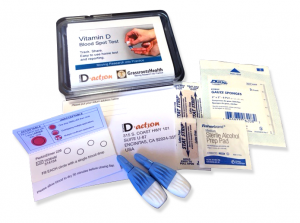
Measuring your vitamin D level and calculating a supplementation amount to help reach and maintain a target level, or taking loading doses to correct deficiency faster, could possibly make all the difference in overall health, wellbeing, and how a current disease situation progresses. Test your level now!
Create your custom home blood spot kit by adding any of the following measurements, along with your vitamin D:
- Omega-3 Index (with or without Ratios AA:EPA and Omega-6:Omega-3)
- Magnesium (with additional Elements copper, zinc, selenium, mercury, and cadmium)
- hsCRP as a marker of inflammation and HbA1c as a marker of blood sugar health
Having and maintaining healthy vitamin D levels and other nutrient levels can help improve your health, now and for the future. Enroll and test your levels today, learn what steps to take to improve your status of vitamin D (see below) and other nutrients and blood markers, and take action! By enrolling in the GrassrootsHealth projects, you are not only contributing valuable information to everyone, you are also gaining knowledge about how you could improve your own health through measuring and tracking your nutrient status, and educating yourself on how to improve it.
How Can You Use this Information for YOUR Health?
Having and maintaining healthy vitamin D and other nutrient levels can help improve your health now and for your future. Measuring is the only way to make sure you are getting enough!
STEP 1 Order your at-home blood spot test kit to measure vitamin D and other nutrients of concern to you, such as omega-3s, magnesium, essential and toxic elements (zinc, copper, selenium, lead, cadmium, mercury); include hsCRP as a marker of inflammation or HbA1c for blood sugar health
STEP 2 Answer the online questionnaire as part of the GrassrootsHealth study
STEP 3 Using our educational materials and tools (such as our dose calculators), assess your results to determine if you are in your desired target range or if actions should be taken to get there
STEP 4 After 3-6 months of implementing your changes, re-test to see if you have achieved your target level(s)