

Published on September 15, 2020

 Omega-3s are a healthy type of fat can be found in fish (EPA and DHA) and in plant oils such as flaxseed and soybean (ALA). The omega-3s found in fish have been linked to the most health benefits. These benefits include a lower risk of cardiovascular disease, dementia, depression, asthma, inflammation, and cancer as well as helping treat symptoms of lupus, arthritis, and dry eye disease. The Omega-3 Index measures the long-term (about four months) intake of EPA and DHA from food and supplements and is offered as a home blood spot test from GrassrootsHealth.
In a previous blog we looked at the overall Omega-3 Index results among GrassrootsHealth participants. In today’s blog we will look at Omega-3 Index and omega-3 intake (supplement use and fatty fish consumption) broken down by age and gender.
Omega-3 Index and Intake by Age Among GrassrootsHealth Participants
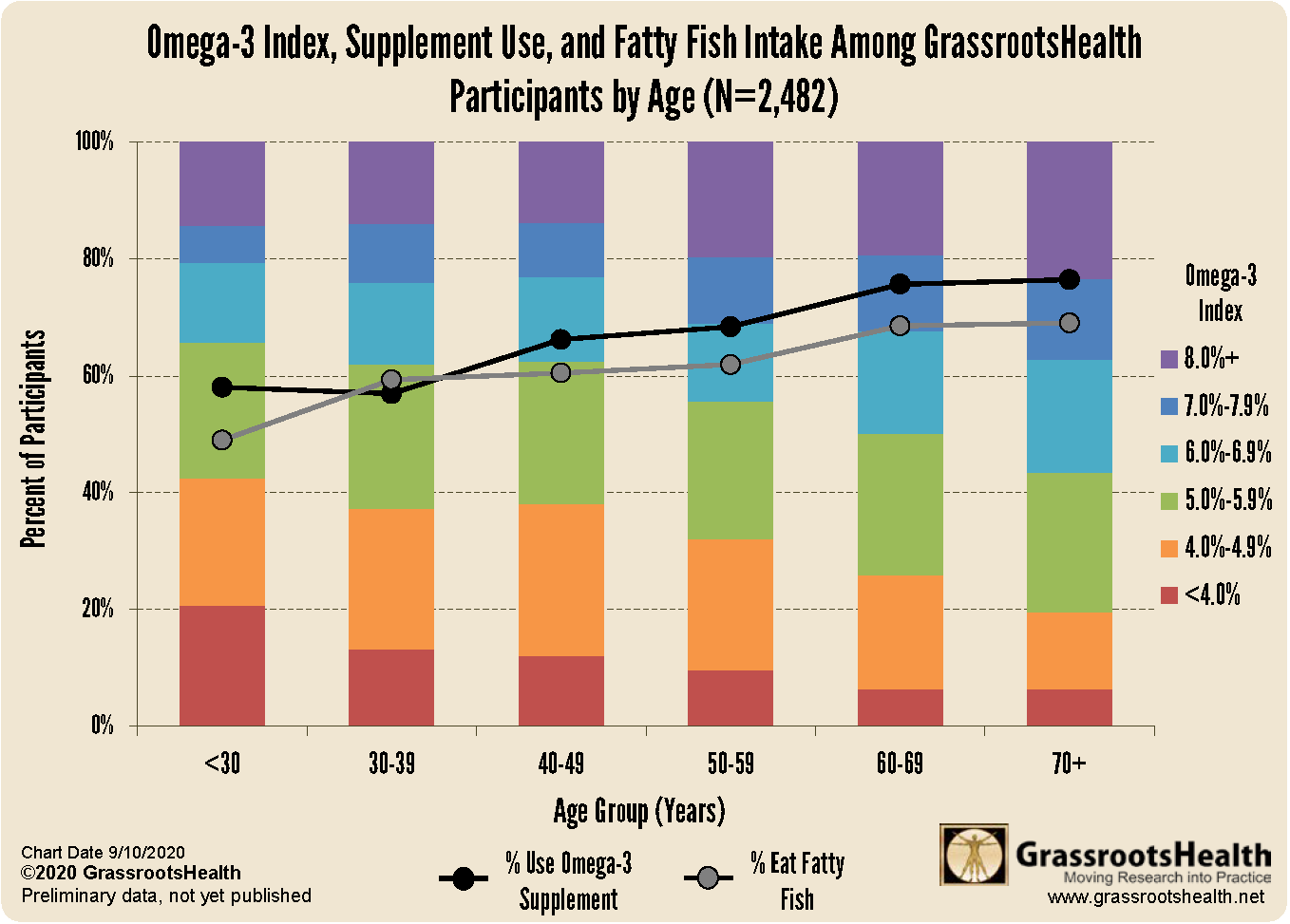
The chart below shows the Omega-3 Index, omega-3 supplement use, and fatty fish consumption by age group. The percent of participants with an Omega-3 Index of at least 8%, which evidence shows is optimal for health, increased with age, from 14% for those less than 30 years old to 23% for those aged 70 years and older. The percent of participants using an omega-3 supplement and eating at least one serving per week of fatty fish also increased by age.
Omega-3 Index and Intake by Gender Among GrassrootsHealth Participants
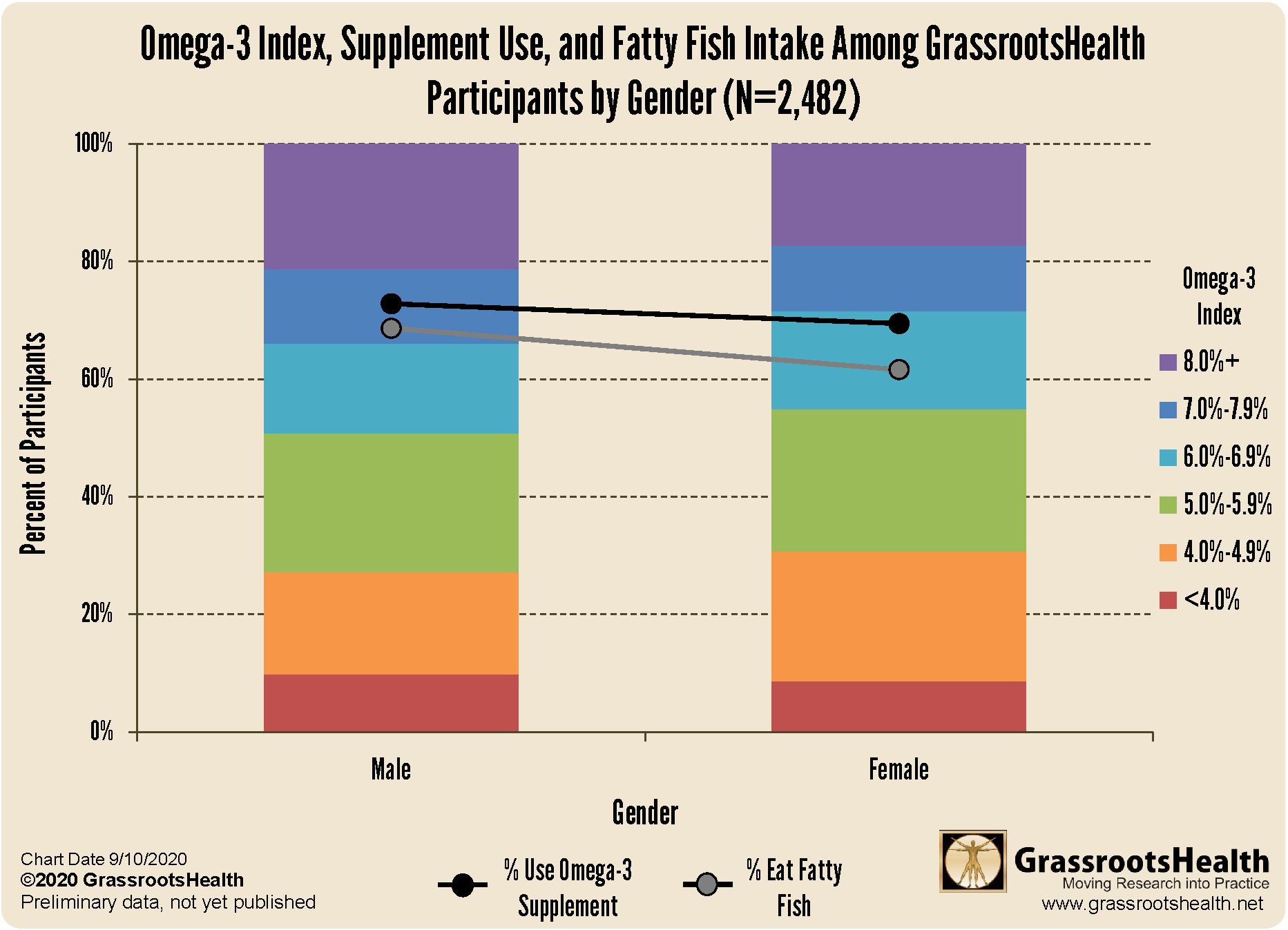
The chart below shows the Omega-3 Index, omega-3 supplement use, and fatty fish consumption by gender. The percent of males with an Omega-3 Index of at least 8% is slightly higher than females (21% vs. 17%), as is the percent using an omega-3 supplement (73% vs. 69%) and the percent who eat fatty fish (69% vs. 62%).
Are You Getting Enough Omega-3s?
Have you measured your Omega-3 Index lately to make sure? Test your levels today and adjust your supplementation and/or diet as needed to ensure you are maintaining an Omega-3 Index level of at least 8%. Use the Omega-3 Calculator to help determine how much DHA+EPA you may need to help you achieve your target Omega-3 Index based on where you are at now!
Avoid Nutrient Deficiency – Enroll in the Immune Boost Project and Test Today
Could getting more of certain nutrients help to decrease your levels of inflammation, and improve your immune response? Find out by testing your vitamin D, omega-3s, magnesium and other essential elements (including copper and zinc), as well as your inflammation levels, with the new Immune Boost home test kit offered by GrassrootsHealth. Measuring levels is the only way to know if you are supporting your immune system and whether additional changes should be made, with supplementation, dietary changes, or both.
What Does it Take YOU to Get Your D to 40 ng/ml (100 nmol/L)?
Did you know your health could be greatly affected by making sure you have a vitamin D level of at least 40 ng/ml (100 nmol/L)? Help us help you.

STEP 1 – Do you know what your vitamin D level is? If not, be sure to test today to find out.
STEP 2 – Determine your target level. Are you at your target level? Experts recommend a level of at least 40-60 ng/ml (100-150 nmol/L).
STEP 3 – Need to boost your level? Use the D*calculator to see how much vitamin D it may take to reach your target. Opt for the Loading Dose for a quicker boost.
STEP 4 – Optimize how your body absorbs and utilizes vitamin D with co-nutrients and these simple steps.
STEP 5 – Re-Test! This is an important step to make sure you have reached your target level, and to ensure you are not taking too much! Re-testing after 3-4 months is recommended.
STEP 6 – Adjust, Repeat…
Give your immune system the nutrients it needs to support a healthy you and protect yourself from unnecessary diseases, especially COVID-19.
How can I track my nutrient intake and levels over time?
To help you track your supplement use and nutrient levels, GrassrootsHealth has created the Personal Health Nutrient Decision System called

For each specific supplement, you can track what days you take it, how much, and many other details. This will help you know your true supplemental intake and what patterns of use work for you to reach and maintain optimum nutrient levels. Check it out today!
How Can You Use this Information for YOUR Health?
Having and maintaining healthy vitamin D and other nutrient levels can help improve your health now and for your future. Measuring is the only way to make sure you are getting enough!
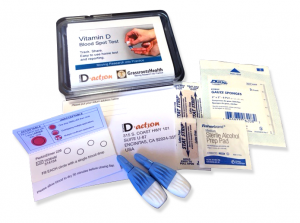
STEP 1 Order your at-home blood spot test kit to measure vitamin D and other nutrients of concern to you, such as omega-3s, magnesium, essential and toxic elements (zinc, copper, selenium, lead, cadmium, mercury); include hsCRP as a marker of inflammation or HbA1c for blood sugar health
STEP 2 Answer the online questionnaire as part of the GrassrootsHealth study
STEP 3 Using our educational materials and tools (such as our dose calculators), assess your results to determine if you are in your desired target range or if actions should be taken to get there
STEP 4 After 3-6 months of implementing your changes, re-test to see if you have achieved your target level(s)