

Published on September 15, 2025

Individuals with higher signs of magnesium depletion had a notably increased risk of overactive bladder, suggesting magnesium could be a modifiable factor in bladder health.
Key Points
-
- Overactive bladder is common and worsens with age, especially in women.
- Magnesium is vital for muscle control, nerve signaling, and reducing inflammation.
- People with higher Magnesium Depletion Scores (MgDS) had a higher risk, with the strongest effects seen in women, adults 40–60, people with obesity, and non-smokers.
Check Your Vitamin D Levels with Magnesium and Other Elements Here

Overactive bladder (OAB) is a widespread condition that affects nearly 1 in 6 adults in the United States. It often leads to sudden urges to urinate, frequent restroom trips, and sometimes incontinence. These symptoms can disrupt sleep, hinder social and work life, and greatly diminish overall quality of life especially since existing treatments often fall short.
A new study in Scientific Reports by Bian et al. reveals that magnesium depletion may be an overlooked contributor to OAB. This finding reinforces previous research showing that maintaining optimal levels of specific nutrients, including vitamin D and magnesium, is essential for supporting muscle function, nerve signaling, and overall health. The findings show that those with higher signs of magnesium depletion had a notably increased risk of overactive bladder, suggesting magnesium could be a modifiable factor in bladder health.
Keep in mind that factors like absorption, medications, and lifestyle can influence magnesium status, an important topic covered in a previous post here.
What Did the New Study Find?
Researchers used health data from 28,621 U.S. adults (ages 20–80). Instead of just looking at blood magnesium or diet, they used the Magnesium Depletion Score (MgDS).
This score adds up risk factors that lower magnesium in the body, such as:
- Diuretic use
- Proton pump inhibitor (PPI) use
- Kidney function problems
- Heavy alcohol use
Results showed:
- Every 1-point increase in MgDS → 9% higher risk of OAB.
- People with middle MgDS had 17% higher odds of OAB.
- People with high MgDS had 20% higher odds of OAB.
Why Does Magnesium Matter for the Bladder?
Magnesium helps the body in three key ways that connect directly to bladder health:
- Muscle Relaxation → Magnesium prevents bladder muscles from contracting too often.
- Nerve Regulation → It keeps nerve signals balanced, reducing sudden bladder urges.
- Inflammation Control → Low magnesium can fuel inflammation, which worsens bladder sensitivity.
Previous smaller studies have hinted that magnesium might help reduce urinary urgency and nighttime bathroom trips. This large U.S. study strengthens that connection.
While this study can’t prove that low magnesium causes OAB, it does highlight magnesium as something you can work on to support bladder health.
 Ways to boost magnesium naturally:
 Ways to boost magnesium naturally:
- Eat magnesium-rich foods: spinach, pumpkin seeds, almonds, beans, avocados, and whole grains.
- Limit heavy alcohol use.
- Talk with your doctor about long-term use of medications like PPIs or diuretics.
- Consider magnesium supplements if recommended by your healthcare provider.
Measure Your Magnesium Status Today as Part of the Elements Panel
Knowing your magnesium status a great first step to taking control of your bladder and overall health. The GrassrootsHealth Elements Panel allows you to measure not only magnesium, but also other key nutrients like vitamin D, selenium, and zinc that play critical roles in muscle, nerve, and immune function. By testing, you can identify potential deficiencies or imbalances and make personalized changes to your diet, supplements, or lifestyle.
When you combine accurate measurement with targeted action, you give your body the best chance to restore balance, supporting bladder health and beyond.
Take charge of your magnesium status today when including the Elements Panel in your home test kit.

Measure Your Levels Today – Save 15% when Including Your Omegas with Code OMEGA3S
If you haven’t had your levels checked recently, now is the time! With so many Americans still falling short, awareness is the first step toward change.
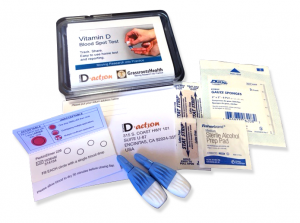
Create your custom home blood spot kit by adding any of the following measurements, along with your vitamin D:
- Omega-3 Index (with or without Ratios AA:EPA and Omega-6:Omega-3)
- Magnesium (with additional Elements copper, zinc, selenium, mercury, and cadmium)
- hsCRP as a marker of inflammation and HbA1c as a marker of blood sugar health
Having and maintaining healthy vitamin D levels and other nutrient levels can help improve your health, now and for the future. Enroll and test your levels today, learn what steps to take to improve your status of vitamin D (see below) and other nutrients and blood markers, and take action! By enrolling in the GrassrootsHealth projects, you are not only contributing valuable information to everyone, you are also gaining knowledge about how you could improve your own health through measuring and tracking your nutrient status, and educating yourself on how to improve it.
How Can You Use this Information for YOUR Health?
Having and maintaining healthy vitamin D and other nutrient levels can help improve your health now and for your future. Measuring is the only way to make sure you are getting enough!
STEP 1 Order your at-home blood spot test kit to measure vitamin D and other nutrients of concern to you, such as omega-3s, magnesium, essential and toxic elements (zinc, copper, selenium, lead, cadmium, mercury); include hsCRP as a marker of inflammation or HbA1c for blood sugar health
STEP 2 Answer the online questionnaire as part of the GrassrootsHealth study
STEP 3 Using our educational materials and tools (such as our dose calculators), assess your results to determine if you are in your desired target range or if actions should be taken to get there
STEP 4 After 3-6 months of implementing your changes, re-test to see if you have achieved your target level(s)