
Published on March 2, 2026
Optimizing your vitamin D level may be the easiest, safest, cheapest, and most effective way to improve your health. Amanda’s story is one of many examples…
Key Points
- Amanda Bourbonnais began supplementing with high doses of vitamin D after her vitamin D level tested at 27 ng/mL—considered “sufficient” by mainstream guidelines; she experienced rapid improvements in her chronic Lyme disease and ulcerative colitis symptoms, as well as mood, clarity, and hope after short-term supervised high-dose supplementation.
- Research and safety data show that vitamin D dosing up to 10,000 IU/day is considered a no-adverse-effects level, with studies demonstrating safety even at higher doses under supervision, while toxicity is generally not associated with levels below 200 ng/mL.
- GrassrootsHealth emphasizes individualized dosing based on lab testing, and is now offering a High Dose Vitamin D Safety Panel (including 25(OH)D, PTH, ionized calcium, and renal function measures), and encourages reducing unnecessary fear by prioritizing monitored optimization over avoidance.

In the featured video below, Jen Aliano, Executive Director of GrassrootsHealth, interviews Amanda Bourbonnais as she shares her deeply personal journey through ulcerative colitis, chronic Lyme disease, severe fatigue, brain fog, and depression, and the role vitamin D played in helping her regain stability and hope.
When Amanda first tested her vitamin D level, it was 27 ng/mL, below the optimal range yet above the cut-off for deficiency as defined by mainstream guidelines and many medical doctors. Under the supervision of a knowledgeable practitioner, she began a short-term higher-dose vitamin D protocol. What surprised her most was how quickly she noticed change, not just physically, but mentally.
Within weeks, she noticed:
- Fewer looping depressive thoughts
- Greater emotional steadiness
- Improved clarity and decision-making
- The return of hope
Vitamin D is often viewed narrowly as a “bone vitamin,” yet it functions as a hormone and gene regulating molecule with widespread effects on immune regulation, inflammation, and brain health. As discussed in the interview, optimal levels generally fall between 40–60 ng/mL (100-150 nmol/L) for most individuals, with some individuals requiring higher levels for certain clinical contexts and individual needs.
For those interested in measuring their PTH, serum calcium, and other markers for monitoring the safety of higher levels of vitamin D, see below for more information about our new High Dose Vitamin D Safety Panel.
WATCH AMANDA’S INTERVIEW
Key Points & Chapters
(Clickable links in the video description on YouTube)
- Welcome & Introduction – Meet Amanda Bourbonnais and hear about her inspiring journey toward health and wellness.
- Amanda’s Personal Introduction – Amanda shares her background, where she’s from, and general life story.
- Health Challenges Begin – Discussion of her diagnoses with ulcerative colitis and chronic Lyme disease, and the impact on her life.
- Becoming a Freelancer – How Amanda turned her English degree into a freelance career supporting her health and lifestyle.
- Balancing Health and Work – Reflection on life balance and learning from personal health challenges.
- Pre-Vitamin D Health Journey – Symptoms experienced, conventional treatments tried, and struggles with gut and mental health.
- Finding a New Path – Working with a naturopathic doctor and starting high-dose vitamin D therapy.
- Vitamin D Levels & Treatment – Initial lab results, dosing plan (50,000 IU daily for 2 weeks), and maintenance dose (5,000–7,000 IU).
- Early Effects of Vitamin D – Mental clarity, improved mood, increased energy, and positive lifestyle changes.
- Other Interventions Added – Low-dose naltrexone (LDN) and additional supplements introduced later.
- Supplement & Nutrient Biohacking – B complex, choline, acetylcysteine, herbal supplements, and managing gut health.
- Dietary Adjustments – Gluten-free diet, paleo approach, and balanced nutrition supporting overall wellness.
- The Role of Vitamin D – Discussion of vitamin D as a safe, effective, and often overlooked nutrient.
- Educating Others – Experiences sharing vitamin D with others and raising awareness of proper dosing.
- Current Levels & Testing – Amanda’s current vitamin D levels, seasonal adjustments, and supplement preferences.
- Sunlight & Geography – Importance of UVB exposure and challenges living in northern latitudes.
- Advice for Others – Guidance for people with similar diagnoses and considerations for high-dose vitamin D.
- High Dose Perspective – Biological individuality, safe dosing ranges, and supporting resources through GrassrootsHealth.
- Final reflections, encouragement for viewers, and gratitude.
If you have struggled with chronic symptoms, fatigue, or mood changes, this interview offers both evidence-based information and encouragement through optimizing vitamin D levels and aiming for a high-normal range.
NOTE: This video is for educational purposes only and is not meant to treat or diagnose. Individuals wishing to seek treatment for a medical condition should consult their health care provider.
Additional Support for Individuals Wanting Comfort with Higher Dosing
Many individuals have contacted GrassrootsHealth asking if their vitamin D level is too high or if they are taking too much vitamin D, and what to do about it. Their fear is often a result of a medical provider telling them they are taking too much vitamin D (considered by them more than 2000 or 4000 IU per day) or that their vitamin D lab work came back too high (over 50 ng/ml). This unnecessary fear is due to a lack of knowledge about vitamin D safety and toxicity.
The fear of vitamin D deficiency and its health consequences should be greater than the fear of vitamin D toxicity. Patrick McCullough, MD
For example, the Institute of Medicine (Health and Medicine Division of the National Academies) has set their no adverse effects level (NOAEL) at 10,000 IU of vitamin D per day. Studies such as those by Hathcock et al. and McCullough et al have demonstrated safety of vitamin D doses of up to 30,000 – 50,000 IU per day (with PTH and calcium levels remaining in normal range). GrassrootsHealth emphasizes the importance of dosing to maintain a target vitamin D level, since every individual has a unique dose response, and we do not encourage maintaining 25(OH) vitamin D levels above 150 ng/ml without the assistance of a qualified medical practitioner. It is important to note that the observed toxicity levels start at 200 ng/ml (500 nmol/L) per Hathcock et al, or even higher per McCullough et al.. Additional information on vitamin D safety and cautions, including the importance of co-nutrients at higher doses, can be found here.
Put Your Worries at Ease with the Vitamin D Safety Panel
The High Dose Vitamin D Safety Panel is a combination of labs to support those who choose to maintain higher levels of vitamin D and would like to monitor for safe dosing.
THIS PANEL INCLUDES
-Vitamin D [as 25(OH)D]
-PTH
-Ionized Calcium
-Renal Function Panel
Testing is done through Quest Labs and our GrassrootsHealth Wellness Center Fullscript account. This service is HSA/FSA eligible but is not available in all states. Contact Jen Aliano at [email protected] for more information on Personalized Vitamin D Consulting and High Dose Vitamin D Support Protocols, or to find a health practitioner knowledgable in the area of therapeutic uses of vitamin D.
*This service is not to replace professional medical advice or the treatment of disease under a qualified medical practitioner.
Learn More About Amanda Bourbonais
 YouTube channel link: / @healthfirstfreelancer
Instagram: / healthfirstfreelancer
Website: https://www.amandabourbonaisagency.com/
Measure Your Vitamin D and Other Important Nutrients
If you haven’t had your vitamin D levels checked recently, now is the time! With so many Americans still falling short, awareness is the first step toward change.
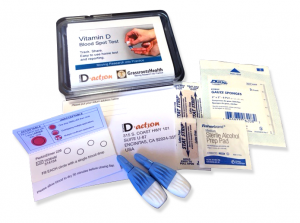
Measuring and calculating a supplementation amount to help reach and maintain a target level, or taking loading doses to correct deficiency faster, could possibly make all the difference in overall health, wellbeing, and how a current disease situation progresses. Test your level now!
Create your custom home blood spot kit by adding any of the following measurements, along with your vitamin D:
- Omega-3 Index (with or without Ratios AA:EPA and Omega-6:Omega-3)
- Magnesium (with additional Elements copper, zinc, selenium, mercury, and cadmium)
- hsCRP as a marker of inflammation and HbA1c as a marker of blood sugar health
Having and maintaining healthy vitamin D levels and other nutrient levels can help improve your health, now and for the future. Enroll and test your levels today, learn what steps to take to improve your status of vitamin D (see below) and other nutrients and blood markers, and take action! By enrolling in the GrassrootsHealth projects, you are not only contributing valuable information to everyone, you are also gaining knowledge about how you could improve your own health through measuring and tracking your nutrient status, and educating yourself on how to improve it.
How Can You Use this Information for YOUR Health?
Having and maintaining healthy vitamin D and other nutrient levels can help improve your health now and for your future. Measuring is the only way to make sure you are getting enough!
STEP 1 Order your at-home blood spot test kit to measure vitamin D and other nutrients of concern to you, such as omega-3s, magnesium, essential and toxic elements (zinc, copper, selenium, lead, cadmium, mercury); include hsCRP as a marker of inflammation or HbA1c for blood sugar health
STEP 2 Answer the online questionnaire as part of the GrassrootsHealth study
STEP 3 Using our educational materials and tools (such as our dose calculators), assess your results to determine if you are in your desired target range or if actions should be taken to get there
STEP 4 After 3-6 months of implementing your changes, re-test to see if you have achieved your target level(s)