

Published on July 7, 2026
Learn why measuring the Omega-3 Index and balancing omega-6 intake can help personalize supplementation for better inflammation control and overall health
Key Points
- Healthy omega-3 levels (an Omega-3 Index of 8% or higher) have been associated with heart, brain, and immune health, lower inflammation, and increased longevity.
- Because individuals respond differently to the same omega-3 intake, testing your Omega-3 Index is the only reliable way to determine your ideal dose.
- EPA and DHA each provide unique health benefits, and the ideal balance between them depends on your individual health goals and clinical needs.
- Reducing excess omega-6 intake may be necessary to improve both the Omega-3 Index and the Omega-6:Omega-3 Ratio, as well as to support a healthier inflammatory response.
Measure Your Omega-3 Levels with Vitamin D – Save 15% with Code Omega3s

Omega 3 fatty acids play an important role in inflammation regulation, cellular membrane integrity, and overall metabolic balance. Within therapeutic protocols focused on immune modulation, including high dose vitamin D approaches such as the Coimbra Protocol, Omega 3 supplementation is frequently emphasized due to its well established anti inflammatory potential.
How Do You Determine the Correct Dose of Omega-3s?
Healthy omega-3 levels, defined as an Omega-3 Index of at least 8%, have been associated with heart health, a longer life span, brain health, cancer prevention, reduced inflammation, improved immune response to viral infection, and much more. The Omega-3 Index measures the amount of omega-3 fatty acids EPA and DHA in red blood cell (RBC) membranes and is expressed as a percent of total RBC fatty acids. It is a long-term and stable marker of omega-3 status, and it reflects tissue levels of EPA+DHA.
Taking simple dietary steps like increasing the consumption of foods or supplements rich in EPA and DHA will help increase the Omega-3 Index. However, similar to vitamin D serum level response to supplementation, there is a wide variation in response between omega-3 intake and a resulting Omega-3 Index level; there is no way to tell if you are getting enough omega-3s unless you test your levels. Using the Omega-3 Index Calculator after determining a current status can help individuals estimate what dose of Omega-3s are needed to achieve an Omega-3 Index of 8% or higher.
The Importance of Distinguishing Between EPA and DHA
As a part of many nutrient-based therapeutic approaches, high concentration Omega 3 fatty acids are often administered to individuals due their anti inflammatory effects. EPA and DHA help reduce inflammatory cytokines such as IL 6 and TNF α, support cell membrane integrity, and may modulate autoimmune activity through effects on immune cell signaling and lipid mediators. These mechanisms help explain why Omega 3 supplementation is foundational in immune modulating protocols.
In addition, the EPA to DHA ratio is an important consideration:
- A higher EPA content is often used when the primary goal is reducing inflammation.
- In certain conditions, a higher DHA content may be more appropriate due to DHA’s role in supporting neuronal membrane structure and regeneration.
- The optimal ratio may vary depending on the clinical context and the specific physiologic goals of therapy.
Learn more about the difference between EPA and DHA and what individual needs and factors can be considered when deciding how much of each to take here.
Should You be Decreasing Your Omega-6 Intake while also Increasing Omega-3s?
Omega-3s and omega-6s in the cell membrane play different roles in inflammation. Omega-6s (such as AA) are essential for initiating and sustaining the inflammatory response – a physiologic function necessary for healing from injuries and infection. Omega-3s (such as DHA and EPA) are anti-inflammatory and promote the resolution of the inflammatory process.
Pro-inflammatory eicosanoids produced from omega-6s are important chemicals in the immune system. However, when too many of them are produced, they can suppress the immune system, promote blood clotting and increase inflammation and inflammatory disease. Unfortunately, a majority of the population consumes too many omega-6s and too few omega-3s, which leads to an abundance of omega-6s in the cell membrane.
Measurements such as the Omega-6:Omega-3 Ratio can be helpful in determining if there is a need for decreasing omega-6 intake while increasing omega-3 intake. The target range for the Omega-6:Omega-3 Ratio is considered to be 3:1 to 5:1, although evidence suggests that lower ratios are better for health. While a lower ratio of each correlates with a higher Omega-3 Index, it is possible to have an Omega-3 Index within a healthy range (8% or greater) but have one or both ratios higher than desirable. In this case, omega-6 intake may need to be addressed.
Individuals taking Omega-3 supplements without seeing an improvement in the Omega-3 Index are likely getting too much Omega-6s! Learn more here.
Knowing your Omega-6:Omega-3 and AA:EPA ratios can help you take more specific steps to achieve an ideal ratio status, mainly by increasing omega-3 intake with supplements and food (fatty fish) while also decreasing omega-6 intake. Doing this may not only improve both ratios, but it will likely also improve your Omega-3 Index and overall response to inflammation.
Measure Your Omega-6:Omega-3 Ratio – Save 15% with Code Omega3s

Measure Your Vitamin D and Other Important Nutrients – Get 15% Off when Including Omega-3s with Code OMEGA3S
If you haven’t had your vitamin D levels checked recently, now is the time! With so many Americans still falling short, awareness is the first step toward change.
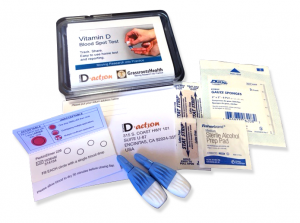
Measuring and calculating a supplementation amount to help reach and maintain a target level, or taking loading doses to correct deficiency faster, could possibly make all the difference in overall health, wellbeing, and how a current disease situation progresses. Test your level now!
Create your custom home blood spot kit by adding any of the following measurements, along with your vitamin D:
- Omega-3 Index (with or without Ratios AA:EPA and Omega-6:Omega-3)
- Magnesium (with additional Elements copper, zinc, selenium, mercury, and cadmium)
- hsCRP as a marker of inflammation and HbA1c as a marker of blood sugar health
Having and maintaining healthy vitamin D levels and other nutrient levels can help improve your health, now and for the future. Enroll and test your levels today, learn what steps to take to improve your status of vitamin D (see below) and other nutrients and blood markers, and take action! By enrolling in the GrassrootsHealth projects, you are not only contributing valuable information to everyone, you are also gaining knowledge about how you could improve your own health through measuring and tracking your nutrient status, and educating yourself on how to improve it.
How Can You Use this Information for YOUR Health?
Having and maintaining healthy vitamin D and other nutrient levels can help improve your health now and for your future. Measuring is the only way to make sure you are getting enough!
STEP 1 Order your at-home blood spot test kit to measure vitamin D and other nutrients of concern to you, such as omega-3s, magnesium, essential and toxic elements (zinc, copper, selenium, lead, cadmium, mercury); include hsCRP as a marker of inflammation or HbA1c for blood sugar health
STEP 2 Answer the online questionnaire as part of the GrassrootsHealth study
STEP 3 Using our educational materials and tools (such as our dose calculators), assess your results to determine if you are in your desired target range or if actions should be taken to get there
STEP 4 After 3-6 months of implementing your changes, re-test to see if you have achieved your target level(s)