

Published on June 25, 2026
Vitamin D level identified as an independent predictor of sepsis survival and recovery, even after adjusting for age, severity of illness, comorbidities, inflammation, and other laboratory markers
Key Points
- Patients with vitamin D levels of 12 ng/mL or higher were about 40% more likely to survive 90 days after hospitalization for sepsis than those with lower levels.
- Higher vitamin D levels at hospital admission were independently associated with faster recovery, including a 61% greater likelihood of being discharged alive within 15 days.
- The median vitamin D level among patients with sepsis was just 11.2 ng/mL, highlighting the widespread prevalence of severe vitamin D deficiency in this high-risk population.
- This study adds to growing evidence that maintaining healthy vitamin D status may support immune resilience before serious illness occurs.

Sepsis is one of the leading causes of death worldwide, claiming millions of lives each year. Despite advances in medical care, predicting which patients are most likely to recover remains a major challenge. A new study by Sainaghi et al. found that measuring vitamin D upon hospital admission not only helped help identify those at greatest risk, but also identified an easy-to-address factor that greatly improved survival.
Researchers analyzed 829 hospitalized adults with confirmed sepsis, most of whom were over 80 years of age. Vitamin D levels were measured within 24 hours of hospital admission and compared with survival and recovery over the following 90 days. Nearly all patients had low vitamin D levels, with a median concentration of just 11.2 ng/mL, well below levels considered sufficient.
Lower Vitamin D Predicted Worse Outcomes
Over the 90-day follow-up period, 84 patients (10.1%) died within the first 7 days, 168 (20.3%) died by 30 days, and 237 (28.6%) died within 90 days, highlighting that mortality continued to rise well after the initial hospitalization.
Patients who survived had significantly higher vitamin D levels than those who died. Compared to survivors:
- Patients who died within 90 days had a median vitamin D level of 9.6 ng/mL, compared to 12.0 ng/mL among survivors.
- Patients discharged home within 15 days had a median level of 12.5 ng/mL, compared to 10.5 ng/mL among those requiring longer hospitalization.
Even after adjusting for age, severity of illness, comorbidities, inflammation, and other laboratory markers, vitamin D remained an independent predictor of recovery.
Researchers identified 12 ng/mL as the threshold most strongly associated with outcomes:
- Patients with vitamin D levels below 12 ng/mL had approximately 68% higher odds of dying within 90 days (OR 1.68, inverse of reported OR 0.596).
- Patients with vitamin D levels 12 ng/mL or higher had approximately 61% higher odds of being discharged alive within 15 days (OR 1.61).
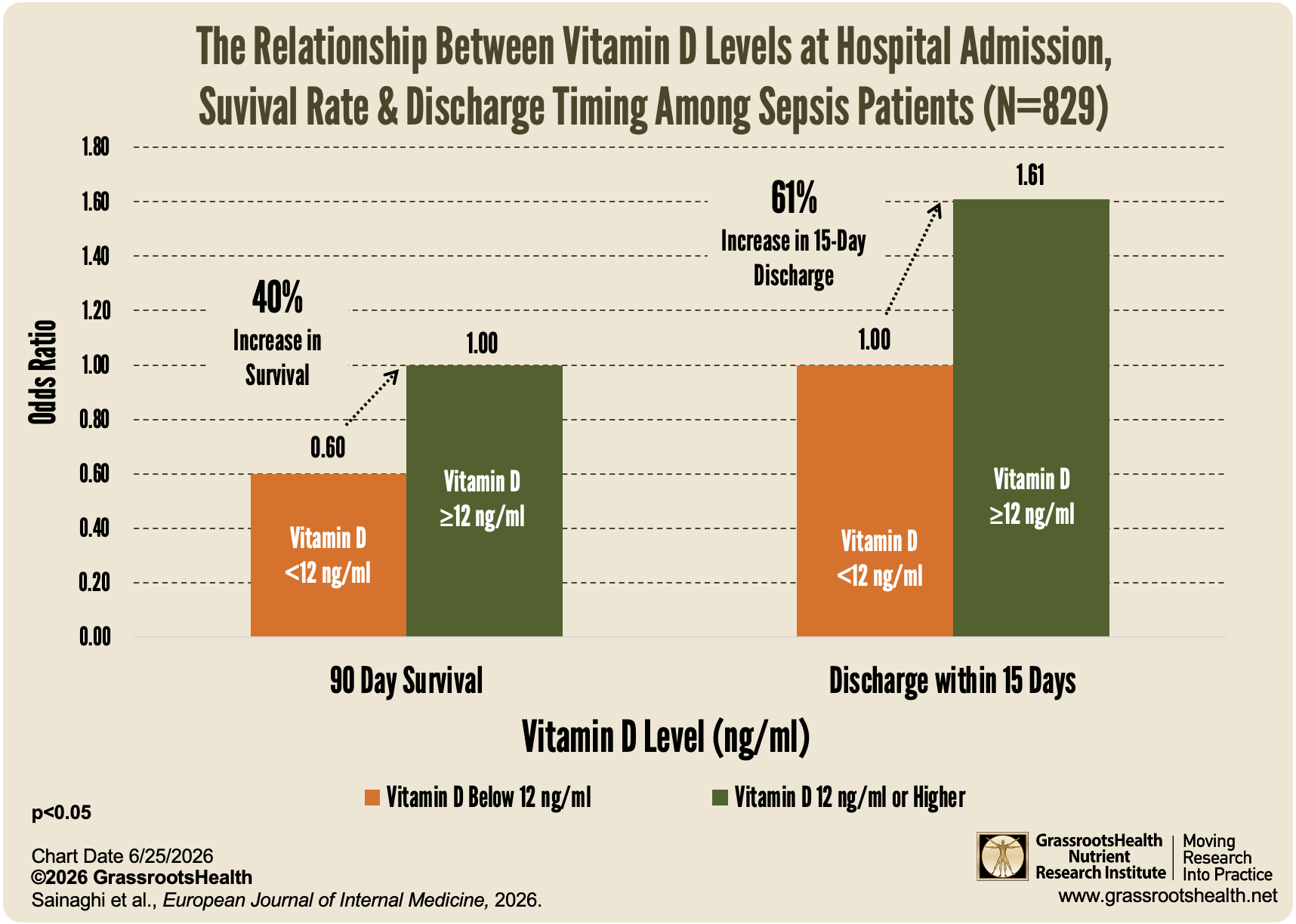
In other words, vitamin D levels of 12 ng/mL or higher were associated with a 40% greater likelihood of surviving 90 days after hospitalization.
Why Might Vitamin D Matter?
Vitamin D helps regulate both the innate and adaptive immune systems. Previous research has shown that it can:
- Help produce antimicrobial peptides that fight infection.
- Reduce excessive inflammatory cytokine production.
- Support healthy endothelial function.
- Promote a more balanced immune response rather than the uncontrolled inflammation seen during sepsis.
The authors suggest that patients with higher vitamin D levels may be better able to recover from the prolonged inflammatory and immune dysfunction that often follows the initial infection, potentially lowering the risk of complications and death. This study adds to a growing body of evidence suggesting that vitamin D status is closely linked with immune resilience and recovery from serious illness.
The researchers conclude that measuring vitamin D at hospital admission may provide valuable prognostic information alongside existing clinical scoring systems. They also recommend future clinical trials to determine whether correcting vitamin D deficiency during hospitalization can improve outcomes in patients with sepsis.
The Bigger Picture
This study evaluated patients with extremely low vitamin D levels; the median was only 11.2 ng/mL. While the researchers identified 12 ng/mL as the threshold associated with poorer outcomes in this severely deficient population, it should not be interpreted as an optimal vitamin D target. Instead, it highlights that even among individuals with widespread deficiency, those with the lowest vitamin D levels experienced the poorest recovery and survival.
GrassrootsHealth’s Scientists’ Panel recommends maintaining serum 25(OH)D concentrations of approximately 40–60 ng/mL (100–150 nmol/L) for overall health, with research suggesting that some health conditions may benefit from levels in the 40–80 ng/mL range. These recommendations are based on decades of evidence showing that optimal vitamin D status extends well beyond simply avoiding severe deficiency.
Maintaining healthy vitamin D status before serious illness occurs is one more way to support a resilient immune system and improve the body’s ability to respond when infections become life-threatening.
Measuring Your Level is Important… Are You Getting Enough Vitamin D?
The only way to know is to test your levels! Testing versus blind supplementation is essential to know for sure if what you are taking is the right amount for you. Once you test your vitamin D (and other levels) to know where you are NOW, you can account for any upcoming changes in lifestyle over the coming months and adjust your intake to reach (or maintain) your targets.
 Measure your:
- Vitamin D
- Magnesium PLUS Elements
- Omega-3 Fatty Acids
- hsCRP
- HbA1c
- TSH
- Type 1 Diabetes Autoantibodies
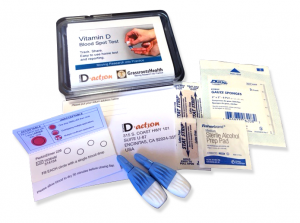
Did you know that each of the above can be measured at home using a simple blood spot test? As part of our ongoing research project, you can order your home blood spot test kit to get your levels, followed by education and steps to take to help you reach your optimal target levels. Start by enrolling and ordering your kit to measure each of the above important markers, and make sure you are getting enough of each to support better mood and wellbeing!
Create your custom home test kit today. Take steps to improve the status of each of these measurements to benefit your overall health. With measurement you can then determine how much is needed and steps to achieve your goals. You can also track your own intakes, symptoms and results to see what works best for YOU.
Enroll in D*action and Test Your Levels Today! Use code SUNMONTH25 for 10% off during May 2025, plus get the Sunshine eBook for FREE with your test kit purchase.
How Can You Use this Information for YOUR Health?
Having and maintaining healthy vitamin D and other nutrient levels can help improve your health now and for your future. Measuring is the only way to make sure you are getting enough!
STEP 1 Order your at-home blood spot test kit to measure vitamin D and other nutrients of concern to you, such as omega-3s, magnesium, essential and toxic elements (zinc, copper, selenium, lead, cadmium, mercury); include hsCRP as a marker of inflammation or HbA1c for blood sugar health
STEP 2 Answer the online questionnaire as part of the GrassrootsHealth study
STEP 3 Using our educational materials and tools (such as our dose calculators), assess your results to determine if you are in your desired target range or if actions should be taken to get there
STEP 4 After 3-6 months of implementing your changes, re-test to see if you have achieved your target level(s)