

Published on June 4, 2026
Understanding the Scope of Vitamin D Deficiency in South Africa and Across the Globe
Key Points
- Vitamin D deficiency is a major but often overlooked health issue in South Africa
- Many doctors receive limited training in nutrition and micronutrients
- South Africa has rising rates of chronic diseases like diabetes, obesity, hypertension, and autoimmune conditions
- Many patients have symptoms like fatigue, pain, depression, and frequent infections
- Darker skin (higher melanin) requires longer sun exposure to produce vitamin D
- Vitamin D is not easily obtained from food alone — sunlight is the main source
- Over 95% of tested patients in the clinic were vitamin D deficient (<40 ng/ml)
By Dr. Boitumelo Phetla
To the team at GrassrootsHealth,
 I write this article not only as a South African medical doctor, but also as a clinician whose professional perspective has fundamentally shifted through deeper exposure to the science of vitamin D and micronutrient deficiencies. As a certified vitamin D practitioner through GrassrootsHealth, I have come to recognize that vitamin D deficiency represents one of the most under-recognized public health challenges in South Africa, despite our country’s abundant sunshine.
For many years, like most conventionally trained medical doctors, I approached disease through the classical biomedical model taught in medical school. We were trained extensively in pathology, pharmacology, diagnostics, and acute disease management. However, nutritional medicine and micronutrient deficiencies received relatively limited emphasis. The prevailing assumption was that adequate nutrition naturally comes from food and that deficiencies would mainly occur in cases of severe poverty or malnutrition.
Yet clinical reality increasingly tells a different story.
Over the past decade, I became increasingly frustrated by the changing disease profile among South Africans. In daily clinical practice, we are seeing dramatic increases in non-communicable diseases — diabetes, hypertension, obesity, cardiovascular disease, autoimmune conditions, chronic fatigue, mental health disorders, infertility, and cancer. Alongside these conditions is a growing burden of chronic unexplained pain syndromes: lower back pain, headaches, muscle pain, pelvic pain, and generalized fatigue that often persist despite extensive investigations and multiple medications.
Many patients undergo numerous scans, blood tests, specialist consultations, and chronic treatments without ever identifying or addressing underlying micronutrient deficiencies.
My own personal experience with iron deficiency and vitamin D deficiency also became a turning point. Looking back now, with the knowledge I currently possess, I recognize that some of my own health struggles were strongly connected to deficiencies that were never initially considered.
This realization forced me to rethink many assumptions in medicine.
The South African Paradox: Sunshine Without Vitamin D
International audiences are often surprised to hear discussions about vitamin D deficiency in South Africa. The common assumption is simple: “How can people living in Africa be vitamin D deficient when there is so much sun?”
The answer lies in the profound social and lifestyle changes that have occurred over the last 20 to 30 years.
Following democracy in South Africa, millions of Black South Africans gained increased access to higher education, urban employment opportunities, professional careers, and improved socioeconomic mobility. While this progress is deeply important and worth celebrating, it also unintentionally altered our relationship with sunlight exposure.
More people now work in office environments rather than outdoor labor. Daily routines increasingly involve commuting by car, spending entire days indoors, and returning home after sunset. Economic advancement has also created lifestyles where avoiding sun exposure is often associated with sophistication, beauty standards, or health consciousness.
At the same time, growing global messaging around skin cancer and ultraviolet exposure has caused many people to fear sunlight altogether, often without balanced education regarding healthy sun exposure and vitamin D production.
In practice, many South Africans now spend remarkably little time in direct sunlight during the hours required for effective vitamin D synthesis.
This issue is even more significant in Black populations because melanin, while naturally protective against ultraviolet radiation, also reduces the efficiency of vitamin D production in the skin. As a result, darker-skinned individuals generally require longer periods of sun exposure to produce sufficient vitamin D levels.
The biological reality collides directly with our modern lifestyle patterns.
Nutritional Deficiencies Beyond Food
One of the greatest misconceptions surrounding micronutrient deficiencies is the belief that they are purely dietary problems.
Even individuals attempting to eat healthy diets may still develop deficiencies due to multiple contributing factors:
- Reduced nutrient density in modern food systems
- Indoor lifestyles
- Chronic stress
- Obesity and metabolic dysfunction
- Gastrointestinal absorption challenges
- Inflammation
- Environmental and occupational changes
- Reduced sun exposure
- Sedentary lifestyles
Vitamin D is particularly unique because very little is naturally obtained from food alone. Sunlight remains the primary source for most people globally.
This means that even financially stable, educated, health-conscious individuals may still have significant vitamin D deficiency without realizing it.
What I See in Clinical Practice
In my experience, vitamin D deficiency frequently overlaps with conditions that are highly prevalent in South Africa today:
- Chronic fatigue
- Musculoskeletal pain
- Frequent infections
- Depression and anxiety
- Sleep disturbances
- Poor immune resilience
- Metabolic disease
- Fertility challenges
- Chronic inflammatory conditions
While vitamin D deficiency is rarely the sole cause of disease, it is often a significant contributing factor that may worsen overall health outcomes and quality of life.
Unfortunately, routine screening and education around vitamin D remain limited in many primary healthcare settings. About a thousand patients that we have tested for vitamin D blood levels in our practice over the past 16 months, over 95% of patients are vitamin D deficient (< 40ng/ml).
A Call for Greater Awareness Among Healthcare Professionals
Part of my current mission as a vitamin D advocate is to increase awareness among healthcare practitioners, particularly general practitioners who serve on the frontline of community healthcare in South Africa.
Many clinicians simply have not been adequately exposed to evolving nutritional science during their formal training. This is not due to negligence, but rather reflects how rapidly the scientific landscape around micronutrients, inflammation, oxidative stress, and preventive medicine has evolved.
I strongly believe that empowering doctors with practical, evidence-informed education around vitamin D and micronutrient deficiencies can improve:
- Clinical outcomes
- Preventive healthcare strategies
- Quality of life for patients
- Early identification of chronic disease contributors
- Patient confidence and health literacy
Most importantly, it may help us move medicine toward a more proactive rather than purely reactive approach.
The Importance of Global Collaboration
Organizations like GrassrootsHealth play an important role in advancing scientific awareness and public education regarding vitamin D. For practitioners like myself working in developing healthcare contexts, access to global data, research, and educational resources is invaluable.
South Africa presents a unique intersection of modern urbanization, historical inequality, lifestyle transition, and changing disease patterns. These realities make conversations around vitamin D particularly relevant for our population.
My hope is that more African clinicians, researchers, and public health professionals become actively involved in these discussions so that our local experiences and realities contribute meaningfully to the global understanding of vitamin D deficiency and preventive health.
The conversation around vitamin D is no longer only about bones.
It is increasingly about modern life, chronic disease, inflammation, immunity, mental health, metabolic health, and the future of preventive medicine itself.
To find more about my work:
 Dr. Boitumelo Phetla is a South African qualified Medical Doctor with an MBA degree. She still practices in clinical medicine with special interest in Vitamin D and oxidative stress management.
She has founded ‘Dr Boitumelo Wellness’ which is focused on her own nutritional supplements range and wellness education, supported by her international certification as a Vitamin D Practitioner.
She is founder of the Dr BB Phetla Foundation NPO which is focused on youth & community empowerment through education. She has authored four books on life and business, which are used as some of the interventions/tools in the foundation.
Dr Boitumelo Phetla
Measuring Your Level is Important… Are You Getting Enough Vitamin D?
The only way to know is to test your levels! Testing versus blind supplementation is essential to know for sure if what you are taking is the right amount for you. Once you test your vitamin D (and other levels) to know where you are NOW, you can account for any upcoming changes in lifestyle over the coming months and adjust your intake to reach (or maintain) your targets.
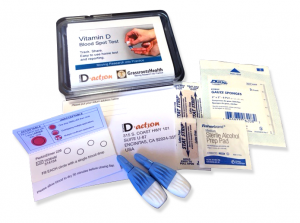 Measure your:
- Vitamin D
- Magnesium PLUS Elements
- Omega-3 Fatty Acids
- hsCRP
- HbA1c
- TSH
- Type 1 Diabetes Autoantibodies
Did you know that each of the above can be measured at home using a simple blood spot test? As part of our ongoing research project, you can order your home blood spot test kit to get your levels, followed by education and steps to take to help you reach your optimal target levels. Start by enrolling and ordering your kit to measure each of the above important markers, and make sure you are getting enough of each to support better mood and wellbeing!
Create your custom home test kit today. Take steps to improve the status of each of these measurements to benefit your overall health. With measurement you can then determine how much is needed and steps to achieve your goals. You can also track your own intakes, symptoms and results to see what works best for YOU.
Enroll in D*action and Test Your Levels Today! Use code SUNMONTH25 for 10% off during May 2025, plus get the Sunshine eBook for FREE with your test kit purchase.
How Can You Use this Information for YOUR Health?
Having and maintaining healthy vitamin D and other nutrient levels can help improve your health now and for your future. Measuring is the only way to make sure you are getting enough!
STEP 1 Order your at-home blood spot test kit to measure vitamin D and other nutrients of concern to you, such as omega-3s, magnesium, essential and toxic elements (zinc, copper, selenium, lead, cadmium, mercury); include hsCRP as a marker of inflammation or HbA1c for blood sugar health
STEP 2 Answer the online questionnaire as part of the GrassrootsHealth study
STEP 3 Using our educational materials and tools (such as our dose calculators), assess your results to determine if you are in your desired target range or if actions should be taken to get there
STEP 4 After 3-6 months of implementing your changes, re-test to see if you have achieved your target level(s)