

Personalized vitamin D supplement doses, aimed at maintaining levels between 40-80 ng/ml, reduced risk of a repeat heart attack by 52%
Key Points
- A large, randomized clinical trial found that treating heart attack patients in a “target to treat” fashion, where patients’ blood levels of vitamin D were monitored and vitamin D3 dosing adjusted to achieve optimal levels, cut their risk of a second heart attack in half.
- Many observational studies have shown low levels of vitamin D to be associated with poor cardiovascular outcomes. However, previous clinical trials provided standard supplementation doses to patients with no reduction in cardiovascular risk found. This study shows it may be more important to increase a patient’s vitamin D level to a certain level rather than just provide supplementation.
- For patients in the study who received targeted treatment, vitamin D blood levels were checked once a year to determine if they were above 40 ng/mL. For patients whose vitamin D levels were lower, they were tested every three months with their dosage adjusted, then every year after they achieved 40 ng/mL.
 (NEW ORLEANS, November 09, 2025) — A tailored approach of vitamin D3 supplementation in patients who have suffered a heart attack significantly reduces their risk of a second heart attack, a new study from heart researchers at Intermountain Health in Salt Lake City finds.
In a large, randomized clinical trial, Intermountain Health researchers have found that treating heart attack patients in a “target to treat” fashion, where patients’ blood levels of vitamin D were monitored and vitamin D3 dosing adjusted to achieve optimal levels, cut their risk of a second heart attack in half.
Results of the study were presented today at the 2025 American Heart Association Scientific Sessions in New Orleans.
The results are promising, said Heidi May, PhD, cardiovascular epidemiologist at Intermountain Health and principal investigator of the study
“We observed no adverse outcomes when giving patients higher doses of vitamin D3 supplementation, and to significantly reduce the risk of another heart attack, which are exciting results,” said Dr. May. “We’re excited with these results but know we have further work to do to validate these findings.”
The findings are important as between a one-half to two-thirds of people worldwide have low levels of vitamin D, Dr. May noted.
In the past, most people were able to get enough vitamin D from the sun. However, with changes in lifestyle and recommendations to reduce skin cancer risk, sun exposure has decreased, and individuals must obtain enough vitamin D from alternative sources, such as supplementation with vitamin D3.
Many observational studies have shown low levels of vitamin D to be associated with poor cardiovascular outcomes. However, previous clinical trials provided standard supplementation doses to patients with no reduction in cardiovascular risk found. Intermountain heart researchers wondered if it was more important to increase a patient’s vitamin D level to a certain level rather than just provide supplementation.
“Previous studies just gave patients supplementation without regularly checking blood levels of vitamin D to determine what supplementation achieved,” said Dr. May. “With more targeted treatment, when we checked exactly how supplementation was working and made adjustments, we found that patients had their risk of another heart attack cut in half.”
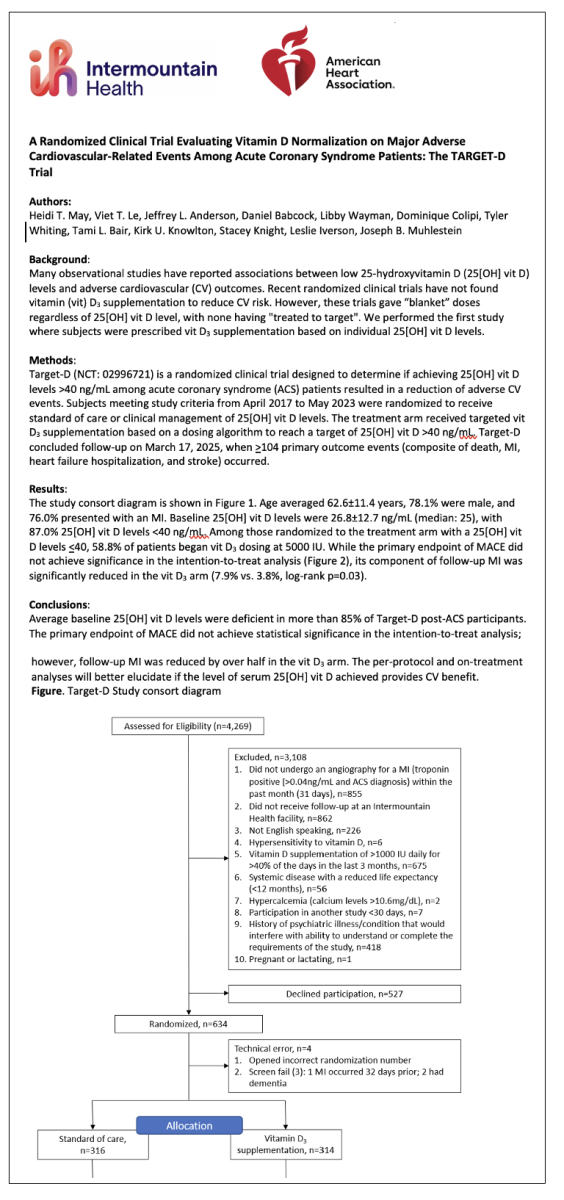
The Intermountain study, called the TARGET-D trial, enrolled patients from April 2017 to May 2023 and included 630 Intermountain Health patients who had a heart attack within a month of their enrollment. Participants were followed until March 2025 for the occurrence of cardiovascular events.
Researchers randomized study patients into two groups: those who received no management of vitamin D3 by the study and those who received targeted vitamin D3 treatment.
In the vitamin D treatment group, the goal was to raise their blood levels of vitamin D to more than 40 nanograms per ml (ng/mL). Of the heart attack patients enrolled in the study, 85% had insufficient vitamin D3 levels (<40 ng/mL). Of those who received targeted treatment, more than 50% required an initial vitamin D3 dose of 5,000 international units (IU), where current supplementation suggestions are usually between 600 to 800 IU.
For patients in the study who received targeted treatment, their vitamin D blood levels were checked once a year to determine if they were above 40 ng/mL. For patients whose vitamin D levels were lower, they were tested every three months with their dosage adjusted, then every year after they achieved 40 ng/mL.
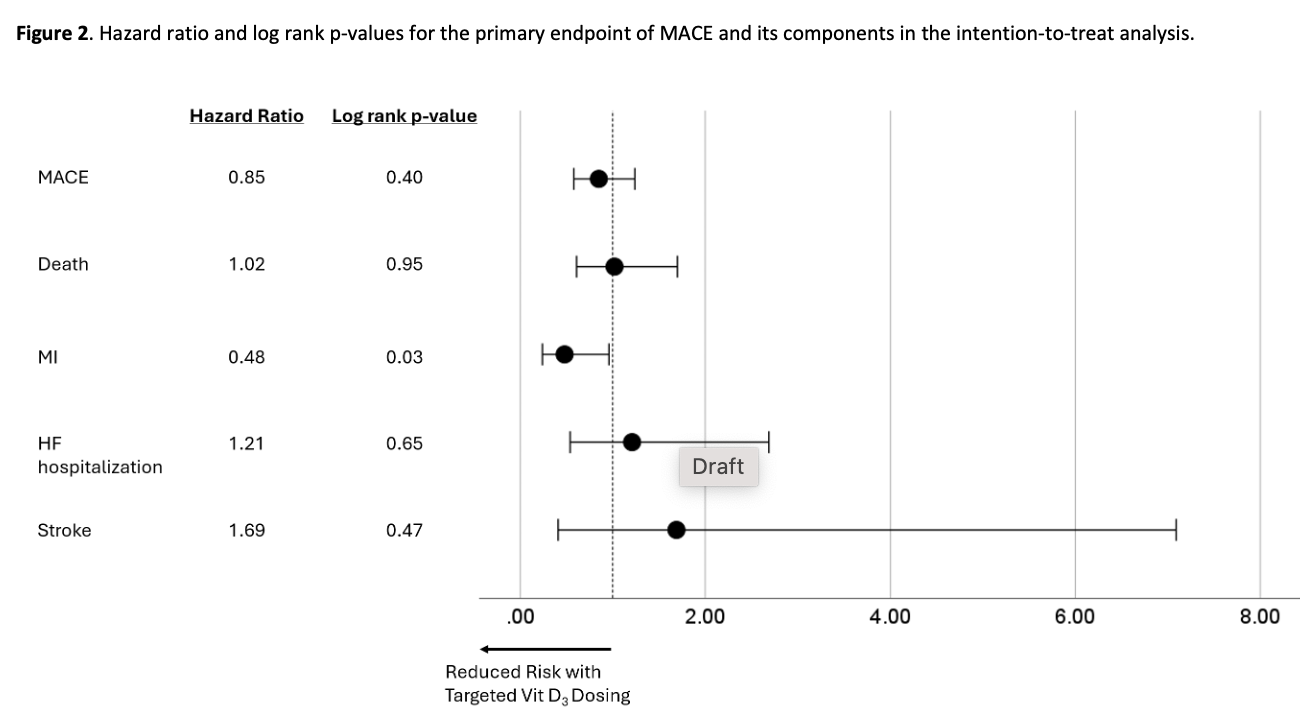
Intermountain researchers then followed patients to see who had follow-up major cardiac events (MACE), including heart attack, heart failure hospitalization, stroke or death. Of the 630 patients enrolled in the clinical trial, 107 experienced a major cardiac event.
Researchers found no significant difference in the risk of MACE between the groups. However, they did find that the risk of a follow-up heart attack was reduced by half in those patients who received targeted vitamin D management.
The next step for researchers is to do a larger clinical trial to reaffirm these findings. A larger study group will allow researchers to adequately evaluate whether targeted vitamin D management reduces the risk of developing or reducing the risk of other cardiovascular disease, said Dr. May.
###
Measure Your Vitamin D Levels, Include Omegas to Save 15% with Code OMEGA3S

Create your custom home blood spot kit to help determine if you are getting enough of the following nutrients shown to benefit overall health, along with other measures, including:
 Vitamin D
- Omega-3 Index plus Omega-3:Omega-6 and AA:EPA Ratios
- Magnesium (plus Zinc, Copper, Selenium, Lead, Cadmium & Mercury)
- hsCRP
- HbA1c
- Type 1 Diabetes Autoantibodies
- TSH
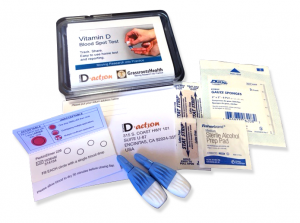 Vitamin D
Enroll and test your levels today, learn what steps to take to improve your status of omega-3s, vitamin D and other nutrients and blood markers, and take action! By enrolling in the GrassrootsHealth projects, you are not only contributing valuable information to everyone, you are also gaining knowledge about how you could improve your own health through measuring and tracking your nutrient status, and educating yourself on how to improve it.
Here is the original post link for reference: Original Press Release