

Published on September 9, 2025

Insights from Dr. KECIA Gaither: An Award Winning OBGYN Specializing in High-Risk Pregnancies
 Dr. Kecia Gaither is a double board-certified physician specializing in Obstetrics & Gynecology and Maternal Fetal Medicine. She holds a master’s degree in public health and an MS/MBA in healthcare policy and research leadership. Dr. Gaither directs perinatal services and maternal fetal medicine at New York City Health + Hospitals Lincoln in the Bronx and serves as an associate professor with Cornell’s Weill Medicine. Her mission is to provide exemplary prenatal care to all women regardless of circumstance and advocate for improved maternal health outcomes.
Video Interview: Why Vitamin D Matters in Pregnancy
In this interview, Dr. Gaither emphasizes that vitamin D is inexpensive yet powerful, regulating homeostasis across multiple body systems. One of its most critical roles in pregnancy is in reducing the risk of preterm labor, a significant concern in her Bronx clinical practice, where high-risk pregnancies are common due to factors such as obesity, substance abuse, cardiovascular disease, and socioeconomic challenges.
Beyond pregnancy, vitamin D influences mental health, immune function, bone health, and cardiovascular stability, making it a cornerstone of comprehensive prenatal care.
Watch the Video
Introduction to Dr. Kecia Gaither (0:12–1:38)
Background, credentials, and mission in maternal health.
Why Vitamin D Matters in Pregnancy (2:00–2:38)
Role in homeostasis, preterm labor prevention, and whole-body benefits.
Dr. Gaither’s Clinical Experience with Vitamin D (2:44–6:36)
Over a decade of practice integrating vitamin D into prenatal care.
Screening & Supplementation Protocols (5:22–9:36)
How she tests, target levels (≥30 ng/mL), and dosing strategies.
Vitamin D Beyond Pregnancy: Mental Health & Immunity (6:36–5:53)
Links to mood stabilization, psychiatric conditions, immunity, and overall health.
Vitamin D’s Impact on Pregnancy Outcomes (11:00–12:22)
Lower preterm labor rates and improved maternal health outcomes.
The Future of Vitamin D Research in Maternal Health (12:31–13:47)
Plans to study psychiatric outcomes, preterm labor, and cardiovascular risks.
Policy & Healthcare Implications (14:33–19:56)
Cost savings, barriers in adoption, and the importance of reaching decision-makers.
Dr. Gaither’s Personal Experience with Vitamin D (21:32–22:56)
Her own deficiency, improved energy, and fewer colds after supplementation.
Addressing Disparities in Vitamin D Deficiency (23:31–25:46)
Higher risk in patients with darker skin, during winter months, or with compromised immunity.
Final Thoughts on Vitamin D’s Importance (26:04–27:25)
Inexpensive, safe, widely available, and beneficial for multiple systems, fertility, and pregnancy outcomes.
Dr. Gaither’s Clinical Experience with Vitamin D
For over a decade, Dr. Gaither has screened all prenatal patients for vitamin D levels, aiming for sufficiency at 30 nanograms per milliliter or higher.
In her 10–15 years of clinical implementation of vitamin D, she has observed lower rates of preterm labor among her patients compared to the general population, reinforcing the importance of vitamin D in maternal health.
Causes and Risks of Vitamin D Deficiency
Vitamin D deficiency is widespread due to limited dietary sources and reduced sun exposure. Contributing factors include:
- Skin pigmentation (darker skin reduces vitamin D synthesis)
- Geographic location and seasonal sun availability
- Sunscreen use
- Obesity
- Air pollution
- Indoor lifestyles
These risks are especially concerning for pregnant women of color, who are already disproportionately affected by vitamin D deficiency due to higher amounts of melanin in their skin.
Screening and Supplementation Protocols
Dr. Gaither typically screens vitamin D levels early in pregnancy and again at 36 weeks to ensure adequacy. Postpartum screening is done only when clinically indicated.
She supports supplementation of vitamin D alongside iron and folate as essentials for high-risk pregnancies. Depending on initial lab results, doses may be increased, with higher-dose regimens for severely deficient patients.
Vitamin D’s Impact on Pregnancy Outcomes
Scientific research consistently shows that vitamin D supplementation during pregnancy can reduce risks of:
- Preterm birth
- Low birth weight
- Preeclampsia
- Miscarriage
- Neonatal mortality
It also plays a role in fetal neurodevelopment and may reduce risks of childhood disorders such as ADHD and autism spectrum disorder. Dr. Gaither’s clinical results align with these findings, showing improved pregnancy outcomes in her patient population.
Beyond Pregnancy: Vitamin D’s Role in Mental Health and Immunity
Dr. Gaither highlights the potential link between vitamin D deficiency and psychiatric disorders of the mother, such as severe depression, schizophrenia, and schizoaffective disorder. Supplementation appears to stabilize mood and may help reduce postpartum depression, particularly when combined with psychiatric care.
Vitamin D also supports immune function, a benefit underscored during the COVID-19 pandemic, when its role in maintaining immunocompetence became especially relevant.
Dr. Gaither’s Personal Experience
After discovering her own vitamin D deficiency, Dr. Gaither began supplementing and experienced noticeable benefits, including increased energy and fewer colds. She now takes a daily 1,000-microgram dose of a high-quality, affordable supplement, underscoring that vitamin D is both accessible and effective.
Vitamin D is not just a vitamin, it acts more like a hormone and signalling molecule, regulating genes and supporting multiple organ systems. It is safe, inexpensive, and widely available, making it an ideal intervention for:
- Improving maternal and fetal health
- Reducing health disparities
- Supporting mental health and immunity
Through her work, Dr. Gaither provides an example of how integrating vitamin D into prenatal care can transform maternal health outcomes and create healthier futures for mothers and children alike.
Measure Your Levels Today
If you haven’t had your vitamin D levels checked recently, now is the time! With so many Americans still falling short, awareness is the first step toward change.
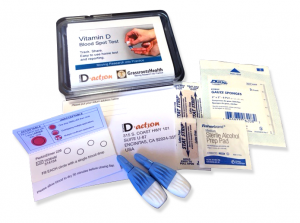
Measuring your vitamin D level and calculating a supplementation amount to help reach and maintain a target level, or taking loading doses to correct deficiency faster, could possibly make all the difference in overall health, wellbeing, and how a current disease situation progresses. Test your level now!
Create your custom home blood spot kit by adding any of the following measurements, along with your vitamin D:
- Omega-3 Index (with or without Ratios AA:EPA and Omega-6:Omega-3)
- Magnesium (with additional Elements copper, zinc, selenium, mercury, and cadmium)
- hsCRP as a marker of inflammation and HbA1c as a marker of blood sugar health
Having and maintaining healthy vitamin D levels and other nutrient levels can help improve your health, now and for the future. Enroll and test your levels today, learn what steps to take to improve your status of vitamin D (see below) and other nutrients and blood markers, and take action! By enrolling in the GrassrootsHealth projects, you are not only contributing valuable information to everyone, you are also gaining knowledge about how you could improve your own health through measuring and tracking your nutrient status, and educating yourself on how to improve it.
How Can You Use this Information for YOUR Health?
Having and maintaining healthy vitamin D and other nutrient levels can help improve your health now and for your future. Measuring is the only way to make sure you are getting enough!
STEP 1 Order your at-home blood spot test kit to measure vitamin D and other nutrients of concern to you, such as omega-3s, magnesium, essential and toxic elements (zinc, copper, selenium, lead, cadmium, mercury); include hsCRP as a marker of inflammation or HbA1c for blood sugar health
STEP 2 Answer the online questionnaire as part of the GrassrootsHealth study
STEP 3 Using our educational materials and tools (such as our dose calculators), assess your results to determine if you are in your desired target range or if actions should be taken to get there
STEP 4 After 3-6 months of implementing your changes, re-test to see if you have achieved your target level(s)