

Published on September 4, 2025

Meet part of “Team Vitamin D” representing GrassrootsHealth and our vitamin D and maternal health initiative NEXT WEEK in Washington DC – which we have named Sunny Solutions!
Key Points
- Low vitamin D levels during pregnancy have consistently been related to a higher risk of preeclampsia, miscarriage, preterm birth, gestational diabetes, cesarean section, postpartum depression, and hemorrhage, as well as poor childhood health outcomes such as asthma.
- GrassrootsHealth has assembled a team to go to Capitol Hill next week to visit with representatives and share about the importance of incorporating current vitamin D research into healthcare practice, especially for the health of moms and babies. We are calling this our Sunny Solutions for Healthy Moms & Babies campaign.
- The team members involved each have their own vitamin D stories to share, stories about how they turned a difficult situation for themselves or a loved one into motivation to help others.
The team at GrassrootsHealth is getting more excited as we gear up for our trip to Capitol Hill in Washington DC next week! We will be promoting our Sunny Solutions for Healthy Moms & Babies campaign – which I will share more about very soon.
I am honored to be working with such a dedicated team of experts as we prepare for a day that we are hoping creates enough sparks of interest to ignite a fire of change that will rapidly move current vitamin D research into practice NOW. We have over two decades of published research on high rates of vitamin D deficiency and insufficiency along with demonstrated evidence of the detrimental health effects that low prenatal vitamin D can have on health outcomes for pregnancy and the child. In addition, guidelines that are relied on by most medical associations (set by the IOM in 2011), based on outdated data for bone health, are grossly inadequate and harmful, especially during pregnancy, and are a main cause of the current state of vitamin D deficiency and the prevalence of its consequences.
Our team, some of whom I will introduce below, discovered the importance of vitamin D not as part of their medical education, but as part of their own journeys into and through motherhood. Unfortunately, as often happens, as it happened with our founder Carole Baggerly as well as with myself, it is a discovery spurred by our own experiences with deficiency and how its health consequences affected us, our children, or others we love. And while we cannot say with 100% certainty that vitamin D deficiency was the cause of these health issues, current evidence has shown how vitamin D deficiency plays a likely role. Let’s face it – vitamin D deficiency has nothing good to offer for our health, and there is no reason for it to continue at the rates it has.
Below are personal stories shared by three of the individuals supporting GrassrootsHealth and our Sunny Solutions initiative with us in person next week on Capitol Hill. I would like to extend my deepest gratitude to each of these wonderful women — for their time, motivation, dedication, and their big, beautiful hearts!
As you read these stories, please consider donating to this initiative. We are past our goal deadline, but the donations are still very much needed. Every dollar counts! Thank you to those who have donated so far.
Your support can help us take advantage of the window of opportunity that is open for transforming health care in America right now through addressing something as basic as vitamin D.
Onwards in Health!
Jen Aliano, MS — Executive Director, GrassrootsHealth
 My Story: Understanding the Impact of Vitamin D on Fetal Lung Development
 My Story: Understanding the Impact of Vitamin D on Fetal Lung Development
I am Dr. Antoinette Austin-Glass, a practicing anesthesiologist in Austin Texas.
I am the mother of two daughters who were both diagnosed with reactive airway disease at very young ages—one at six months, the other at three years old. Over time, their diagnoses were confirmed as asthma. This came as a surprise, since we had no family history of asthma or other chronic lung conditions. I often wondered what had caused it and whether something during my pregnancies might have played a role.
I had my daughters a few years before attending medical school, at a time when I had no awareness of vitamin D or its importance in maternal and fetal health. To make matters more difficult, the impact of vitamin D on pregnancy and fetal lung development was not being taught in medical school more than 25 years ago. Much of what I now understand has come not from my training, but from my own personal story—watching my children cope with asthma and uncovering the science later.
Only recently did I have my vitamin D checked for the first time. My level came back at 21 ng/mL, well below sufficiency. That result was an awakening. I began reading and discovered that maternal vitamin D levels are not just about bone health—they can influence the developing lungs of a baby in utero. Studies now show that vitamin D sufficiency (≥40 ng/mL) early in pregnancy can support healthy lung development and may reduce the risk of wheezing and asthma in children.
For my oldest daughter, the impact has been especially difficult. She has faced the most challenges with her asthma, particularly after contracting COVID. Each time she became ill with COVID, her asthma was significantly exacerbated, further complicating her health. I cannot help but wonder how different her life might have been had vitamin D screening and supplementation been supported and encouraged during my childbearing years. She may not have spent the majority of her life fighting this condition.
What makes this even more disheartening is that I was proactive long before becoming pregnant. I established a relationship with my OB-GYN several years before my husband and I decided to start a family, making sure I was in the best position to have a healthy pregnancy once we conceived. Despite that preparation, vitamin D was never a part of my screening—not during my annual visits before pregnancy, and not during my pregnancies themselves.
Now, as a practicing anesthesiologist, I have made it my mission to ensure that patients are empowered with knowledge that allows them to take an active role in their health. I also devote much of my free time to advising and educating friends and family on the importance of nutrition and personal health management. Having seen firsthand how the absence of critical information can lead to unfortunate health outcomes, I am committed to using my voice and experience to inform and empower others.
That passion has grown into broader advocacy. As a board member of Crossroads Health Foundation, Inc.—a pending 501(c)(3) nonprofit dedicated to improving maternal, child, and adult health through addressing vitamin D deficiency—I have partnered with GrassrootsHealth, a public health promotion nonprofit founded in 2007 to address what is now the most prevalent nutrient deficiency worldwide: vitamin D. Together, we are working to bring awareness, research, and practical solutions to the forefront of healthcare, so that others will less likely face the same challenges my family has endured.
I cannot change the past, but I can transform regret into purpose. If even one expectant mother learns from my story and ensures her vitamin D levels are sufficient, then my journey—and my daughters’ struggles—will help create healthier beginnings for another child. My life’s mission is to continue sharing this knowledge, so that others can have the information and tools necessary to live full and healthy lives.
Up to 80% fewer preterm births — why aren’t we talking about this?
 Up to 80% fewer preterm births — why aren’t we talking about this?
Sun Science, Vitamin D, and Maternal Health: My Story, by Dr. Beth S. Sanford, DNP, RN, LNC
In the year 2000, the power of sunlight and vitamin D to impact maternal health outcomes was barely on the radar — and unfortunately, it still isn’t.
My story: I was joyfully pregnant with my second child after experiencing a miscarriage. Following what I was taught in nursing school, I diligently avoided mid-day sun all spring and summer to reduce my risk of sun damage and skin cancer.
What I didn’t know: Mid-day sun (when the UV index is above 3) is the only time those vitamin D-generating UVB rays reach us.
That decision had consequences.
My blood pressure crept up. I swelled so much I could barely move. I spent 8 weeks on bedrest, medicated to prevent preterm birth. I felt like I was walking on water balloons, and I had terrible muscle cramps in my legs. My neck disappeared.
During delivery, I hemorrhaged. My hemoglobin dropped to 7, and the post natal the excess fluid loss put me at risk for seizures. My baby was too lethargic and jaundiced to feed properly for a month, and he displayed many symptoms that I now can relate to symptoms of vitamin D deficiency. I lost 60 pounds of water in 10 days postpartum and it took 6 months to fully recover.
Unfortunately, no one recommended that my vitamin D blood level, or that of my children, be checked until 20 years later, when my daughter showed symptoms of severe vitamin D deficiency at age 17. That Fall of 2019, my happy, vibrant daughter found herself too fatigued to continue to run cross-country. She was sick constantly, tired, and had extreme symptoms of PMS which then changed to crying for no reason around Thanksgiving on a daily basis. She came to me and said, “Mom, something is wrong with me; I feel like I’m dying.”
Talking through her symptoms, health history, and personality with our healthcare provider, who is a naturopathic doctor and a nurse practitioner, she recommended getting her vitamin D levels drawn. Her level was 9 ng/ml.
Thinking of my daughter’s history: she was slow to grow, talked late, had skin issues, food allergies, multiple fractures, and childhood cavities. Her growing-up years were spent not under the blue skies of North Dakota but a polluted city of 7 million in southern China. In addition, the previous two summers she had held a job as a locker room attendant at our community pool—inside a concrete box for 6-8 hours per day/ 5 days per week. Now I know she was a prime candidate for extreme vitamin D deficiency and likely had been for most of her life.
After a few days on vitamin D supplements, she quit crying daily, after two weeks she started to have less pain, and three months later, her level was up to 35 ng/ml. To this day, she must take 10K from October to May and 5K the other months in addition to co-nutrients in addition to intentionally having daily sun exposure in the summer months in order to keep her levels between 40-60 ng/ml.
The good news, my daughter is now in charge of her own health and knows that she needs to monitor her vitamin D levels for a healthier life.
When I was pregnant in the early 2000s, we didn’t understand how addressing vitamin D deficiency in pregnancy could change outcomes. But now, we do:
- Up to 80% reduction in preterm birth
- Significant reduction in preeclampsia, gestational diabetes, perinatal infections, and more
- Along with decreased risk of many childhood health outcomes, including delayed motor development, respiratory infections, asthma, allergies, mental/emotional health issues, and more
As a vitamin D researcher and maternal health advocate, I’m here to bridge the gap between decades of research and current healthcare practice.
My Story, by Dr. Nakiisa Rogers
 My Story, by Dr. Nakiisa Rogers
[email protected]
Breast Imaging Specialist • Health Advocate • Vitamin D Policy Champion
Founder, Crossroads Health Foundation, Inc.
I am a mother of four sons whose lives have been shaped by a preventable condition: vitamin D deficiency. Despite no family history of asthma, all four of my boys developed it. My oldest was just two years old when he struggled to breathe for the first time. My husband and I, both physicians, were stunned. We rushed him to the Emergency Department and left with a nebulizer machine—our initiation into the world of pediatric asthma. Over the years, each of my sons experienced similar episodes of wheezing requiring breathing treatments. My 3rd son had a frightening hospitalization following an asthma attack.
Following the birth of my 4th son, I discovered my own vitamin D level was just 12 ng/mL—well below the threshold for sufficiency, which research shows should be at least 40 ng/mL. I later learned that all four of my sons were also deficient. That discovery was a turning point. I began to ask: What if I had known earlier? What if I had supplemented before pregnancy? Could I have protected their developing lungs?
The answer, based on emerging science, is yes.
Vitamin D plays a critical role in fetal lung development and immune regulation. Deficiency during pregnancy has been linked to complications such as preterm birth, preeclampsia, gestational diabetes, pregnancy loss, and neonatal mortality. And the long-term consequences don’t end at birth—childhood asthma, like my sons experienced, is increasingly associated with prenatal vitamin D deficiency.
These issues disproportionately affect Black women. Due to higher melanin levels, we naturally produce less vitamin D from sunlight making deficiency more common.
My sons’ stories are not isolated. They are part of a larger pattern—one we have the power to change. With bold policy, updated clinical guidelines, and community-driven education we can ensure that vitamin D sufficiency becomes the standard of care.
As founder of Crossroads Health Foundation, Inc.—a pending 501(c)(3) nonprofit dedicated to improving maternal, child, and adult health through addressing vitamin D deficiency—I have partnered with GrassrootsHealth, a public health promotion nonprofit founded in 2007 to address what is now the most prevalent nutrient deficiency worldwide: vitamin D. Through public speaking, my goal is to bring awareness about current research and practical solutions to end this preventable epidemic.

What You Can Do Today
Support Your Pregnancy with Sufficient Vitamin D – Before You Conceive:
- Test your vitamin D level early—ideally prior to pregnancy or in the first trimester
- Maintain levels between 40–60 ng/ml (100-150 nmol/L) which have been shown to be optimal during pregnancy
GrassrootsHealth is advocating for improved maternal and infant health by promoting updated vitamin D guidelines during pregnancy. Research shows that maintaining a serum level of 40 ng/mL or higher can significantly reduce risks like preterm birth and preeclampsia, yet the majority of pregnant women fall below this threshold.
To address this, the organization is seeking $50,000 to support policy efforts in Washington, D.C. and continuing efforts aiming to integrate vitamin D testing and supplementation into standard prenatal care.
Measure Your Vitamin D and Other Important Nutrients
If you haven’t had your vitamin D levels checked recently, now is the time! With so many Americans still falling short, awareness is the first step toward change.
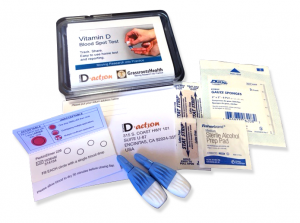
Measuring your vitamin D level and calculating a supplementation amount to help reach and maintain a target level, or taking loading doses to correct deficiency faster, could possibly make all the difference in overall health, wellbeing, and how a current disease situation progresses. Test your level now!
Create your custom home blood spot kit by adding any of the following measurements, along with your vitamin D:
- Omega-3 Index (with or without Ratios AA:EPA and Omega-6:Omega-3)
- Magnesium (with additional Elements copper, zinc, selenium, mercury, and cadmium)
- hsCRP as a marker of inflammation and HbA1c as a marker of blood sugar health
Having and maintaining healthy vitamin D levels and other nutrient levels can help improve your health, now and for the future. Enroll and test your levels today, learn what steps to take to improve your status of vitamin D (see below) and other nutrients and blood markers, and take action! By enrolling in the GrassrootsHealth projects, you are not only contributing valuable information to everyone, you are also gaining knowledge about how you could improve your own health through measuring and tracking your nutrient status, and educating yourself on how to improve it.
How Can You Use this Information for YOUR Health?
Having and maintaining healthy vitamin D and other nutrient levels can help improve your health now and for your future. Measuring is the only way to make sure you are getting enough!
STEP 1 Order your at-home blood spot test kit to measure vitamin D and other nutrients of concern to you, such as omega-3s, magnesium, essential and toxic elements (zinc, copper, selenium, lead, cadmium, mercury); include hsCRP as a marker of inflammation or HbA1c for blood sugar health
STEP 2 Answer the online questionnaire as part of the GrassrootsHealth study
STEP 3 Using our educational materials and tools (such as our dose calculators), assess your results to determine if you are in your desired target range or if actions should be taken to get there
STEP 4 After 3-6 months of implementing your changes, re-test to see if you have achieved your target level(s)