

Published on July 24, 2025
For Every Mother, Father, and Child
Key Points
- Jen Aliano, Director of GrassrootsHealth, shares her personal story of preterm labor, birth and neonatal complications, likely linked to unrecognized vitamin D deficiency, highlighting a preventable gap in prenatal care
- For nearly two decades, researchers have shown that optimal vitamin D levels during pregnancy can reduce risks like preterm birth and gestational issues. Yet, clinical practice still overlooks it. At this point, it’s a public health injustice.
- GrassrootsHealth is leading an initiative to update national prenatal care guidelines to include vitamin D sufficiency. Donations will fund a critical trip to Capitol Hill this September to press for this change. This moment matters—and your support makes it possible.

Have you – or someone you love – faced pregnancy loss, early labor, or complications like preeclampsia or gestational diabetes? I have, and I endured months of fear, anxiety, and worry for myself and my baby because of it. I know many others who have, and I can almost guarantee that you do as well.
Much of this could be very easily avoided – and the change is urgently needed now. In fact, it was needed years ago when we already had the clinical evidence, but inaction and blind eyes kept this knowledge out of the hands of our care providers – as it still does for most women.
Our initiative today aims to save lives, beginning in the womb, and reduce generational health burdens through one of the simplest and most impactful implementations in modern medicine: vitamin D sufficiency.
My Story
 I don’t like to say “I wish I knew then what I know now” – but in this case, it’s most definitely true. It wasn’t until I began working for GrassrootsHealth that my eyes were opened to the world of evidence surrounding vitamin D, especially for prenatal health. I had been a health practitioner and nutritionist for years already, helping other women as a fertility and prenatal health specialist. During my own pregnancy, I ate incredibly healthy and took prenatal vitamins along with other supplements I knew would support a healthy pregnancy and baby. Never once did concern for vitamin D for myself or my patients cross my radar.
I can’t say that the preterm labor and birth I experienced was a result of vitamin D deficiency during pregnancy. I can’t, because my vitamin D level was never measured; I had never learned how important vitamin D was for myself or my pregnancy. But I do know that my newborn was vitamin D deficient – his level was 11 ng/ml at just a few weeks old (a strong indication that I was deficient when pregnant with him). At that time, after spending a long four days in the NICU, we had to make regular, tedious trips to Children’s Hospital for check-ups and blood work to see why he was struggling with certain health issues. I remember finally figuring out the best way to bring him in so that he cried the least when they poked him – snuggly wrapped against my chest in our Moby with his little foot out for the blood draw.
How many other women and their babies have had to endure unnecessary stress and suffering, and how many have died, due to conditions that might have been avoided with something as simple as vitamin D? The knowledge is there and it’s easy to understand – why aren’t we taking more action?!
“But It’s Just a Vitamin”
“Vitamin D” is a term that refers to several compounds that function as a nutrient, signaling molecule, secosteroid, pro-hormone, and hormone. In general, vitamin D affects nearly every type of cell and tissue in the body. What’s more intriguing, during pregnancy, something happens with the way vitamin D is processed within the body…
Changes unique to vitamin D metabolism occur during pregnancy; the conversion of vitamin D into its active form, calcitriol, triples by the 12th week of gestation—reaching levels that would be toxic or even fatal to a non-pregnant individual.
This indicates that the greatest of vitamin D’s effects likely happen during pregnancy!
Grossly Ignored Facts About Vitamin D During Pregnancy
- By the 12th week of pregnancy, the amount of calcitriol a pregnant woman has in her blood would be toxic or even fatal to a non-pregnant individual
- The conversion of vitamin D into its ‘active’ form becomes uncoupled from its role of calcium regulation to reach triple its normal amount. This only occurs during pregnancy, and indicates a unique need for higher inputs of vitamin D during pregnancy that does not occur during any other time of the lifecycle
- This conversion is optimized only when she has enough supply of vitamin D3 to sustain a serum 25(OH)D of at least 40 ng/ml
Vitamin D also plays a key role in immune function and has far-reaching implications on gene expression in the pregnant mother and her developing fetus. Vitamin D is needed for the regulation of approximately 3000 genes (likely more), but this effect is dependent on how much vitamin D you are getting. Higher supplementation levels regulate exponentially higher quantities of genes. One study showed that 600 IU per day of vitamin D regulated only 162 genes, 4,000 IU/d 320 genes, and 10,000 IU//d 1,289 genes, specifically genes in white blood cells.
Keep the above in mind and remember, the first 1,000 days—from preconception through age two—are foundational for lifelong health. Meanwhile, research has shown that vitamin D deficiency during this time can result in detrimental effects for both the mom and baby that can last a lifetime.
Vitamin D Deficiency During Pregnancy is 100% Unnecessary and Avoidable
Adverse Outcomes for mom and baby related to vitamin D deficiency include:
- Higher risk of maternal preeclampsia
- Increased risk of preterm birth
- Increased risk of gingivitis and periodontal disease in mother
- Impaired fetal growth
- Increased risk of infertility and miscarriage
- Impaired dentition—enamel hypoplasia
- Increased risk of RSV
- Neurodevelopmental differences
- Increased risk of allergies and asthma
We can do something about this now!
It is past time to Move Research into Practice, and current opportunities exist right now that must be utilized. With decades of published scientific evidence, it is our duty to expand this knowledge beyond our immediate circles. It’s time to update our standards of care to protect all women and babies from the negative consequences of vitamin D deficiency.
Let’s Get Political
Vitamin D is safe, affordable, and backed by science. Not addressing vitamin D levels during pregnancy goes directly against medicine’s fundamental ethical principle, “First, Do No Harm,” and ignoring it is harming mothers, fathers, infants, children, and families.
The opportunity to address this is knocking loudly RIGHT NOW!
GrassrootsHealth is representing a consortium of over a hundred leading vitamin D research scientists (including prenatal vitamin D research pioneers, Drs. Carol Wagner and Bruce Hollis), practicing physicians, health care providers and educators, public health officials, policy makers and individuals – all who are passionate about creating this change. Our team has provided input into the next MAHA Commission report emphasizing how vital the extra skeletal benefits of vitamin D are for immunity, fertility, and maternal, infant, child, and lifelong health and disease prevention, including reducing the risks of chronic disease. We are taking the lead with this initiative to update national vitamin D policy and will ensure that our voice is heard, and action is taken.
Your support can help us take advantage of the window of opportunity that is open for transforming health care in America right now through addressing something as basic as vitamin D.
Please consider helping us with a donation of any size.
GrassrootsHealth is a 501(c)(3) IRS-approved nonprofit, therefore, all donations are tax-deductible to the fullest extent allowed by law—often reducing both federal and state income taxes. Additionally, you can include our organization in your estate plans through a will or living trust. Any amount you leave to us is fully exempt from federal estate taxes, allowing you to make this lasting impact while potentially reducing the tax burden on your heirs.
Ensuring adequate vitamin D levels from preconception through pregnancy and early childhood affects a lifetime of health. Your attention and assistance in this matter is urgent for the health of mothers and babies in this Country.
Together, we can save lives.
Together, we can prevent unnecessary suffering.
Together, we can build healthier generations—now.
Every dollar counts. Please donate today.
In health and gratitude,
Jen Aliano
Director, GrassrootsHealth
How Can You Use this Information for YOUR Health?
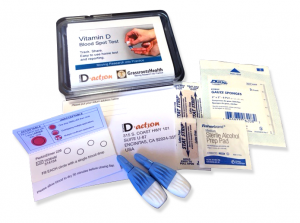
Having and maintaining healthy vitamin D and other nutrient levels can help improve your health now and for your future. Measuring is the only way to make sure you are getting enough!
STEP 1 Order your at-home blood spot test kit to measure vitamin D and other nutrients of concern to you, such as omega-3s, magnesium, essential and toxic elements (zinc, copper, selenium, lead, cadmium, mercury); include hsCRP as a marker of inflammation or HbA1c for blood sugar health
STEP 2 Answer the online questionnaire as part of the GrassrootsHealth study
STEP 3 Using our educational materials and tools (such as our dose calculators), assess your results to determine if you are in your desired target range or if actions should be taken to get there
STEP 4 After 3-6 months of implementing your changes, re-test to see if you have achieved your target level(s)