

Key Points
- Vitamin D slows cellular aging by protecting telomeres — the DNA caps that shrink with age.
- Study-backed: A large, 4-year trial showed less telomere shortening with daily vitamin D3 (2,000 IU).
- Results = 3 years less aging compared to placebo.
- No effect from omega-3s in the same study.
- Added bonus: Vitamin D also reduces inflammation and some disease risks.
Measure Your Vitamin D Level – Save 15% When Including Your Omega-3 Index with Code Omega3s
Mass General Brigham, May 21, 2025 Results from the VITAL randomized controlled trial reveal that vitamin D supplementation helps maintain telomeres, protective caps at the ends of chromosomes that shorten during aging and are linked to the development of certain diseases. The new report, which is published in The American Journal of Clinical Nutrition, is based on data from a VITAL sub-study co-led by researchers at Mass General Brigham and the Medical College of Georgia, and supports a promising role in slowing a pathway for biological aging.
“VITAL is the first large-scale and long-term randomized trial to show that vitamin D supplements protect telomeres and preserve telomere length,” said co-author JoAnn Manson, MD, principal investigator of VITAL and chief of the Division of Preventive Medicine at Brigham and Women’s Hospital, a founding member of the Mass General Brigham healthcare system. “This is of particular interest because VITAL had also shown benefits of vitamin D in reducing inflammation and lowering risks of selected chronic diseases of aging, such as advanced cancer and autoimmune disease.”
Telomeres are made of repeating sequences of DNA, or base pairs, that prevent chromosome ends from degrading or fusing with other chromosomes. Telomere shortening is a natural part of aging and is associated with an increased risk of various age-related diseases.
A few short-term, small-scale studies have suggested that vitamin D or omega 3 fatty acid supplementation may help support telomeres, but results have been inconsistent. VITAL is a randomized, double-blind, placebo-controlled trial of vitamin D3 (2,000 IU/day) and omega 3 fatty acid (1 g/day) supplementation that tracked U.S. females aged 55 years and older and males aged 50 years and older for five years. The VITAL Telomere sub-study included 1,054 of these participants, whose telomere length in white blood cells was assessed at baseline and at Year 2 and Year 4.
Compared with taking placebo, taking vitamin D3 supplements significantly reduced telomere shortening over four years, preventing the equivalent of nearly three years of aging compared with placebo. Omega 3 fatty acid supplementation had no significant effect on telomere length throughout follow-up.
“Our findings suggest that targeted vitamin D supplementation may be a promising strategy to counter a biological aging process, although further research is warranted,”
said Haidong Zhu, PhD, first author of the report and a molecular geneticist at the Medical College of Georgia, Augusta University.
Authorship: In addition to Manson, Mass General Brigham authors include Nancy R. Cook, William Christen, and I-Min Lee. Additional authors include Haidong Zhu, Bayu B. Bekele, Li Chen, Kevin J. Kane, Ying Huang, Wenju Li, and Yanbin Dong.
Disclosures: The authors declare that they have no known competing financial interests or personal relationships that could have appeared to influence the work reported in this paper.
Funding: This work was supported by the National Heart, Lung and Blood Institute (R01 HL131674-01). The parent VITAL trial is supported by R01 AT011729. The funders of the study had no role in study design, data collection, data analysis, data interpretation, or writing of the report as well as in the decision to submit the paper for publication.
Paper cited: Zhu H et al. et al. “Vitamin D3 and Marine Omega-3 Fatty Acids Supplementation and Leukocyte Telomere Length: 4-Year Findings from the VITAL Randomized Controlled Trial” AJCN DOI: 10.1016/j.ajcnut.2025.05.003
About Mass General Brigham
Mass General Brigham is an integrated academic health care system, uniting great minds to solve the hardest problems in medicine for our communities and the world. Mass General Brigham connects a full continuum of care across a system of academic medical centers, community and specialty hospitals, a health insurance plan, physician networks, community health centers, home care, and long-term care services. Mass General Brigham is a nonprofit organization committed to patient care, research, teaching, and service to the community. In addition, Mass General Brigham is one of the nation’s leading biomedical research organizations with several Harvard Medical School teaching hospitals. For more information, please visit massgeneralbrigham.org.
Journal
American Journal of Clinical Nutrition
Media Contact
Mary Eva Tredway, The National Fisheries Institute, 1 404-317-0731, [email protected]
SOURCE The National Fisheries Institute

Measure Your Levels Today – Get 15% Off when Including Your Omega-3 Index
Create your custom home blood spot kit to help determine if you are getting enough of the following nutrients shown to benefit overall health, along with other measures, including:
 Vitamin D
- Omega-3 Index plus Omega-3:Omega-6 and AA:EPA Ratios
- Magnesium (plus Zinc, Copper, Selenium, Lead, Cadmium & Mercury)
- hsCRP
- HbA1c
- Type 1 Diabetes Autoantibodies
- TSH
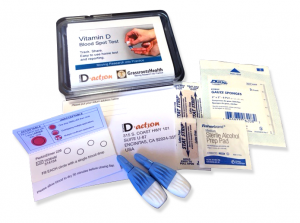 Vitamin D
Enroll and test your levels today, learn what steps to take to improve your status of omega-3s, vitamin D and other nutrients and blood markers, and take action! By enrolling in the GrassrootsHealth projects, you are not only contributing valuable information to everyone, you are also gaining knowledge about how you could improve your own health through measuring and tracking your nutrient status, and educating yourself on how to improve it.